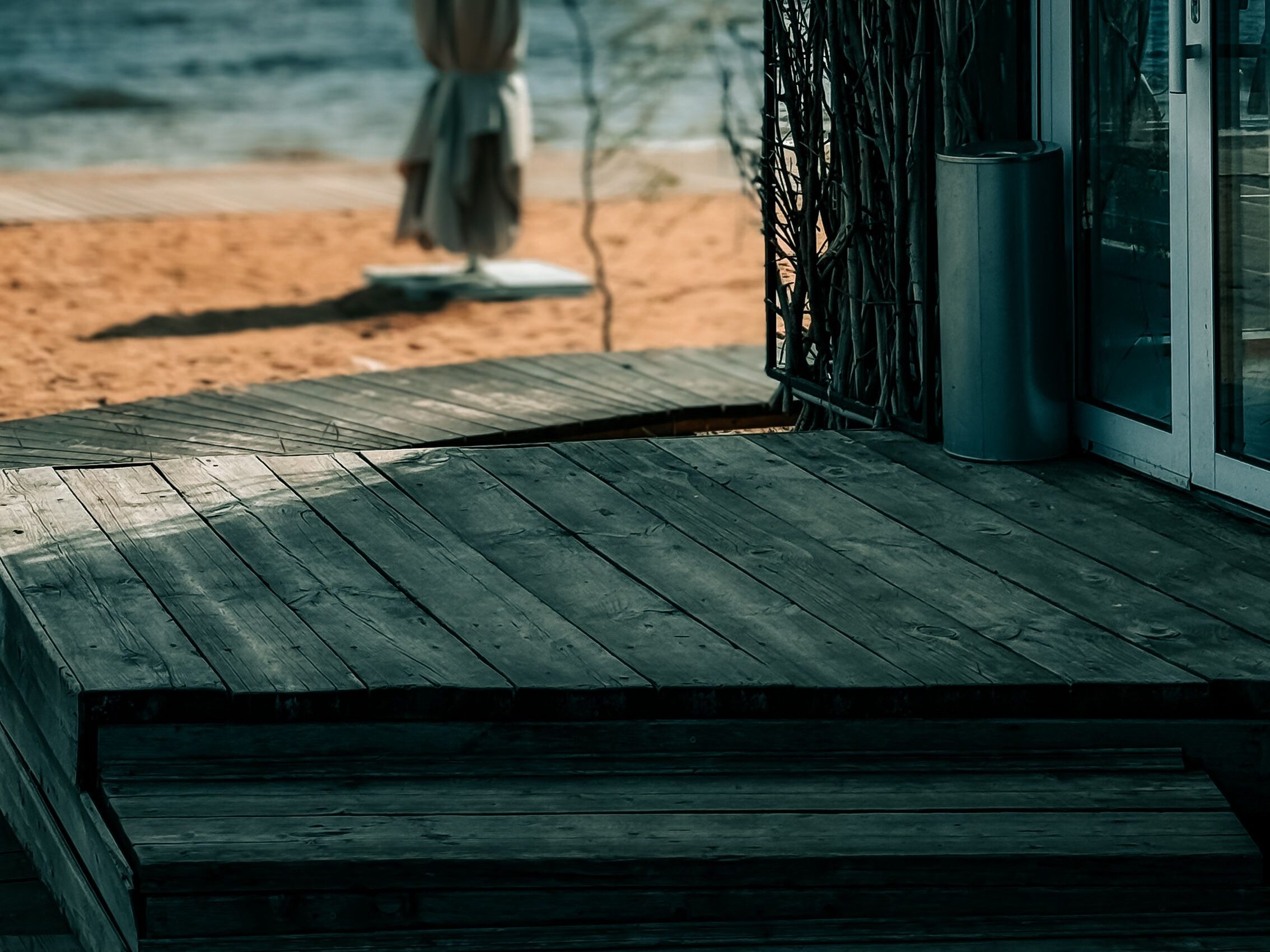
If you are planning to build a terrace or deck, one of the first questions is always the same: how much wood do I need for a terrace?
The answer depends on terrace size, decking board dimensions, joist spacing, cutting losses, and waste factor. This guide explains how to estimate wood materials in a practical, real-world way — not just on paper.
How Much Wood Do I Need for a Terrace?
To calculate how much wood you need for a terrace, you first need to understand the main parts of the structure. A terrace is not only the visible decking boards. It also includes joists, support structure, gaps, cuts, and additional material for mistakes or adjustments.
Most people choose wood because of its natural appearance, warm feel under feet, easy repair, and flexibility in finishing and color. Wood remains one of the most practical terrace materials when it is properly installed and protected.
Step 1: Measure Your Terrace Area
Start with the total surface area of the terrace. The basic formula is simple:
Length × Width = Terrace Area
For example, a terrace that is 5 meters long and 4 meters wide has an area of 20 m².
- Small terrace: 10–15 m²
- Medium terrace: 15–40 m²
- Large terrace: 40+ m²
This area becomes the base for all further material calculations.
Step 2: Understand the Terrace Structure
A wooden terrace usually consists of several layers. Each layer affects the final amount of wood you need.
- Sub-base or foundation
- Support posts or ground supports
- Joists
- Decking boards
- Edge boards and finishing details
If you only calculate the visible decking boards, you will underestimate the real material list.
How Much Wood Do I Need for a Terrace? Joist Spacing
Joist spacing is one of the most important parts of terrace planning. The spacing determines how many joists are needed and how strong the floor will feel.
Common joist spacing:
- 400 mm — stronger, more stable, more material
- 600 mm — more cost-efficient, but less rigid
Tighter spacing increases material usage, but it can reduce movement and improve long-term stability.
Step 3: Calculate Decking Boards
Decking boards are the visible surface of the terrace. Typical European board sizes include:
- Thickness: 28 mm
- Width: 95 mm, 120 mm, or 145 mm
- Length: often 3–6 meters
Boards are usually installed with a 5–7 mm gap for water drainage and seasonal movement.
The basic logic is:
- calculate the total terrace area;
- check the effective board coverage;
- add 5–10% waste factor;
- adjust for cuts, layout, and board length.
How Much Wood Do I Need for a 20 m² Terrace?
For a simple 20 m² terrace, you may need approximately 22–25 m² of decking boards after adding waste factor. The exact amount depends on board width, board length, layout direction, and how many cuts are required.
For example, if the terrace is 5 × 4 meters, the calculation should include not only the visible boards but also joists, edge details, support structure, and spare material.
This is why a terrace material calculator should always include real construction logic, not only square meters.
Step 4: Add Waste Factor and Buffer Material
In real construction, exact calculations are rarely enough. Wood has defects, boards need cutting, and mistakes happen during installation.
A practical waste factor is usually:
- 5% for simple rectangular terraces;
- 10% for more complex layouts;
- 15% or more for diagonal patterns, stairs, or irregular shapes.
Understanding how much wood you need for a terrace helps avoid both underbuying and unnecessary overbuying.
Step 5: Consider Cutting Losses
Even perfect calculations can fail because of cutting losses. Every saw cut removes a small amount of material. This is called kerf loss.
For example, a 3600 mm board may look like it can be split into three 1200 mm pieces. In reality, the saw blade removes material with every cut, so the final pieces may not match perfectly.
Small losses become important when many boards are cut across the whole terrace.
Step 6: Check Real Wood Dimensions
Wood is a natural material, so real dimensions may differ slightly from nominal dimensions. A board sold as 4800 mm may be slightly longer or shorter. Moisture, drying, and seasonal expansion can also affect the material.
Good terrace planning should include tolerance instead of assuming perfect dimensions.
Step 7: Understand How Wood Is Sold
Wood can be sold in different ways depending on the product type:
- decking boards are often sold by square meters or pieces;
- structural timber is often sold by cubic meters;
- small accessories may be sold by packs or boxes.
For structural timber, the volume formula is:
Thickness × Width × Length / 1,000,000,000 = m³
This is important when comparing offers from suppliers, because small differences in real dimensions can affect the final cost.
Common Terrace Material Calculation Mistakes
- calculating only visible decking boards;
- ignoring waste factor;
- using wrong joist spacing;
- forgetting cutting losses;
- not checking actual delivered dimensions;
- underestimating stairs, edges, and finishing boards;
- buying too little material and delaying the project.
These mistakes can increase costs, delay construction, and create unnecessary delivery trips.
Future Terrace Material Calculator
Builtwy is working toward a planning tool that helps calculate terrace materials more accurately. The future calculator will include decking boards, joists, spacing rules, waste factor, cutting losses, and buffer logic.
The goal is simple: help homeowners and builders plan outdoor projects with fewer mistakes and less guesswork.
Conclusion: How Much Wood Do I Need for a Terrace?
So, how much wood do I need for a terrace? The answer depends on terrace size, board dimensions, joist spacing, construction details, and waste factor.
A good estimate should include:
- decking boards;
- joists;
- support structure;
- cutting losses;
- real wood tolerances;
- extra buffer material.
Terrace planning is not only mathematics. It is a practical construction estimate that should reduce delays, extra costs, and material problems before the build starts.