
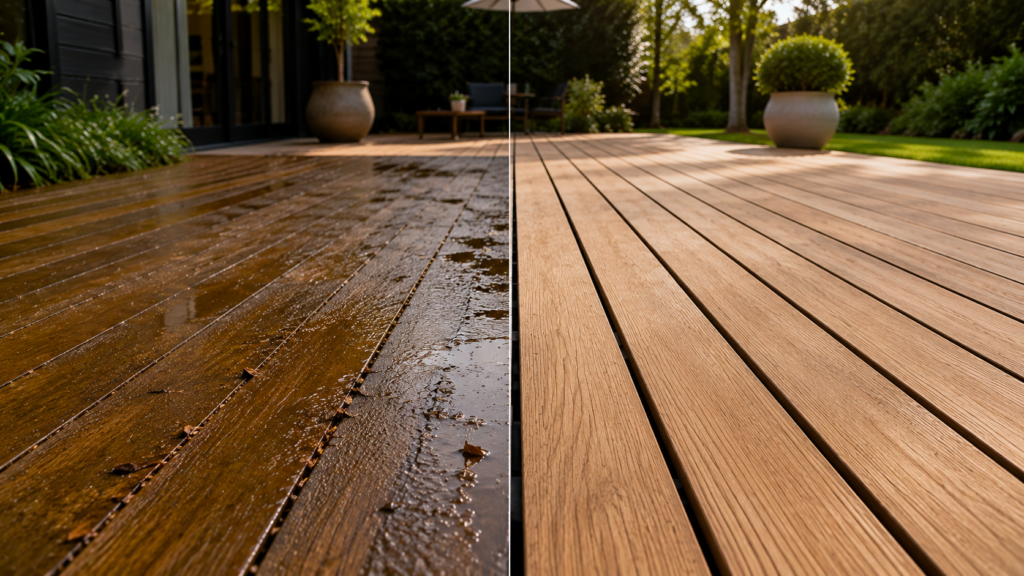
Why No Gaps Between Deck Boards Is a Bad Idea?
Many homeowners assume that tighter decking boards create a stronger and cleaner deck.
Unfortunately, timber does not work that way.
Wood Moves
Wood is a natural material.
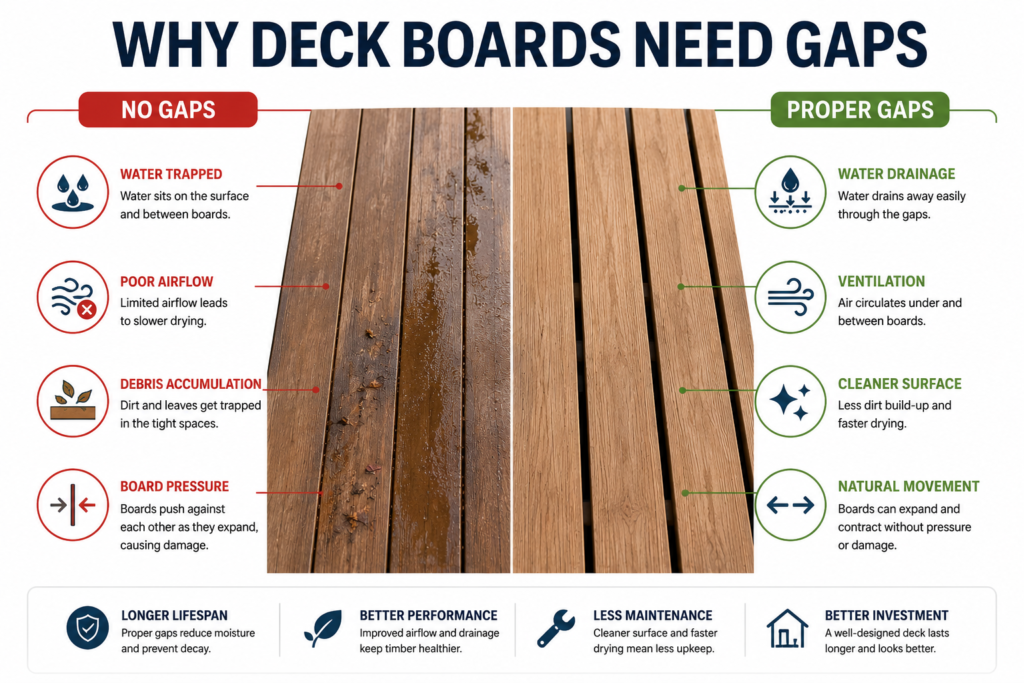
It expands and contracts as moisture levels change.
Boards installed tightly together often end up pressing against each other later.
Water Needs Somewhere To Go
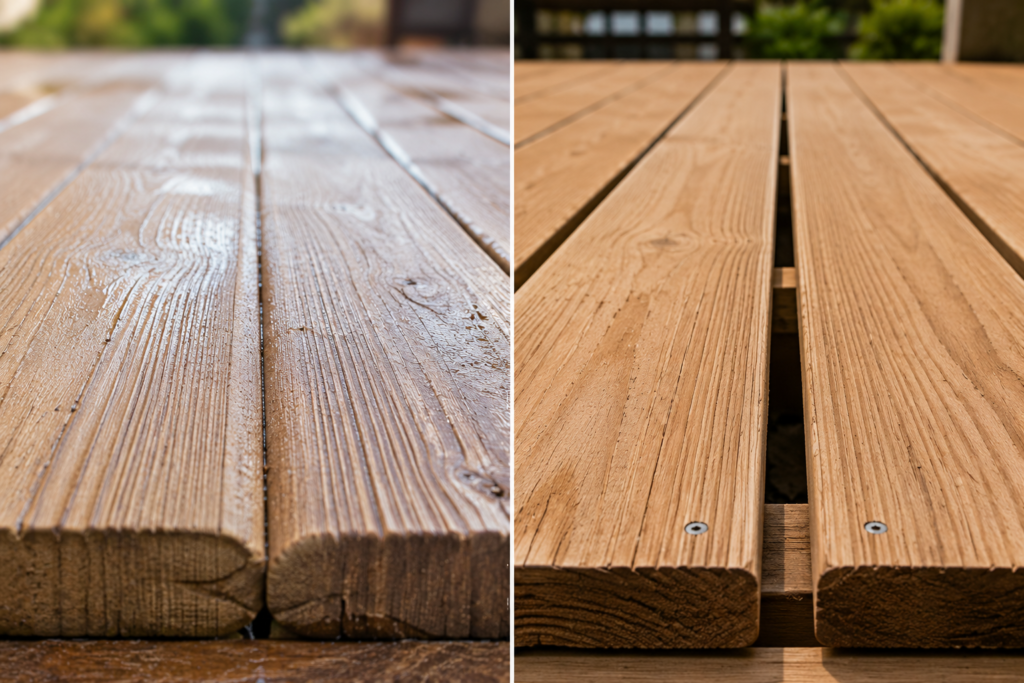
Rainwater should pass through the deck surface.
Without gaps:
- water remains longer
- drying becomes slower
- dirt accumulates more easily
Ventilation Matters
Board spacing helps airflow.
Airflow helps timber dry.
Timber that dries quickly generally lasts longer.
The Hidden Problem
Many people think:
No gaps means better protection.
In reality, the opposite is often true.
Proper spacing helps prevent moisture from becoming trapped.
Final Verdict
Deck boards need room to move, drain and dry.
Small gaps are not a flaw.
They are part of good deck design.