On this page
- What should you put under a deck?
- What geotextile does under a deck
- What gravel does under a deck
- When to use geotextile, gravel or both
- What neither material can fix
- How to prepare the ground under a deck
- What should go under a low-level deck?
- Questions about gravel and geotextile under a deck
- Use the ground layer to support good deck design
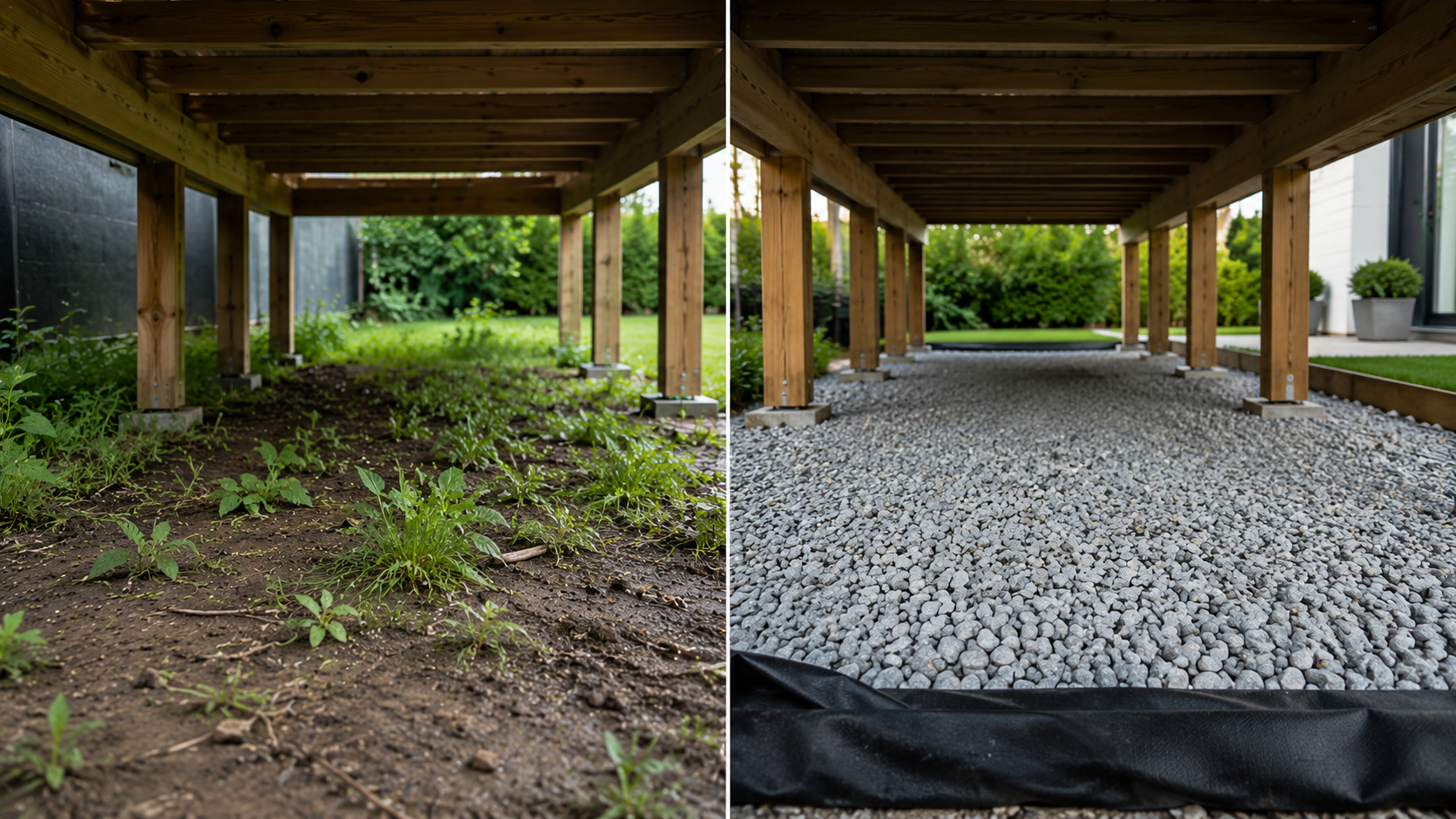
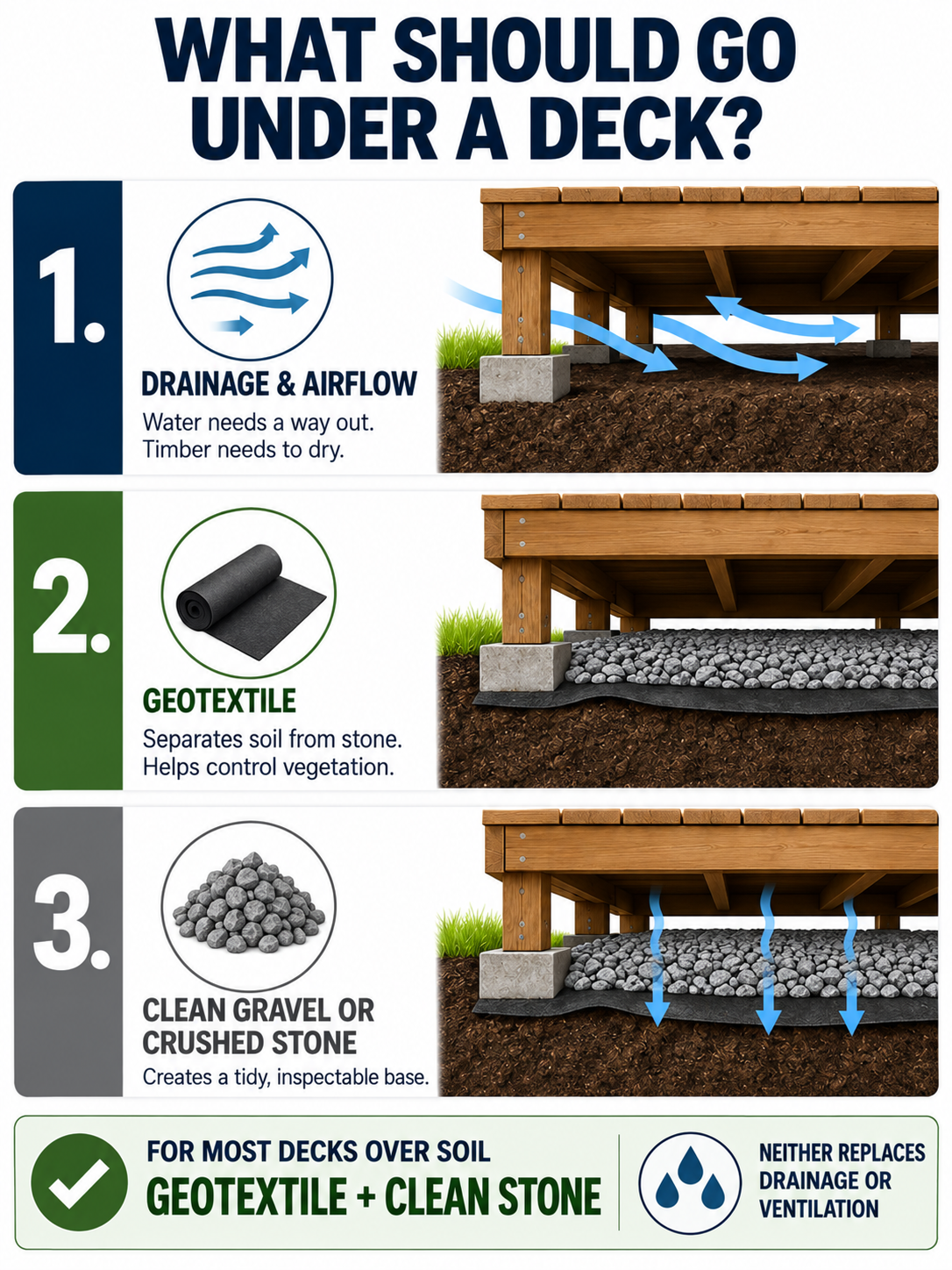
For most decks over soil, the best ground cover is geotextile beneath a layer of clean gravel or crushed stone. The geotextile separates soil from the stone and helps limit vegetation. The stone creates a cleaner surface that is easier to inspect and can let surface water pass through. Neither material replaces drainage and ventilation, which are still the priorities for the deck itself.
The right choice depends on the site. A raised deck over dry, stable ground may need little more than a tidy, weed-controlled surface. A low deck over damp or fine soil needs more careful planning so the underside can dry and the base does not turn into a moisture trap.
What should you put under a deck?
Start with the ground conditions, not a universal material list. Ask three questions:
- Where does rainwater go after it passes through the deck?
- Will the space beneath the deck receive enough air to dry?
- Will soil, weeds, leaves or stored items make the area hard to inspect and maintain?
If water drains away naturally and the deck has good clearance, geotextile and gravel are mostly about keeping the base clean and manageable. If water already sits in the soil or flows toward the house, deal with that drainage problem first. Covering wet ground with fabric or stone does not make the water disappear.
What geotextile does under a deck
Geotextile is a permeable fabric placed between the soil and another layer, such as aggregate. Its main job below a deck is separation. It helps stop fine soil particles from mixing into the gravel above, so the stone stays cleaner and more effective over time.
It can also act as a filter and make vegetation easier to control. However, geotextile is not a waterproof membrane and is not a cure for poor site drainage. Water should still have a route through or away from the area.
Choose a product suitable for ground-contact landscaping or aggregate separation, not a thin plastic weed sheet that tears as soon as stone or foot traffic is placed on it. Overlap joins and secure the fabric during installation so soil does not work up through open seams.
What gravel does under a deck
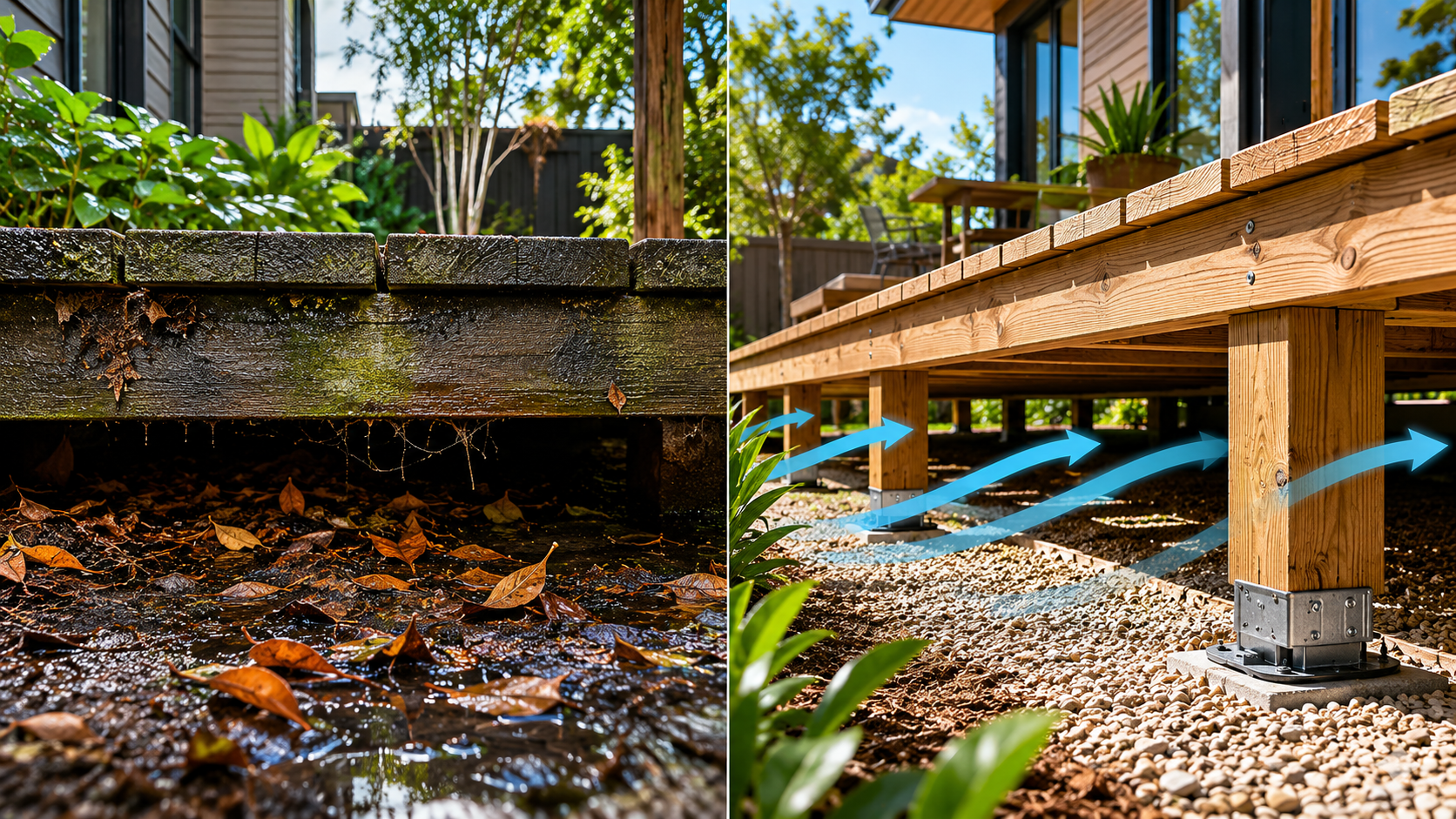
Gravel or clean crushed stone makes the area beneath a deck cleaner than bare soil. It reduces mud splash, gives leaves less soil to settle into and makes it easier to see dropped fasteners, damp areas or signs of pests. It can also provide a freer-draining surface layer when the ground below and around it allow water to escape.
Gravel does not automatically improve a wet site. On clay, compacted ground or an area with no outlet, water can still remain beneath the stone. The deck may look tidy while the substructure stays damp. In that situation, look at the source of the water, the slope and the wider drainage route rather than simply adding more gravel.
When to use geotextile, gravel or both
| Site situation | Useful approach | Why |
|---|---|---|
| Stable, dry ground beneath a raised deck | Geotextile alone can be enough | It separates the soil and limits vegetation where a stone surface is not needed |
| You want a clean, inspectable surface | Geotextile plus clean gravel or crushed stone | The fabric keeps soil out of the stone; the stone makes the base tidier and easier to maintain |
| Low deck over fine or muddy soil | Usually both, alongside a drainage and ventilation plan | The base needs separation and a surface that does not become mud, but the deck must still be able to dry |
| Ground is already wet or water runs toward the deck | Address site drainage first | Neither fabric nor gravel can substitute for a route that takes water away |
| A deck sits well above a maintained paved area | Often neither is necessary | The existing surface may already be clean, stable and free-draining enough |
For many garden decks, using both is the straightforward answer. Use the fabric to keep the layers separate and a clean stone layer to create a durable, low-maintenance base. Do not assume this combination is required in every project, especially if the deck is high above an already suitable surface.
What neither material can fix
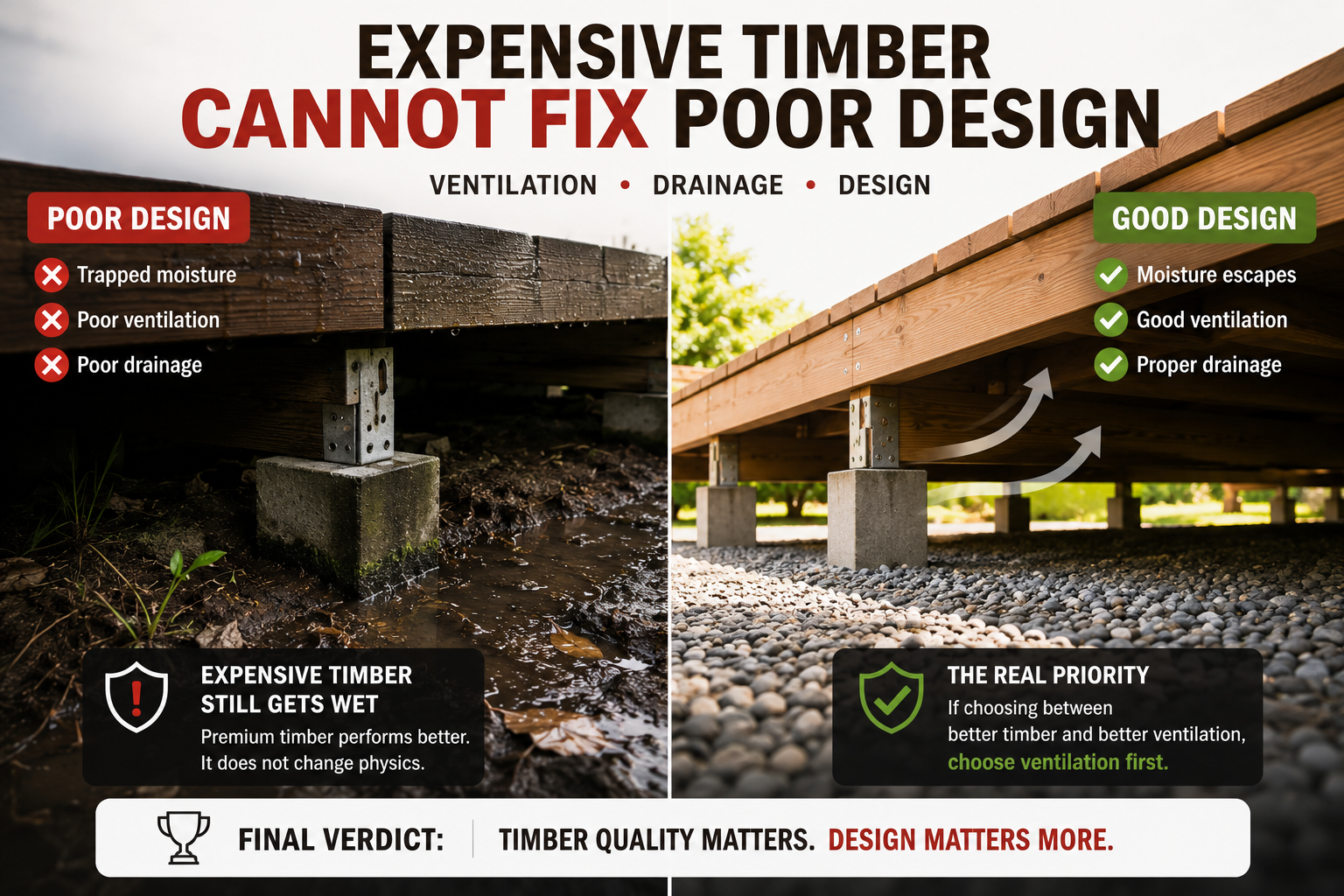
Geotextile and gravel are supporting details. They cannot compensate for a deck design that retains moisture in the timber. Do not expect either one to fix:
- Deck boards with blocked or inadequate gaps.
- A substructure that sits in persistent water or unnecessary soil contact.
- A low deck with no meaningful ventilation below it.
- Water discharged from a roof, path or slope directly toward the deck.
- Leaves, planters and stored items holding moisture against the boards.
These are drainage, detailing and maintenance issues. The ground treatment works best as part of a design that already allows water to leave and air to reach the underside. If your frame uses treated timber, see why UC4 timber still needs ventilation.
How to prepare the ground under a deck
The exact work depends on the site and local construction requirements, but the general sequence is simple:
- Remove organic debris and obvious weeds. Do not bury thick vegetation, roots or wet leaf layers under the new deck.
- Assess the water path. Check where rainwater comes from and where it can leave. Correct obvious low spots or runoff that heads toward the structure.
- Keep timber clear of unsuitable ground conditions. Posts and structural members need a treatment and foundation detail suited to their actual exposure.
- Lay geotextile where separation or vegetation control is useful. Cover the soil continuously and overlap the joins.
- Add clean stone if the site benefits from it. Keep the layer free of soil and leaves so that it remains inspectable and does not become a muddy organic bed.
- Protect the open space below the deck. Do not turn it into long-term storage or block it with solid skirting unless ventilation is designed in.
There is no single correct gravel depth for every deck. Soil type, drainage, the deck's height, site slope and local requirements all matter. Avoid copying a number from another project without understanding why it was used.
What should go under a low-level deck?
Low-level decks need more care because they have less air beneath them. The aim is to avoid damp soil, vegetation and debris sitting immediately below timber that is slow to dry. Geotextile plus clean gravel is often useful for keeping this void tidy, but it should be paired with as much clearance and cross-ventilation as the design can provide.
Check that the proposed deck height does not leave the frame trapped above ground that is wet for much of the year. Sometimes raising the deck or changing the layout gives a better result than adding more material beneath it.
Questions about gravel and geotextile under a deck
Can you put gravel directly on soil under a deck?
You can, but soil can gradually mix into the gravel, especially where there are fine particles or wet conditions. Geotextile between the layers helps keep the stone cleaner and maintain a clearer separation.
Do you need landscape fabric under a deck?
Not always. It is most useful when you want to separate soil from gravel, reduce vegetation and keep the area under the deck easier to maintain. It does not replace drainage or ventilation.
Will gravel stop weeds under a deck?
Gravel alone does not reliably stop weeds. Seeds can germinate in leaf litter and dust that settle on top of it. Geotextile helps with growth from the soil below, while regular clearing prevents a new growing layer forming on the surface.
Does gravel prevent deck rot?
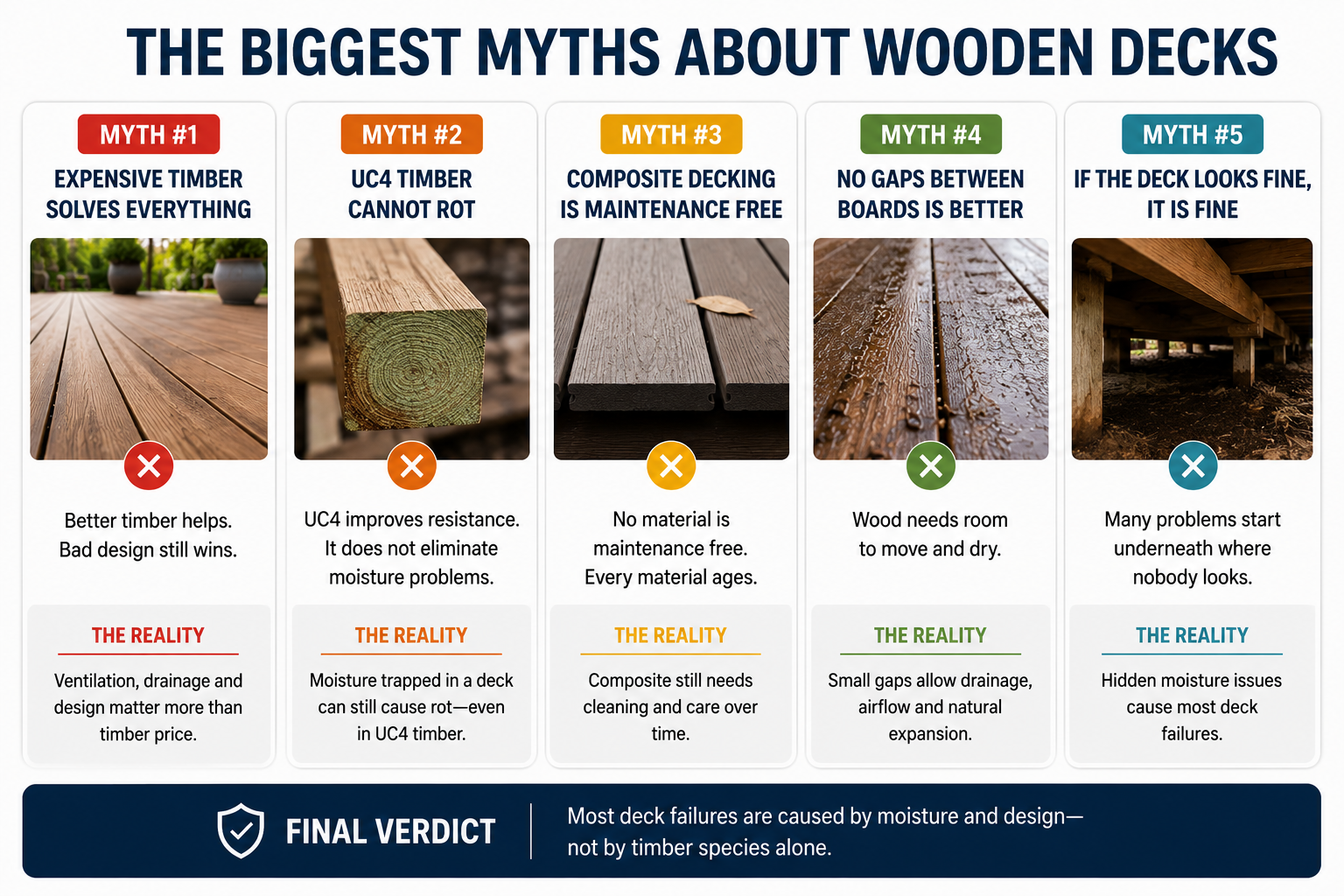
No. It may help create a cleaner, freer-draining base, but rot prevention still depends on suitable timber, correct treatment, drainage, airflow and avoiding long-term trapped moisture. Learn more about why wooden decks rot.
Use the ground layer to support good deck design
Geotextile and gravel are not rivals. They solve different parts of the same ground-preparation problem. Use geotextile when you need separation and vegetation control. Add clean gravel or crushed stone when you want a tidy, inspectable and potentially freer-draining surface. Then make sure the deck above has board gaps, ventilation and a real path for water to leave.
Sources:
Federal Highway Administration: Geotextile Separation, Filtration and Drainage
Federal Highway Administration: Subsurface Drainage and Separator Layers
US Forest Service: Guidelines for the Selection and Use of Pressure-Treated Wood