On this page
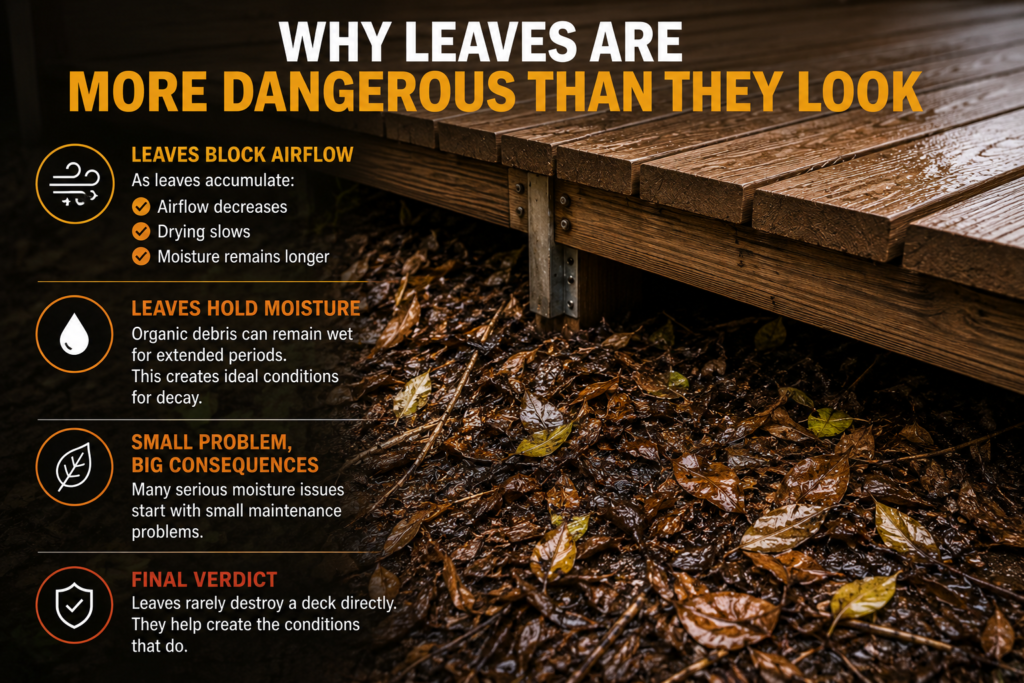
Wet leaves rarely damage a wooden deck in a single season, but they can create the conditions that lead to problems. A layer of organic debris holds water against the boards, blocks drainage gaps and can restrict airflow beneath the structure. The risk is highest where leaves remain wet, shaded and out of sight.
Clearing them is simple maintenance. The important part is noticing whether leaves are only making a mess or revealing a drainage, ventilation or design problem that needs attention.
| Where leaves collect | Why it matters | What to do |
|---|---|---|
| Between deck boards | Gaps cannot drain properly and wet debris keeps the board edges damp. | Brush the gaps clear and check that the original spacing is usable. |
| Against a wall, step, post or rail base | Water is held against a fixed detail that can already be slow to dry. | Clear the build-up and inspect for staining, soft wood or trapped water. |
| Under a low deck | Leaves can block the air space and hide standing water or damp soil. | Remove accessible debris and check drainage and ventilation around the perimeter. |
| At the deck edge or beneath a downpipe | Leaf litter can block the route where surface water should leave the site. | Clear the path and correct the water source if the same area stays wet. |
Why wet leaves are a deck problem
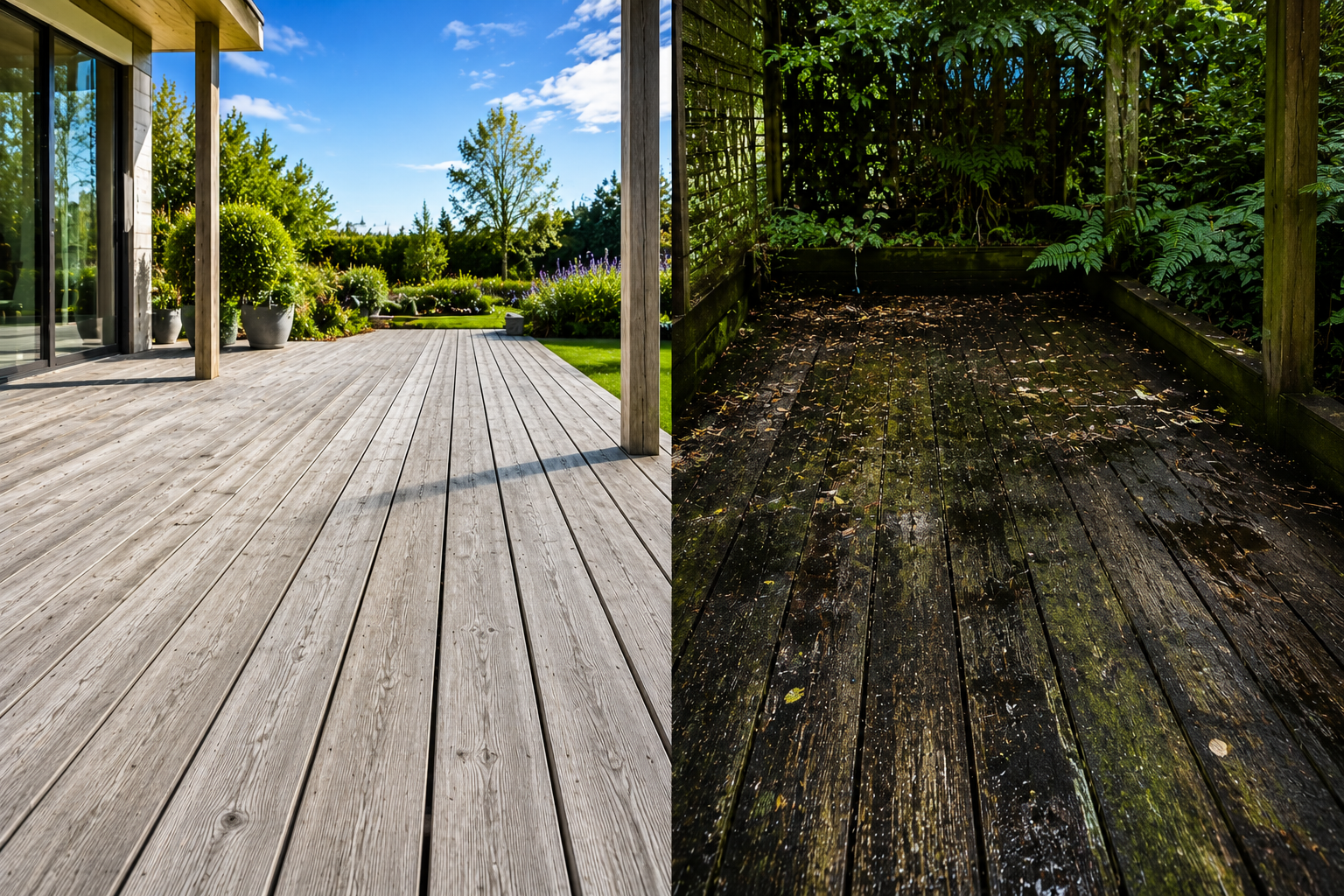
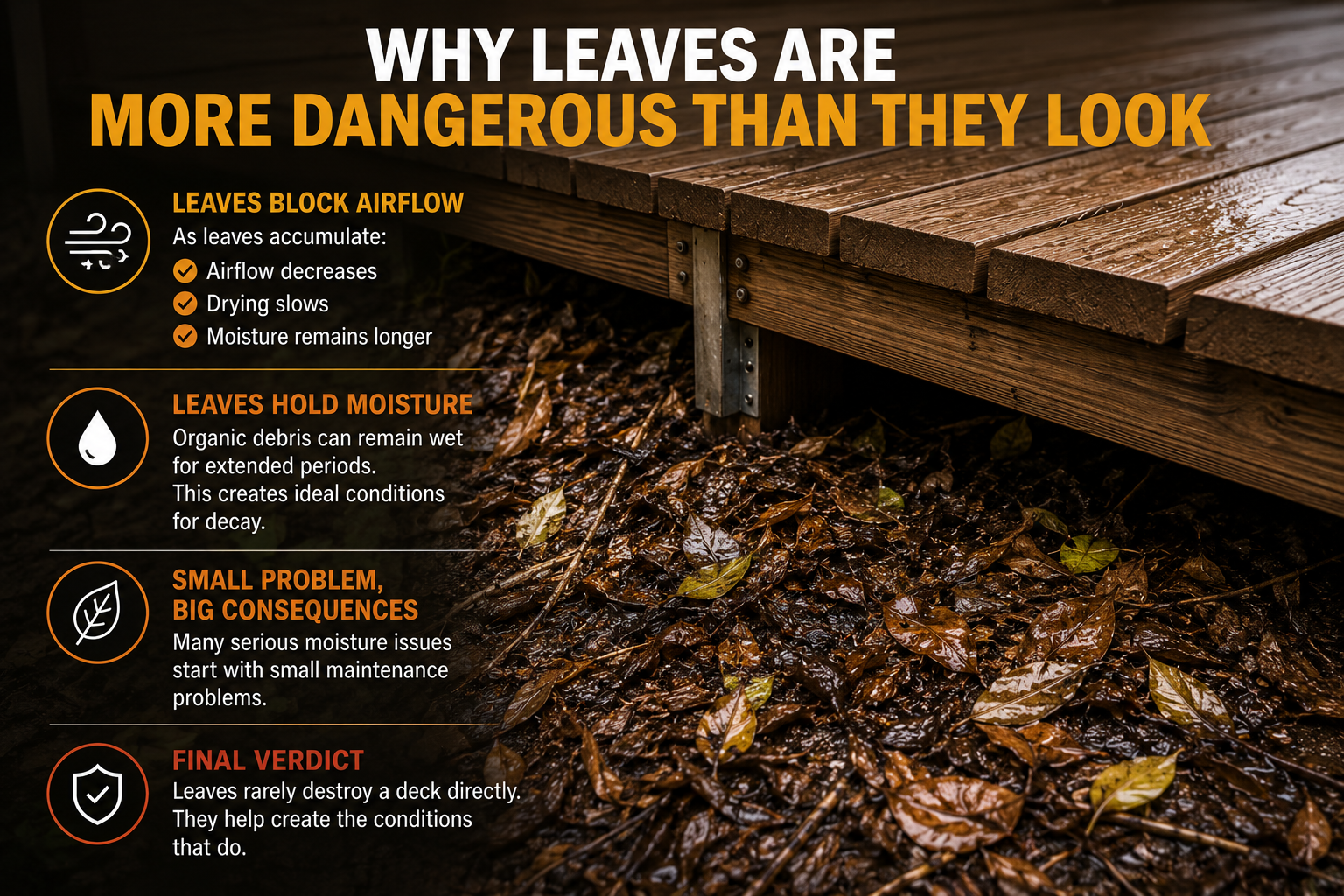
Dry leaves can be swept away easily. Once they become wet, they form a mat that stays damp longer than the timber around it. That mat holds moisture against board faces and edges, catches more dirt and can prevent rainwater from passing through the surface as intended.
Leaves do not cause fungal decay by themselves. They make a damp, slow-drying environment more likely, especially when combined with shaded ground, poor drainage or a deck with very little clearance below it. The US Forest Service guidance on wood biodeterioration explains why moisture and conditions that restrict drying are central to decay risk.
The four places worth checking after leaf fall
Deck-board gaps
Leaves and soil can lodge between boards and close the channels that shed water from the surface. When gaps stay full, water takes longer to leave and the board edges remain wet. If the gaps are too tight even after cleaning, that is an installation issue rather than a cleaning issue. See Deck Board Spacing for the correct role of those gaps.
Deck edges and junctions
Look where the deck meets walls, steps, planters, posts and rail bases. These details naturally catch windblown leaves, and they can dry slowly because water is held against another surface. Do not allow leaf litter to build up against the house or cover a drainage route.
The ground beneath a low deck
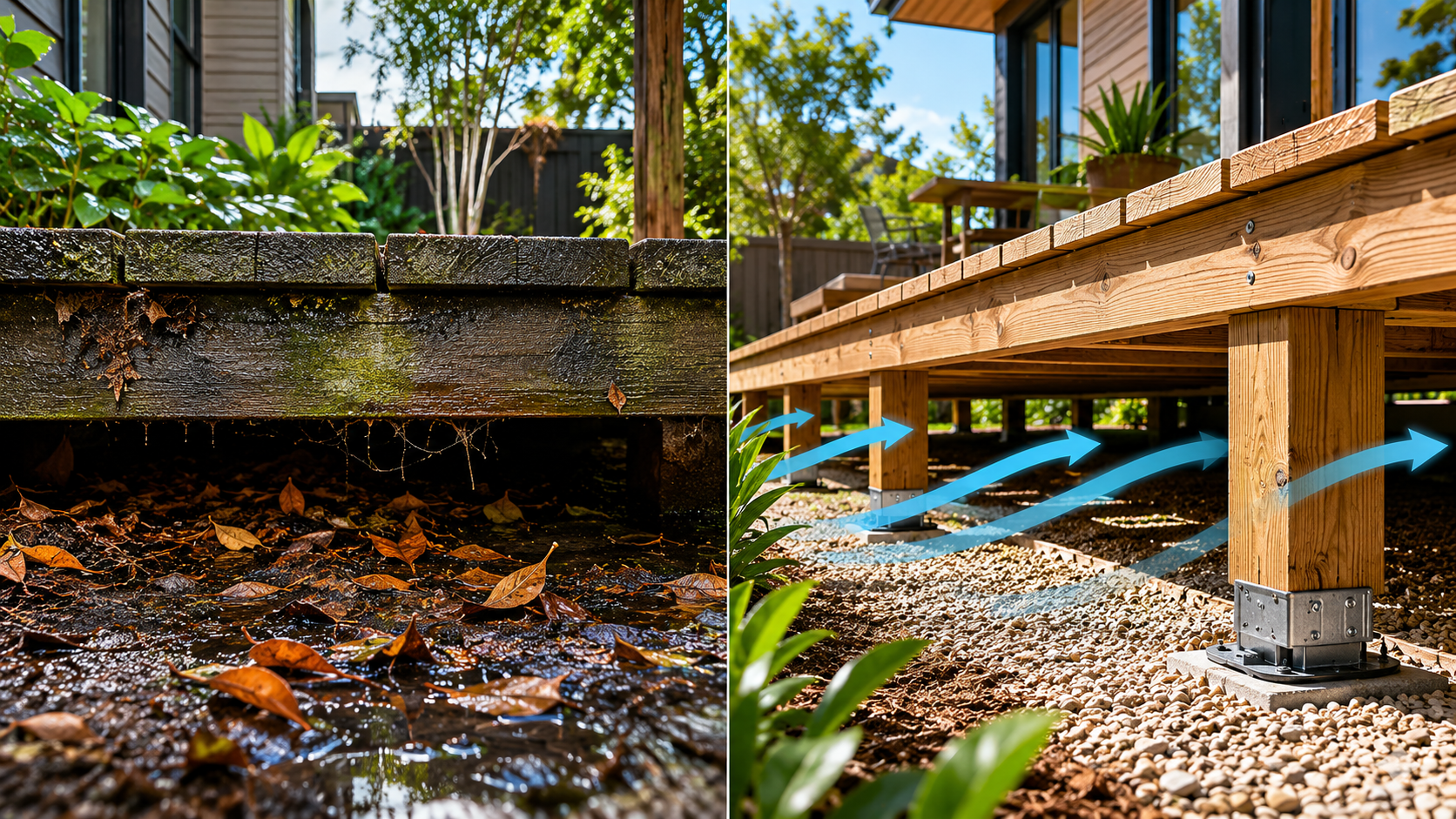
Leaves underneath are easy to forget because the top surface can look clean. If they accumulate over damp soil, they can hold moisture close to the joists and reduce the open space where air should move. Clear what is accessible, and look for the reason debris is not being washed or blown through.
Water outlets and the deck perimeter
A pile of leaves at the deck edge can reveal a bigger issue: rainwater may be running towards the structure instead of away from it. Check downpipes, surface falls and the ground around the deck. The goal is not a perfectly bare garden; it is to stop organic debris from blocking the route water needs to take.
How to clear leaves from a wooden deck
- Sweep the surface while the leaves are dry if possible. A soft broom or plastic rake is less likely to damage board edges than a sharp metal tool.
- Clear the gaps and perimeter. Use a brush or a narrow non-metal tool carefully; do not force material into the gaps.
- Remove accessible debris below the deck. Focus on areas near posts, joists, walls and the outer edge.
- Check what remains wet. After rain, revisit the same spots. Persistent puddles, a dark damp patch or repeated leaf build-up needs more than sweeping.
When cleaning is enough and when to investigate
Cleaning is usually enough when leaves are seasonal, the surface dries normally and the timber is firm. Make a note of areas that collect debris repeatedly, but do not assume ordinary leaf fall means the deck is failing.
Investigate further when boards remain dark and wet for days, the ground beneath stays soggy, gaps fill again immediately, a fixing loosens, timber feels soft or there is visible surface mould in one persistent area. Those signs point to water being trapped or the structure drying too slowly. Start with Why Wooden Decks Rot if you need to diagnose the underlying cause.
Autumn routine for decks near trees
In a garden with regular leaf fall, a quick sweep every week or two during the season is easier than a major clear-up after months of rain. Pay extra attention after storms and before winter. Clear the board surface, gaps, steps and the deck perimeter, then check below the frame when access allows.
This article is about the leaf-specific problem. For a wider seasonal routine covering fixings, drainage, ventilation and early damage, use the wooden deck maintenance checklist.
Frequently asked questions
Can wet leaves cause deck rot?
Not directly in a short period, but they can keep timber damp and block drainage. If that damp condition persists, it can contribute to the conditions in which decay develops.
How often should I remove leaves from my deck?
During heavy leaf fall, clear the surface and gaps every week or two, and after storms. The right frequency is the one that stops wet debris from remaining in the same place for long periods.
Are leaves under a deck a problem?
They can be, particularly beneath a low deck or near damp soil. They reduce the clear air space, hold moisture and hide drainage problems. Remove accessible debris and make sure water has a route away.
Do wet leaves affect composite decking too?
Yes. Composite boards do not decay like timber, but leaves can still stain the surface, block gaps and trap moisture around the subframe beneath them. Clearing debris remains part of normal maintenance.