On this page
- What UC4 treatment actually protects against
- Why UC4 timber still needs to dry
- Can UC4 timber still rot?
- Where poor ventilation causes the most trouble
- How to protect a UC4 deck subframe
- Signs that the deck is not drying properly
- UC4 timber ventilation questions
- Use UC4 together with moisture-conscious design
Yes, UC4 timber still needs ventilation. Poor airflow does not damage treated wood by itself, but it slows drying. If water, damp soil or wet debris keeps the timber moist for long periods, the risk of mould, corrosion around fixings and eventual decay increases.
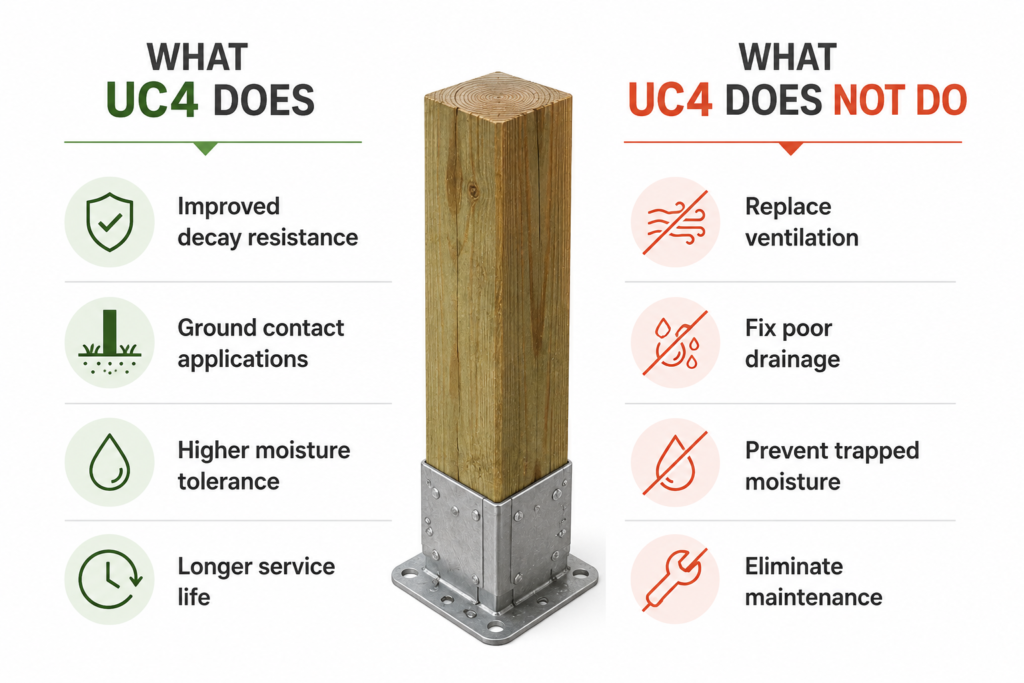
UC4 treatment gives deck joists, posts and other structural components more protection in demanding outdoor conditions. It does not make timber waterproof, and it cannot correct a detail that continually traps water.
What UC4 treatment actually protects against
UC4 is a use class, not a timber species or surface coating. It describes preservative-treated wood intended for contact with or close proximity to the ground, permanent exposure to fresh water, or exterior structural support.
The treatment places preservative into the timber to improve its resistance to wood-destroying organisms. The required penetration and preservative retention depend on the timber species and intended service life. A piece of wood should therefore be supplied and documented as UC4 rather than assumed to be UC4 because it is green, brown or described only as pressure treated.
In UK decking guidance, softwood deck boards are normally specified as UC3, while softwood joists and posts need UC4 treatment. The subframe is structural, harder to inspect and expensive to replace, so it requires the higher level of protection. Our UC3 vs UC4 timber guide explains the wider difference between the two classes.
Why UC4 timber still needs to dry
Preservative treatment reduces the risk of biological decay. It does not stop timber from absorbing water, swelling, shrinking or developing surface mould. It also does not protect metal connectors from moisture-related corrosion.
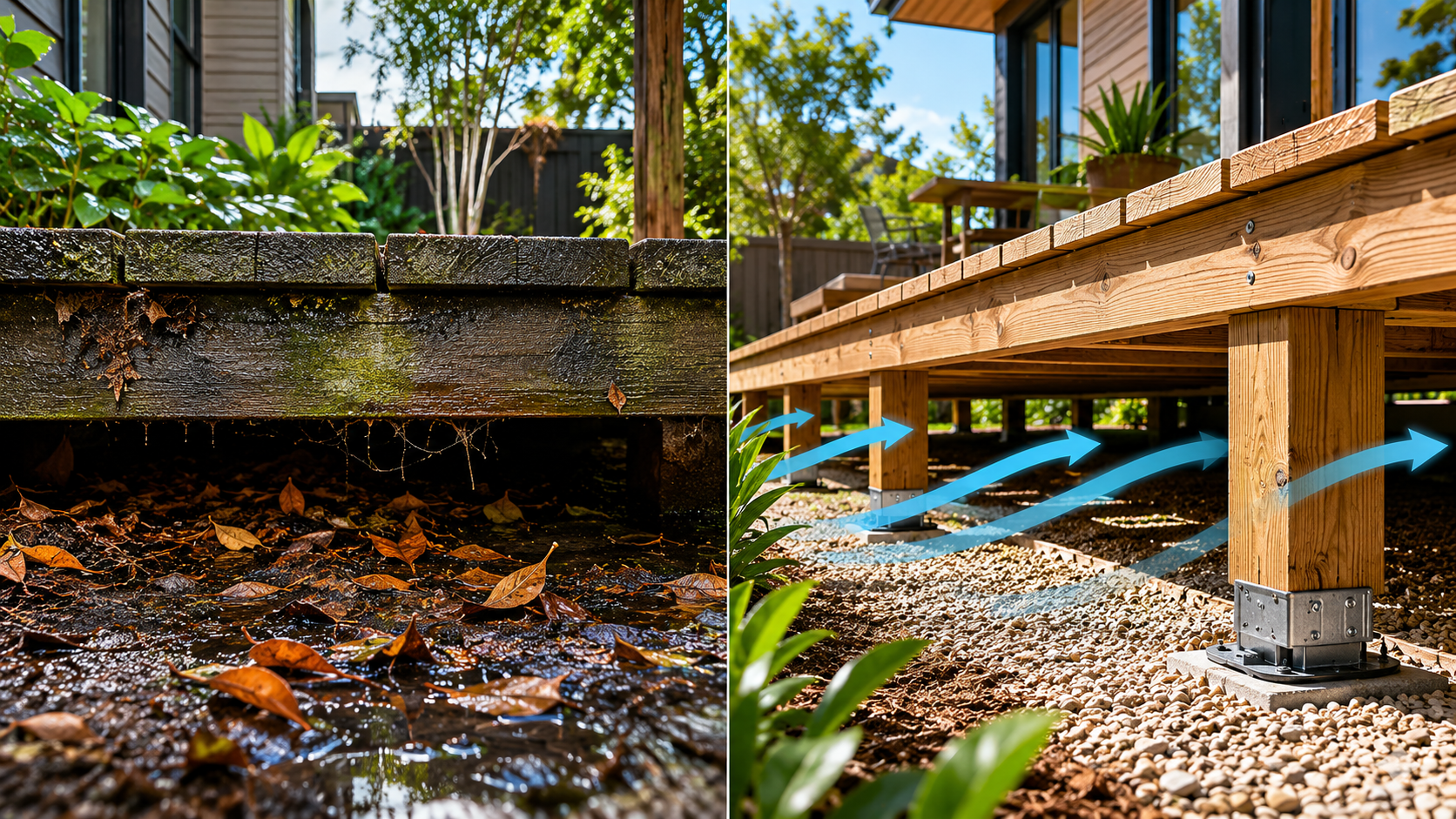
A deck subframe gets wet from rain, splashback, damp ground and condensation. Good construction gives that moisture somewhere to go. Drainage removes liquid water, while ventilation helps the remaining moisture evaporate.
Problems begin when the structure receives new moisture faster than it can release it. Common causes include blocked airflow, water collecting around posts, leaves packed between joists and a low deck built over persistently damp ground.
Can UC4 timber still rot?
UC4 timber can still rot. Correct treatment makes decay less likely and should extend service life, but performance also depends on treatment quality, timber species, installation details and maintenance.
Cutting, drilling or notching can expose areas that did not receive the same preservative penetration as the original surface. The Wood Protection Association advises applying an end-grain preservative to freshly exposed areas and not placing cut ends in the ground. The same guidance warns against forming a concrete pocket that holds water around the foot of a post.
The condition of the supplied timber matters too. A treatment certificate or written confirmation of the use class is more useful than colour alone. For structural decking, also check the required strength grade and the supplier's installation instructions.
Where poor ventilation causes the most trouble
Low-level decks are particularly vulnerable because there is less room for air to move beneath the frame. The risk rises when solid skirting closes every side, nearby planting blocks openings or the ground below stays wet after rain.
Connections deserve extra attention. Water and organic debris can collect where joists meet beams, around posts and beside the building. These sheltered areas often dry more slowly than an exposed face, even when the rest of the timber looks sound.
Board spacing also affects how quickly water leaves the surface. Gaps must suit the board material, moisture condition and supplier's specification. Read our guide to spacing between deck boards before fixing them.
How to protect a UC4 deck subframe
Start with the moisture source rather than adding more preservative to an existing problem. The following checks cover the main failure points:
- Confirm the specification. Ask for UC4 treatment to be stated on the invoice, delivery note or treatment certificate.
- Give water a route out. Correct low spots and details that allow water to sit against joists, beams or posts.
- Keep airflow paths open. Do not seal every side of a low deck without a ventilation strategy.
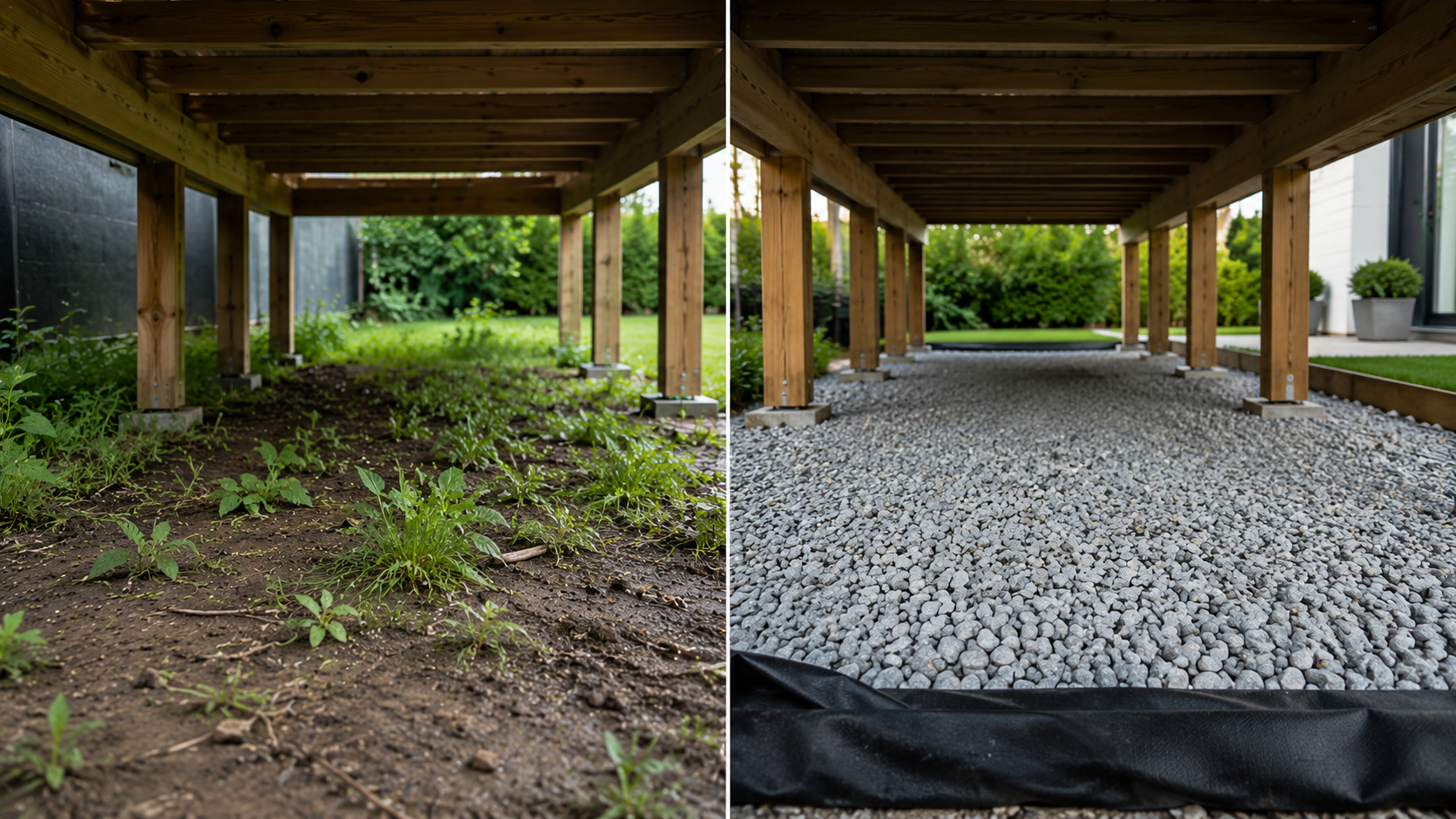
- Control moisture below the deck. Improve drainage and prevent vegetation or wet organic material from touching the frame.
- Protect site cuts. Treat freshly cut or drilled surfaces as required by the timber supplier and preservative manufacturer.
- Remove trapped debris. Clear leaves and soil from corners, joints and the space around supports.
- Inspect hidden timber. Look for persistent dampness, soft fibres, cracking around connections and corroding fixings.
There is no single ventilation gap that works for every deck. The required clearance and opening area depend on the deck layout, surrounding walls, ground conditions, local climate and the products used. Follow the designer's details, local building requirements and the timber supplier's instructions rather than relying on a universal number.
If the soil below the deck stays wet or supports heavy vegetation, improving the base can help with drainage and maintenance. Compare the options in our guide to using gravel or geotextile under a deck.
Signs that the deck is not drying properly
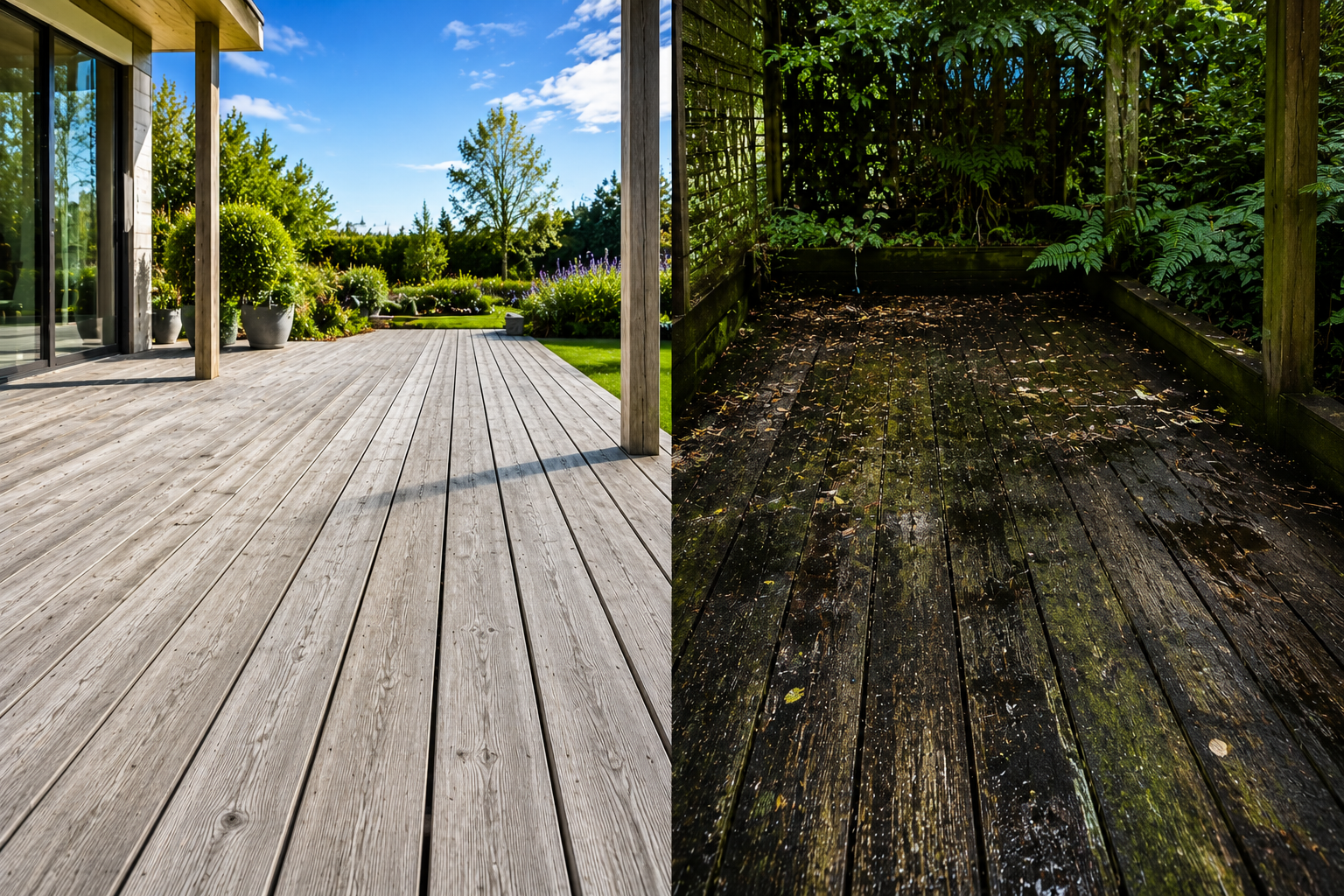
Surface mould or algae does not automatically mean the structure has rotted, but it shows that moisture is lingering. A persistent musty smell, dark damp areas that remain after dry weather, soft timber or movement at connections needs closer investigation.
Structural joists and posts are not the place for guesswork. If the timber feels soft, fasteners are badly corroded or the deck moves under load, restrict access and ask a competent professional to inspect it. Cleaning or adding vents will not restore timber that has already lost structural capacity.
UC4 timber ventilation questions
Is UC4 timber waterproof?
No. UC4 treatment improves resistance to biological decay in demanding conditions, but the timber can still absorb and release moisture. Drainage, drying and suitable fixings remain important.
Does mould mean UC4 timber is rotting?
Not necessarily. Surface mould can grow without serious loss of strength, while decay fungi break down the wood itself. Mould is still a warning that the area is staying damp and that the moisture source should be checked.
Can ventilation make UC3 suitable for deck joists?
Do not use ventilation to justify a lower treatment class than the component requires. Timber Development UK specifies UC4 preservative treatment for softwood deck joists and posts, including deck subframes that are not in direct soil contact.
Should a low deck have solid skirting?
Solid skirting can restrict cross-flow and make inspection difficult. If the sides need to be enclosed, the design should include openings or another documented ventilation approach suited to the site.
Use UC4 together with moisture-conscious design
UC4 is the correct protection level for softwood deck joists, posts and other exterior structural supports in UK industry guidance. It is a safety measure, not permission to trap water around the frame.
Specify genuine UC4 timber, protect site cuts, drain water away and keep the subframe accessible enough to dry and inspect. Those measures work together. For a closer look at moisture pathways and early warning signs, see why wooden decks rot.
Technical references: Wood Protection Association guidance on UC4 treated wood and Timber Development UK decking guidance.