On this page
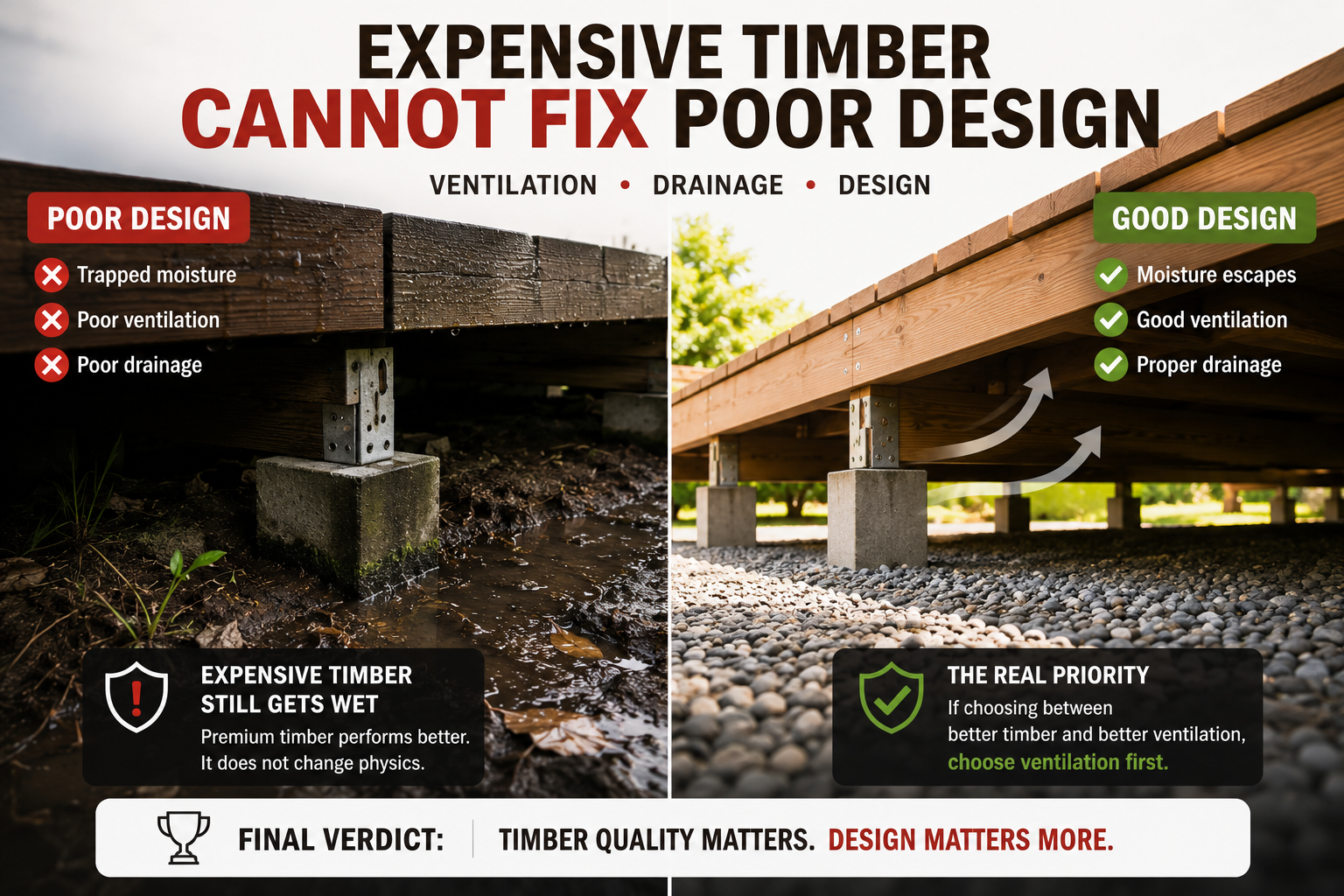
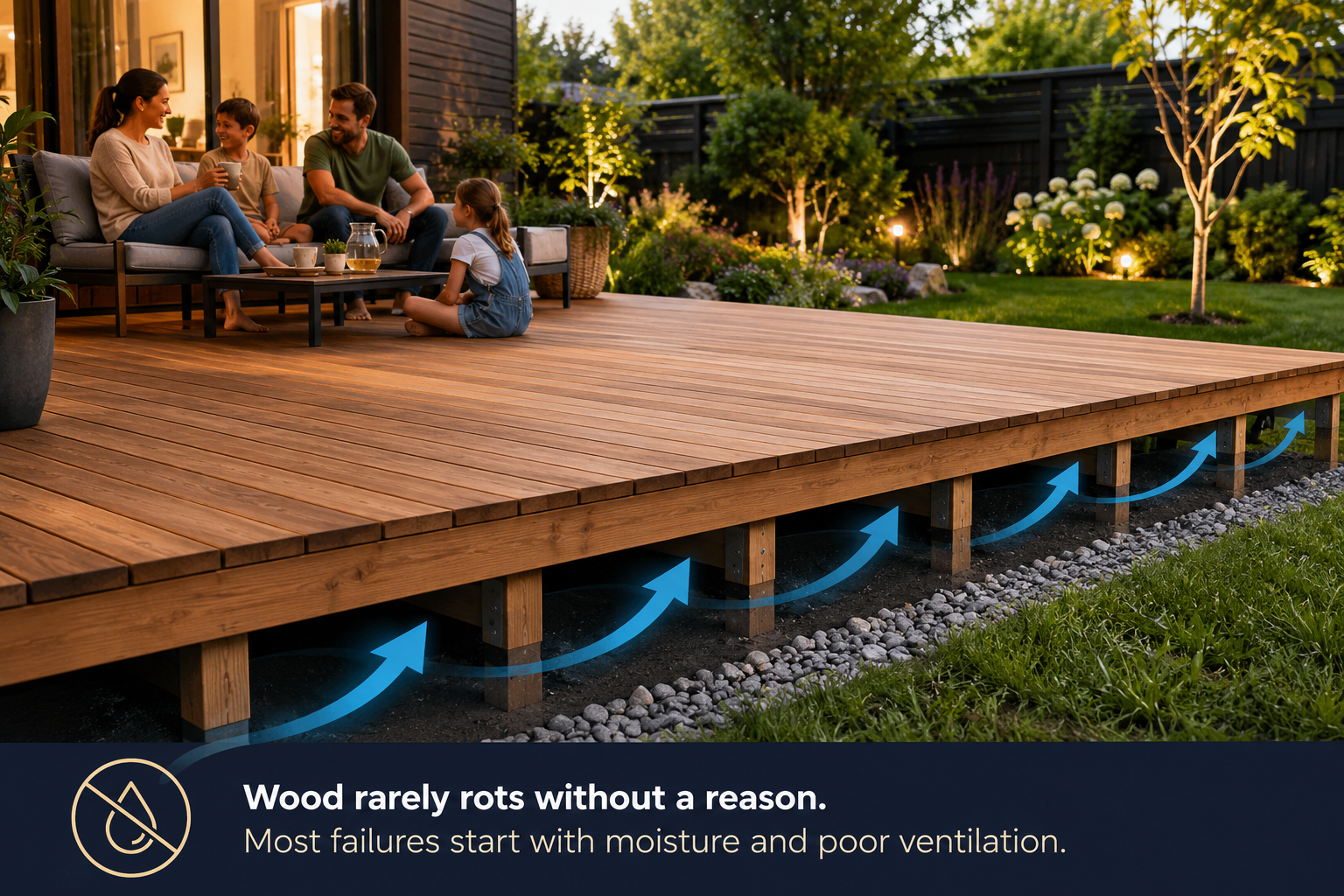
Wooden decks rot when timber stays wet for long enough that it cannot dry between wetting cycles. The usual causes are water held against the structure, blocked drainage gaps, poor airflow below a low deck, contact with damp ground and details such as cut ends or joints that remain wet. The timber species and treatment class matter, but neither can correct a design that repeatedly traps moisture.
The good news is that rot normally has a cause you can find. Start with the damp location, then work backwards to the water path, debris, ground conditions and the specification of the affected timber.
| What you notice | Common underlying cause | First check |
|---|---|---|
| Dark timber that stays wet after surrounding areas dry | Water trap, blocked drainage or restricted airflow | Board gaps, deck edge, ground level and nearby downpipes |
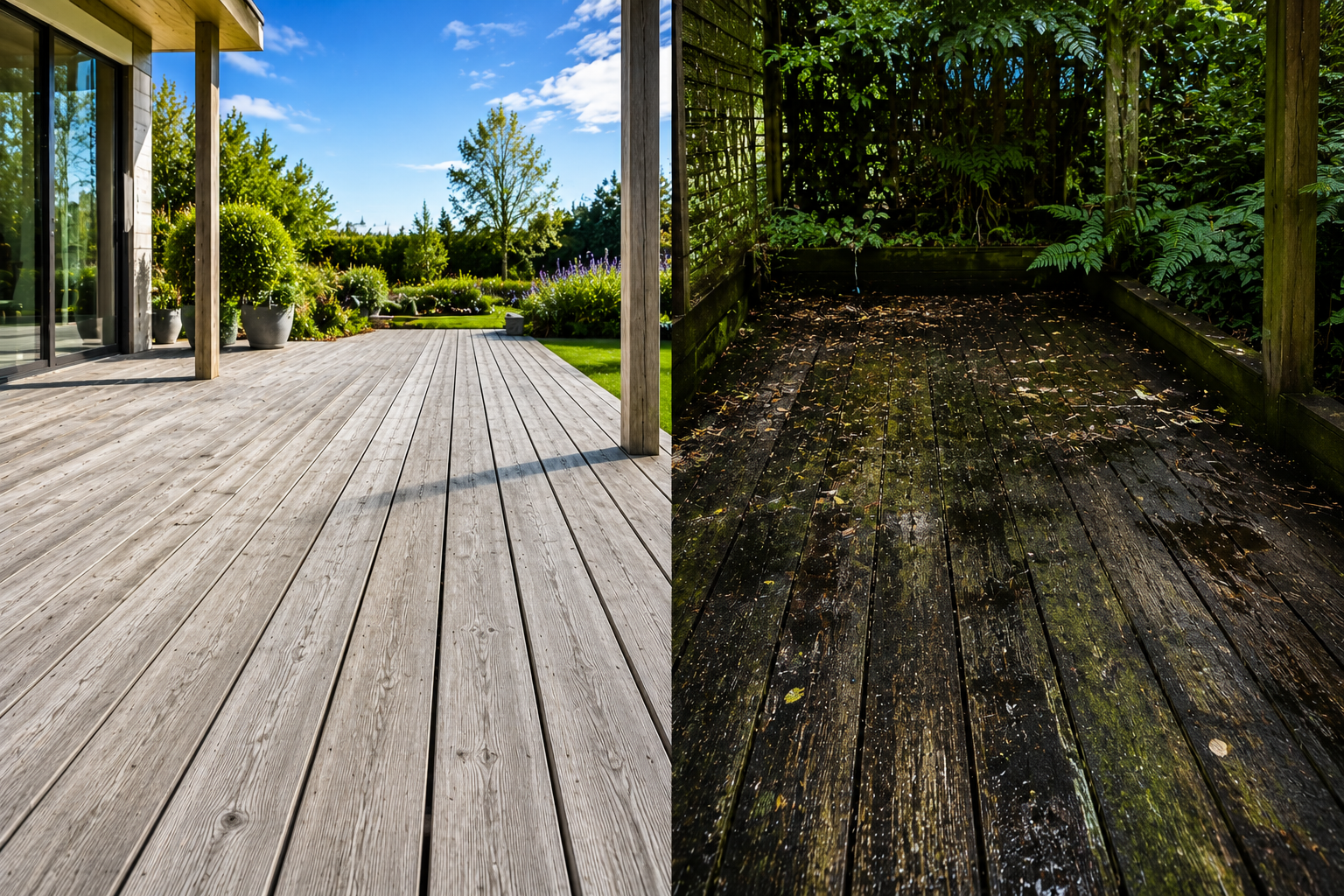
| Moss, mould or algae in one repeated area | Shade and persistent surface moisture | Leaves, soil, planters and poor runoff in that location |
| Soft wood, crumbling fibres or a fixing that no longer holds | Possible decay in the board or hidden subframe | Extent of the damage and the joist or support behind it |
| Boards lifting, cupping or pressing together | Moisture movement, tight gaps or water held on the surface | Board spacing, fixings and how quickly rain leaves the deck |
What actually causes deck rot
Decay fungi need favourable conditions, especially persistent moisture in the wood. Rain by itself does not automatically rot a deck: an exposed deck that drains and dries can perform well for years. The risk rises when water is repeatedly held in the same place, so that the timber remains damp for long periods.
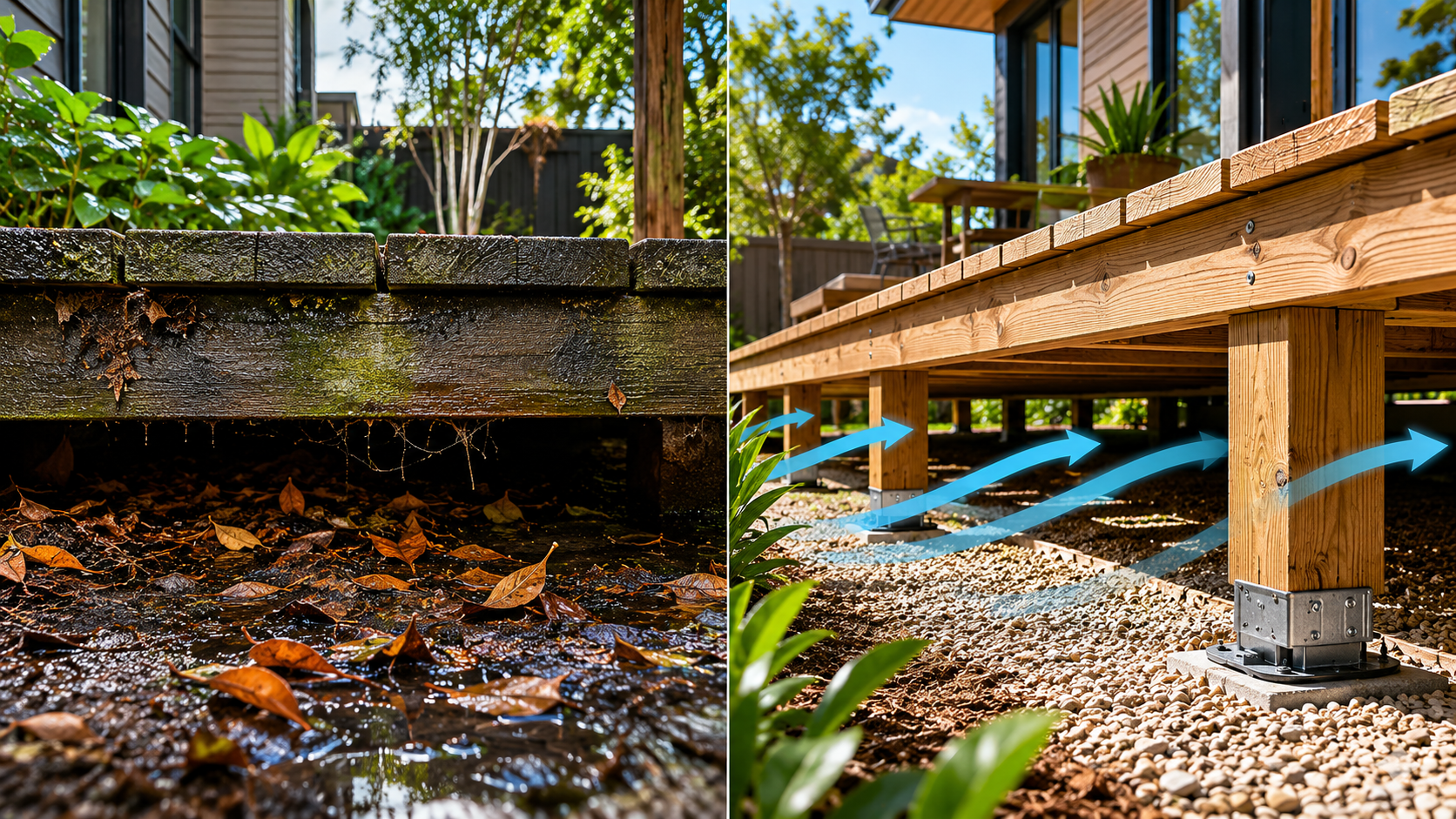
That is why the underside of a deck often needs more attention than the surface. It receives less sun and air, collects organic debris and can sit above damp soil. The US Forest Service guidance on wood biodeterioration explains the central role of moisture conditions in fungal decay.
The four moisture traps that cause most problems
1. Water has nowhere to go
A downpipe discharging beside the deck, a low spot in the ground or a surface that falls towards the house can keep the same area wet after every shower. Gravel or geotextile can improve ground conditions in the right situation, but neither one replaces a real drainage path. See What to Put Under a Deck for the role of each layer.
2. The under-deck space cannot dry
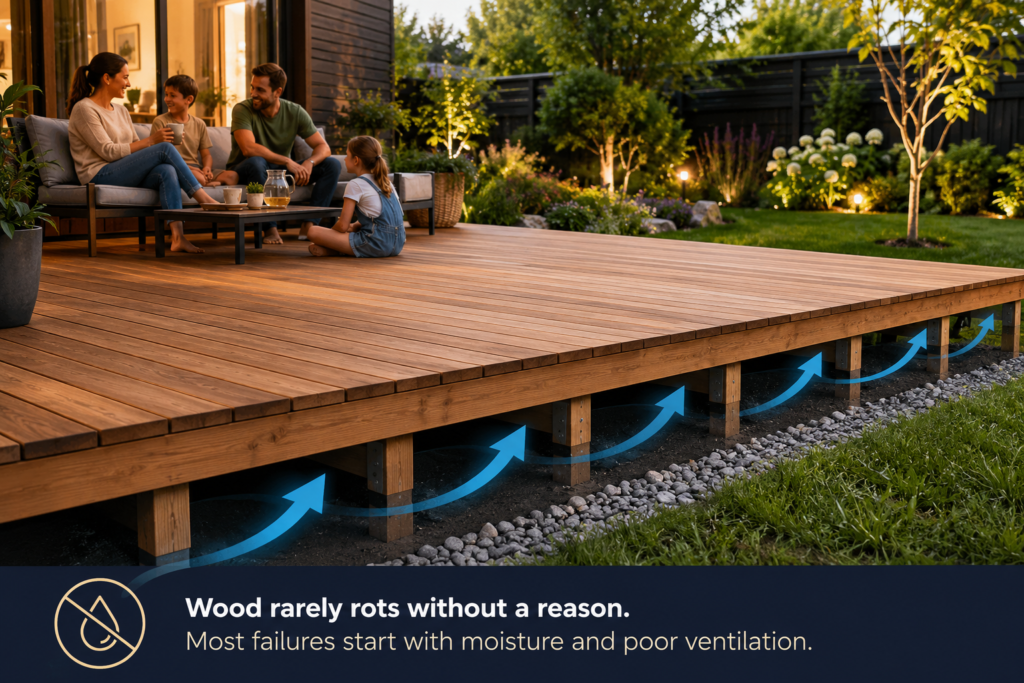
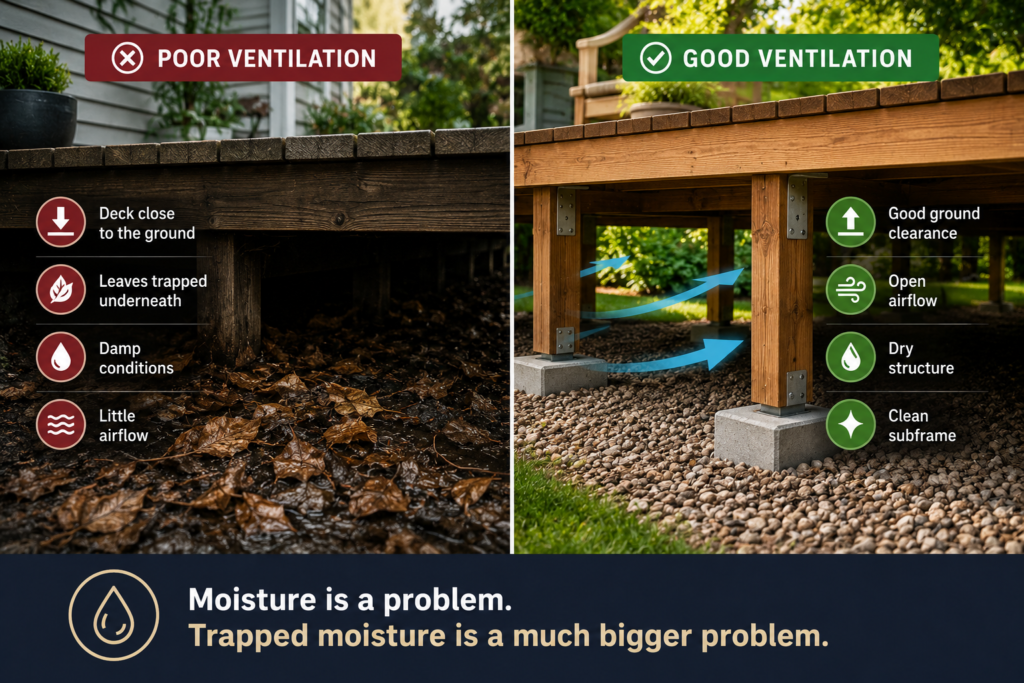
Low clearance, closed skirting, dense planting, stored items and wet soil can all reduce drying beneath the frame. An open, accessible space does not guarantee a dry deck, but it makes it much easier for moisture to leave and for problems to be seen early.
3. Leaves and debris block the drainage detail
Wet leaves, soil and moss can fill the spaces between boards and collect around posts, wall junctions and deck edges. They hold moisture against the timber and hide the place where water should escape. Read why wet leaves are a deck problem for a focused seasonal routine.
4. The timber or site-cut detail does not suit the exposure
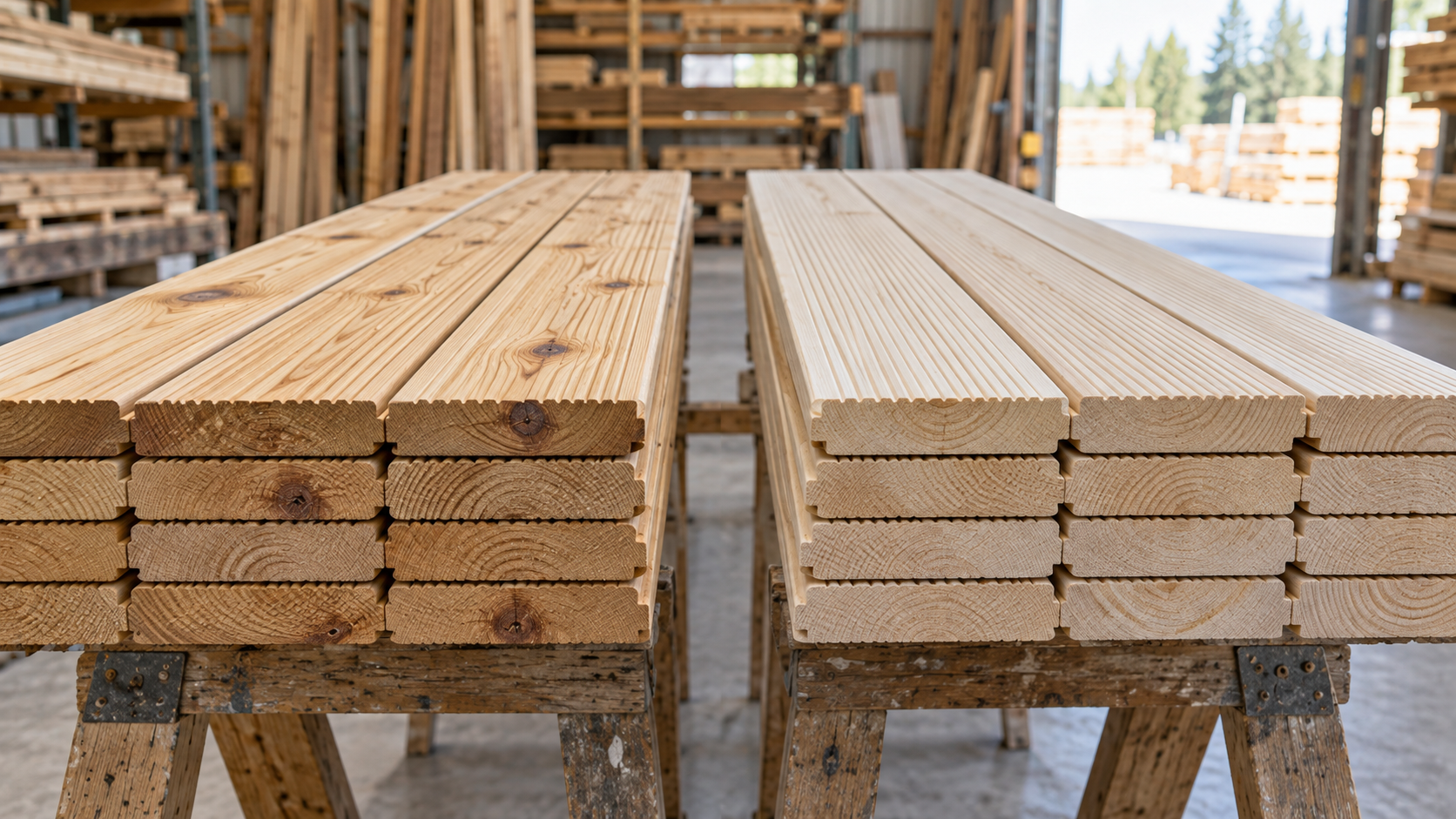
Above-ground deck boards, hidden joists and posts near soil do not face the same hazard. The treatment class and strength grade should suit each component. Fresh cuts, drilled holes and notches may expose less-protected wood, so use the cut-end treatment specified for the timber system. UC3 vs UC4 Timber explains how to specify visible boards and structural support timber separately.
Where rot usually starts first
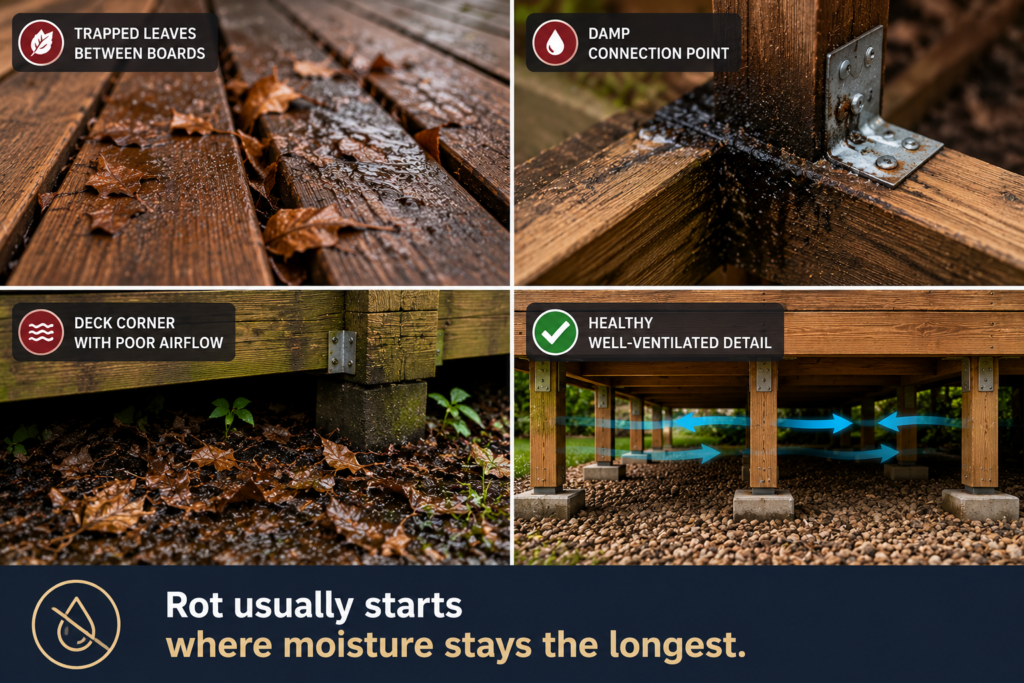
Decay rarely begins in the middle of a dry, exposed board. Inspect joints, joist ends, the underside near posts, board ends, corners that receive little air and places where leaves collect. These locations remain wet longest and are often the first to show dark staining, surface growth or softened wood.
Is it surface mould, local damage or structural rot?
Surface mould, algae and staining are warnings that an area stays damp; they do not by themselves prove that the deck is structurally unsound. Clean the surface, remove the moisture source and watch whether the area dries normally afterwards.
Soft wood, crumbling fibres, deep checks around a fixing, a spongy feel underfoot or movement in a connection need a closer inspection. Check from below where possible. If the affected part is a joist, beam, post or a load-bearing connection, treat it as a structural issue rather than a cosmetic repair.
Can a rotting deck be repaired?
Often, but replacing a visible board is only useful when the joist and the cause of the moisture are sound. A local board can usually be replaced after the drainage path, gap or debris problem has been corrected. Inspect the supporting timber before fixing a new board over the same conditions.
When decay affects joists, beams, posts, stair supports or connections, the repair may involve temporary support and a structural assessment. Do not rely on a coating, wood filler or a new surface board to solve damage in a load-bearing member. Ask a qualified deck contractor or structural professional to inspect any doubtful structural component.
How to prevent deck rot
- Specify timber by component. Use the correct treatment class and strength grade for boards, joists, beams and posts.
- Give water a path away. Correct downpipe discharge, surface falls and any area of standing water near the deck.
- Keep board gaps open. Spacing lets water and debris escape while allowing timber movement. See Deck Board Spacing.
- Preserve the under-deck air space. Keep leaves, stored items and dense vegetation from closing it off.
- Protect site cuts. Follow the supplier’s guidance for freshly cut or drilled treated timber.
- Inspect after wet seasons. Look below the deck as well as at the visible surface.
For a complete routine, use the wooden deck maintenance checklist. It covers cleaning, fixings, drainage and the checks to make before a small moisture issue becomes a repair.
Frequently asked questions
Why is my deck rotting underneath?
The underside usually dries more slowly than the top. Check for damp soil, restricted airflow, leaves and debris, low clearance and water running towards the deck.
Does mould mean my deck is rotting?
Not necessarily. Mould can be a surface sign of persistent dampness. Treat it as a reason to find the moisture source, then inspect the timber for softness or damage.
Can pressure-treated wood still rot?
Yes. Correct treatment improves resistance to decay, but it does not make timber waterproof or correct a design that traps water. The correct treatment class, drainage and drying still matter.
How often should I inspect a wooden deck?
Give it a quick visual check through the year and a closer inspection at least annually, particularly after winter or a wet autumn. Check the underside whenever access allows.