On this page
- What expensive timber can improve
- What no timber choice can fix
- How poor design damages even premium timber
- Is premium timber worth paying for?
- Where to spend your deck budget first
- Choose treatment for the exposure, not the price tag
- Signs that design needs attention before you upgrade timber
- Good timber and good design work together
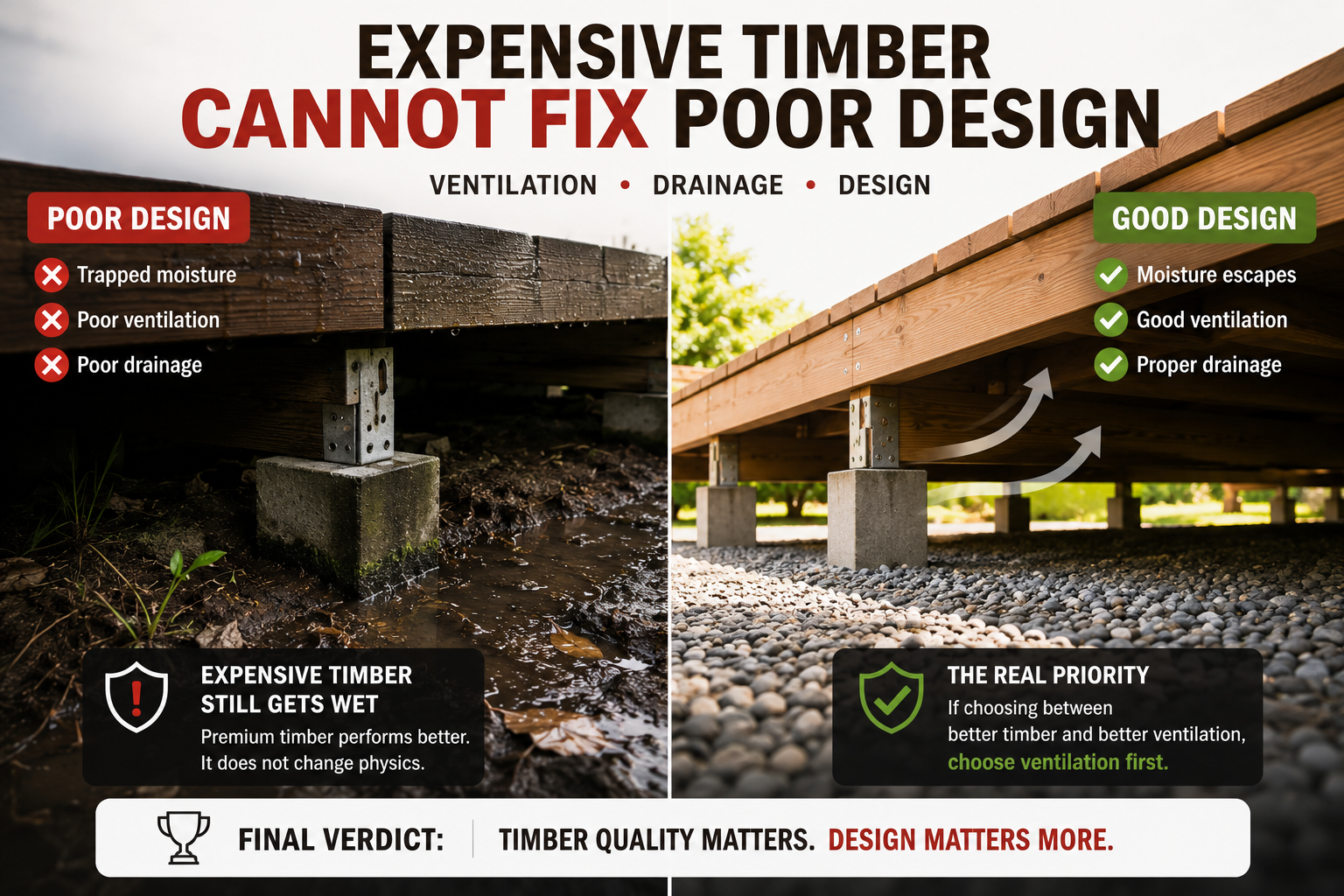
No. Expensive timber can give a deck a better appearance, greater natural durability or better dimensional stability, but it cannot fix a design that keeps the wood wet. If rainwater cannot drain, air cannot move beneath the boards or timber sits in persistent moisture, even a premium deck will age faster than it should.
That does not mean that premium timber is a waste of money. It can be a very good choice once the structure is right. The important question is not simply “Which is the best timber?” but “What is the first weak point in this deck?”
What expensive timber can improve
More expensive timber can offer real advantages. Depending on the product, it may be naturally more durable, modified for better stability or selected for a more consistent appearance. Some species and modified products also weather more predictably than basic softwood.
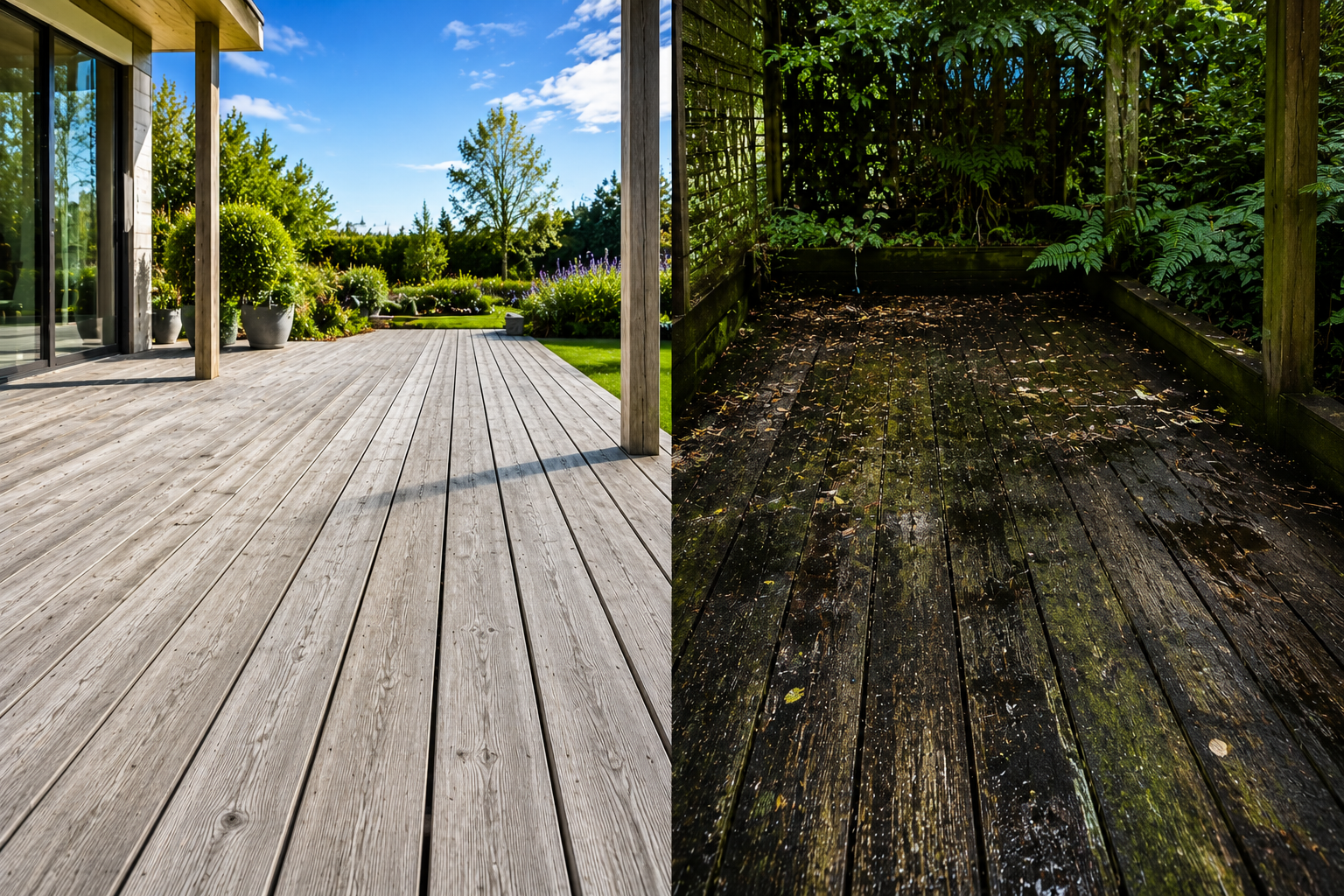
Those benefits can matter if the deck is highly visible, receives heavy use or needs to keep a particular look for longer. Premium boards may reduce how quickly the surface checks, cups or loses visual uniformity. They do not, however, change the basic relationship between wood and moisture.
All outdoor timber needs a way to dry. It also needs treatment or natural durability that matches its actual exposure. For example, deck boards raised above ground have different requirements from structural posts, joists or beams that remain close to damp ground.
What no timber choice can fix
Material quality cannot compensate for a deck that creates moisture traps. The following problems are design and installation issues first:
- Boards laid with no usable gaps for water and debris to clear.
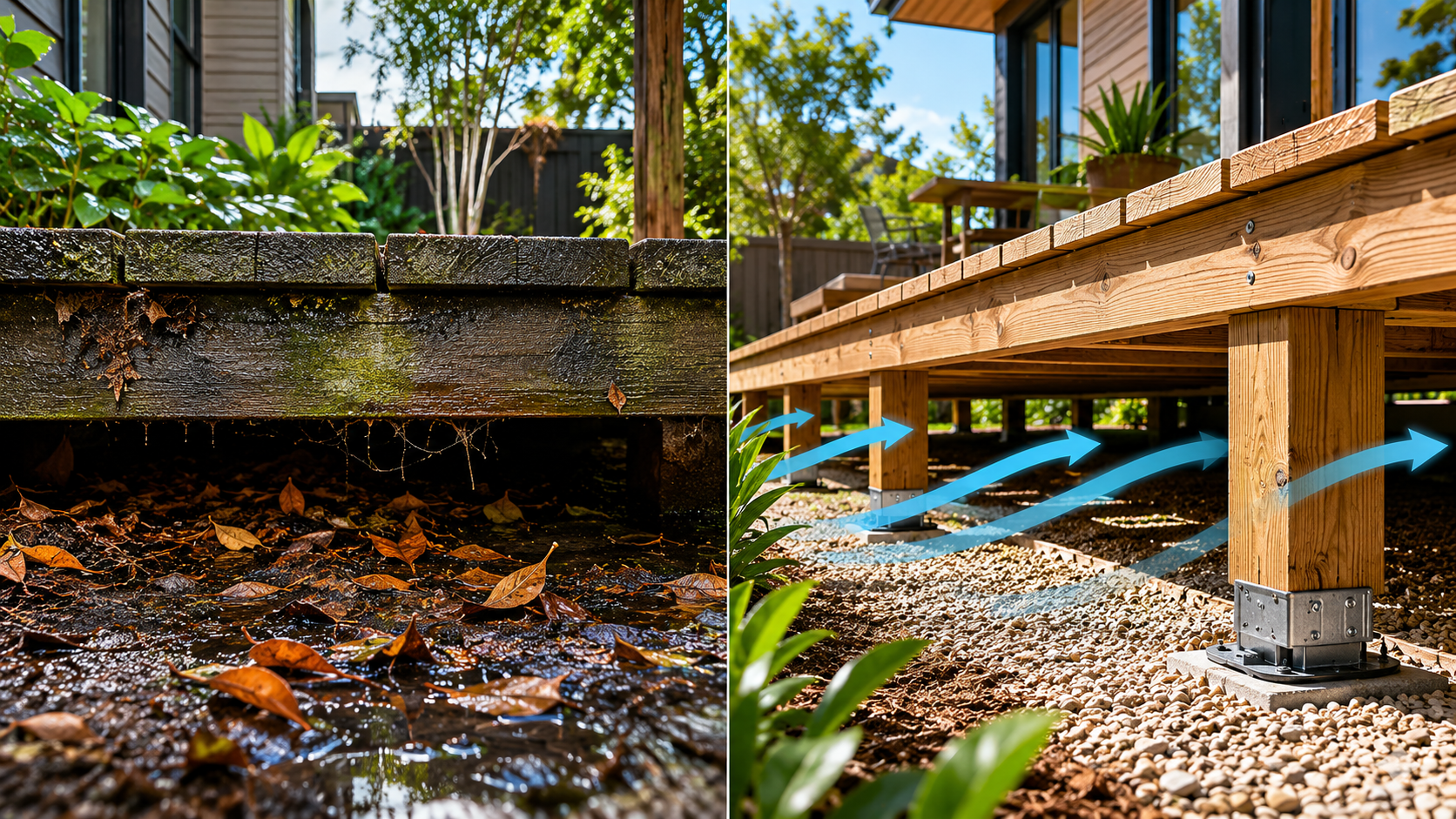
- A deck built too close to the ground for air to circulate below it.
- Joists or posts left in conditions where they stay wet for long periods.
- Flat details that hold puddles instead of directing water away.
- Leaves, soil, mats or planters holding moisture against the timber.
- Unprotected cut ends, notches and drilled holes that expose untreated wood.
A durable board on top cannot protect a poorly detailed substructure beneath it. In fact, the hidden structure is often where a deck first develops serious decay, because it receives less sun and less airflow than the visible surface.
How poor design damages even premium timber
Wood absorbs moisture and then releases it as it dries. That movement is normal. Problems begin when the timber repeatedly becomes saturated, dries unevenly or remains wet long enough for decay fungi to become active.
Consider a deck with tight board spacing and limited clearance above the ground. Rainwater, leaves and dirt settle in the gaps. The boards may look dry from above, while the underside and joists remain damp for days. Over time, that environment can cause staining, surface mould, checking, distortion and eventually decay.
Premium timber may resist this process for longer, but it does not remove the cause. A better design changes the conditions themselves by allowing water to leave and air to reach the timber.
Is premium timber worth paying for?
Yes, sometimes. The value depends on what you are paying for and whether the rest of the build supports that investment. A higher price can buy appearance, natural durability, modification, stability or a longer desired service life. It should not be treated as an insurance policy against poor drainage or poor ventilation.
| Option | What it can offer | What it still cannot do |
|---|---|---|
| Appropriately pressure-treated softwood | Good biological protection at a lower material cost when the correct use class is specified | Prevent water from pooling, improve ventilation or protect cuts that are left untreated |
| Premium naturally durable or modified timber | Higher natural durability or stability, and often a more refined appearance | Make a damp, poorly ventilated deck dry out quickly |
| Premium timber in a poor design | May delay visible deterioration | Guarantee a long service life or save a failing substructure |
For many raised decks, good pressure-treated softwood used in the right place is a sensible choice. The Timber Decking and Cladding Association notes that pressure-treated deck boards for above-ground outdoor use should be specified to at least Use Class 3, while structural deck components need greater protection and are commonly specified to Use Class 4. Always ask the supplier to confirm the treatment and intended use rather than relying on colour or a vague “treated” label.
Premium timber becomes easier to justify once the basics are already funded. It can be a good investment when you value a particular appearance, want a more stable board, have a highly exposed deck or expect heavy use. It is a poor trade if choosing it means cutting the budget for foundations, drainage, ventilation or the structural timber beneath the boards.
Where to spend your deck budget first
When funds are limited, put money into the parts that control moisture before spending it on the appearance of the top boards. A practical order is:
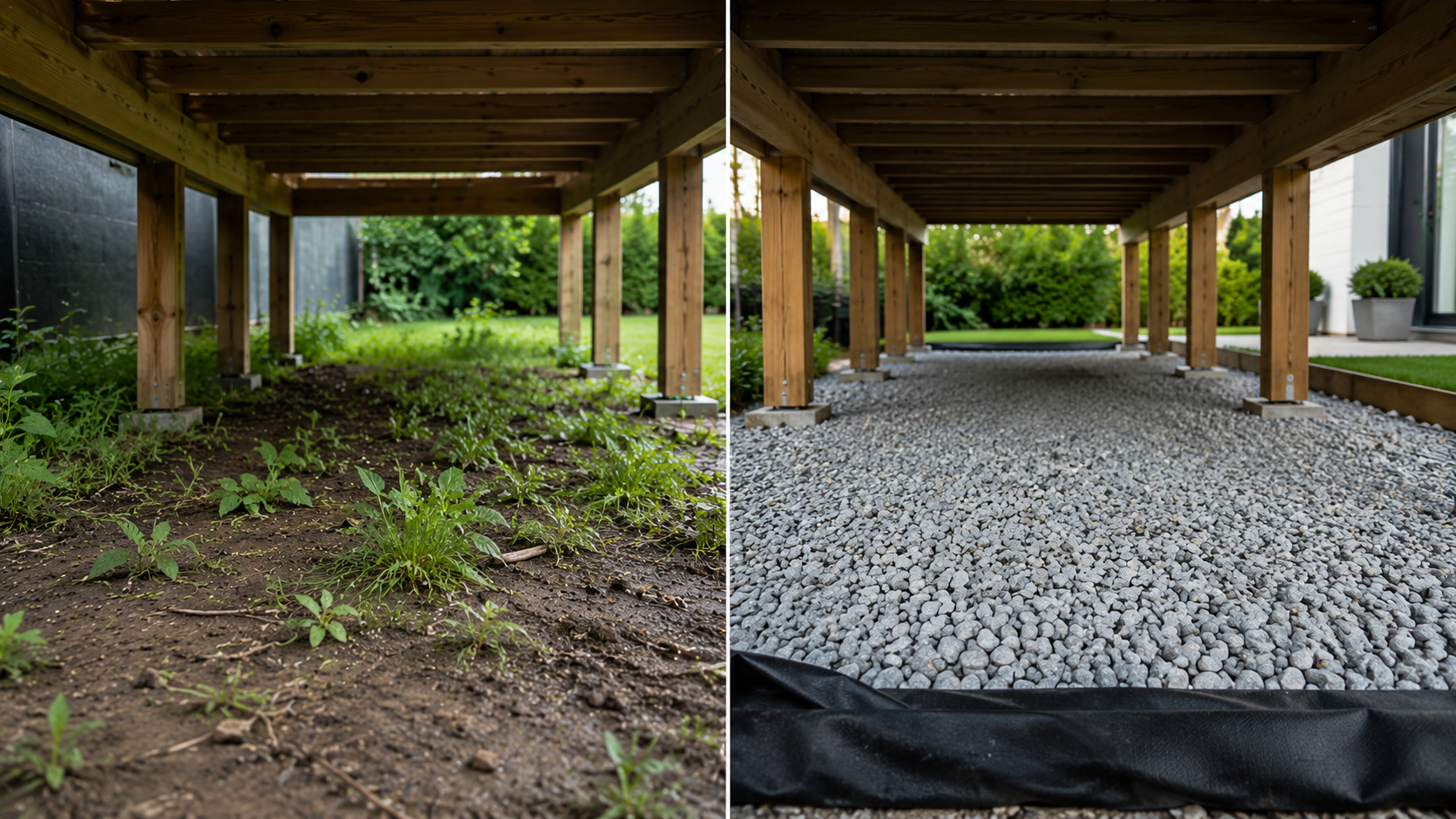
- Ground preparation and drainage. Water should not collect around posts or beneath the deck.
- A sound substructure. Use timber with the right structural capacity and treatment level for its exposure.
- Clearance and ventilation. Leave enough open space for the underside to dry after rain.
- Board spacing and careful detailing. Water and debris need a route out; cut ends and notches need protection.
- Suitable deck boards. Choose treated, naturally durable or modified timber to suit the final design and your priorities.
- Surface appearance. Oils, finishes and a premium species can be worthwhile, but they come after the moisture-control work.
This order is not an argument for buying the cheapest boards available. It is a way to avoid spending most of the budget on the visible layer while underfunding the parts that determine whether the whole structure lasts.
Choose treatment for the exposure, not the price tag
Pressure treatment is useful only when it is appropriate for the component and exposure. A deck board above ground, a low joist close to wet soil and a post in ground contact do not face the same moisture risk. They should not automatically receive the same specification.
In the UK use-class system, UC3 covers outdoor timber above ground that is exposed to frequent wetting. UC4 is intended for more severe exposure, including ground or fresh-water contact and situations with persistent wetting. The right choice depends on how and where each piece of timber is used, not on whether it is the most expensive product in the merchant's yard.
Industrial pressure treatment also matters. A brush-on product is useful for treating fresh cuts where the manufacturer specifies it, but it is not a replacement for factory treatment of timber that will serve outdoors. For a closer comparison, see UC3 vs UC4 Timber: Which Treatment Class Do You Need?.
Signs that design needs attention before you upgrade timber
Pause before choosing a premium board if any of these apply to the planned deck:
- There is no clear route for rainwater to drain away.
- The deck will sit low over soil, concrete or another surface that stays damp.
- The underside will be boxed in without ventilation openings.
- Planters, rugs or built-in storage will keep parts of the deck permanently shaded and damp.
- The substructure specification is unclear or based only on the treatment colour.
Resolve these points first. Guidance on what to put under a deck and why UC4 timber still needs ventilation can help you plan the moisture path before you order materials.
Good timber and good design work together
The strongest deck specification combines both. Use a timber product with the right durability and treatment, then build so that it can shed water and dry quickly. That approach protects the visible boards and the hidden structural parts that are expensive to replace.
So, can expensive timber fix a poorly designed deck? No. But once the deck has drainage, ventilation and the right treatment classes, better timber can be a sensible upgrade for performance and appearance. If you are diagnosing an existing problem, start with why wooden decks rot rather than replacing boards alone.
Sources:
Timber Decking and Cladding Association: Specification for Timber Decking
Timber Decking and Cladding Association: Timber Preservation Treatment
US Forest Service: Guidelines for the Selection and Use of Pressure-Treated Wood