On this page
- Sun, rain and trapped moisture do different things
- What sunlight does to outdoor wood
- What rain and moisture do to outdoor wood
- Why sun and rain together weather wood faster
- When sun is the bigger problem
- When rain is the bigger problem
- How to protect outdoor wood from sun and rain
- Questions about sun, rain and timber damage
- Protect the wood by controlling the conditions around it
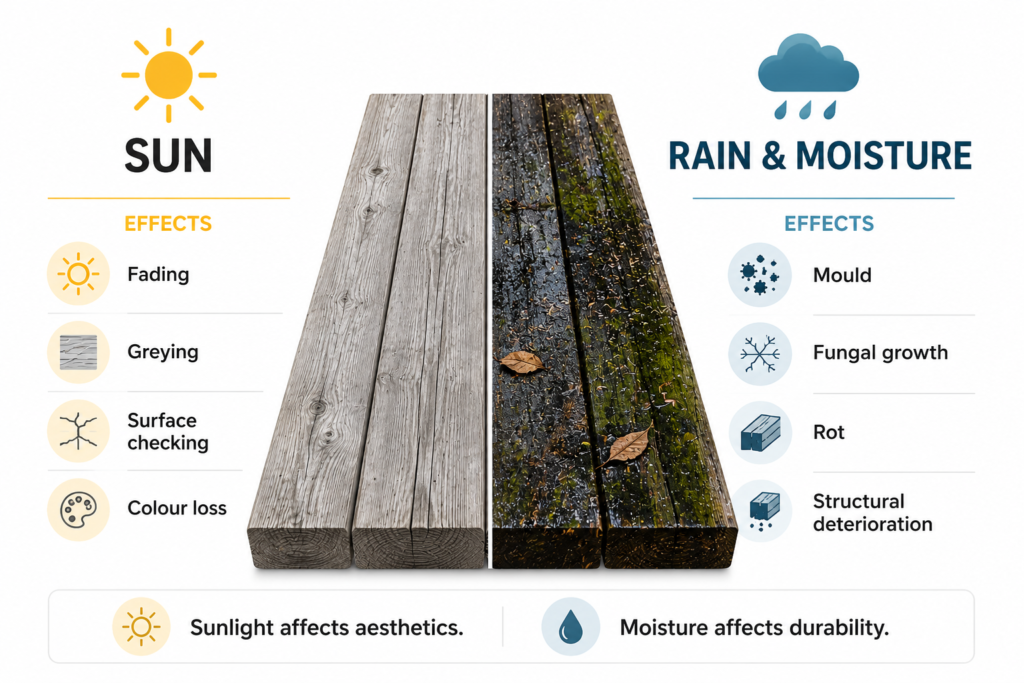
For appearance, sunlight usually does more damage. For rot risk, prolonged moisture is worse. The hardest conditions for outdoor wood are repeated wetting and drying combined with sun exposure, especially where the timber cannot dry properly.
Sun changes the surface. Rain supplies moisture. Neither automatically ruins a deck, fence or cladding board, but the way water and sunlight act together determines how quickly outdoor timber weathers and whether it develops a decay problem.
Sun, rain and trapped moisture do different things
| Exposure | Most common effect | When it becomes serious | Useful response |
|---|---|---|---|
| Direct sunlight | Fading, greying and surface roughening | When appearance or a protective finish is breaking down | Use a suitable finish and maintain it as directed |
| Rain and wet-dry cycles | Swelling, shrinking, checks and movement | When water repeatedly enters joints, cracks or exposed end grain | Improve drainage, board spacing and protection of cuts |
| Trapped moisture | Mould, corrosion and conditions for fungal decay | When timber stays wet for extended periods | Remove the moisture source and restore drying |
The distinction matters because weathering is not the same as rot. A grey, roughened board may need cleaning or refinishing but can still be structurally sound. Decay is a biological process that can reduce the strength of timber and needs the right moisture conditions to develop.
What sunlight does to outdoor wood
Ultraviolet light breaks down material at the exposed wood surface. The first visible changes are usually colour loss, greying and a rougher texture. Sun also affects coatings and finishes, which can eventually crack, peel or lose their ability to protect the surface.
This kind of weathering is usually a surface issue rather than an immediate structural problem. The US Forest Service notes that sunlight, moisture and other outdoor factors combine to weather wood, while light-related degradation is concentrated near the surface.
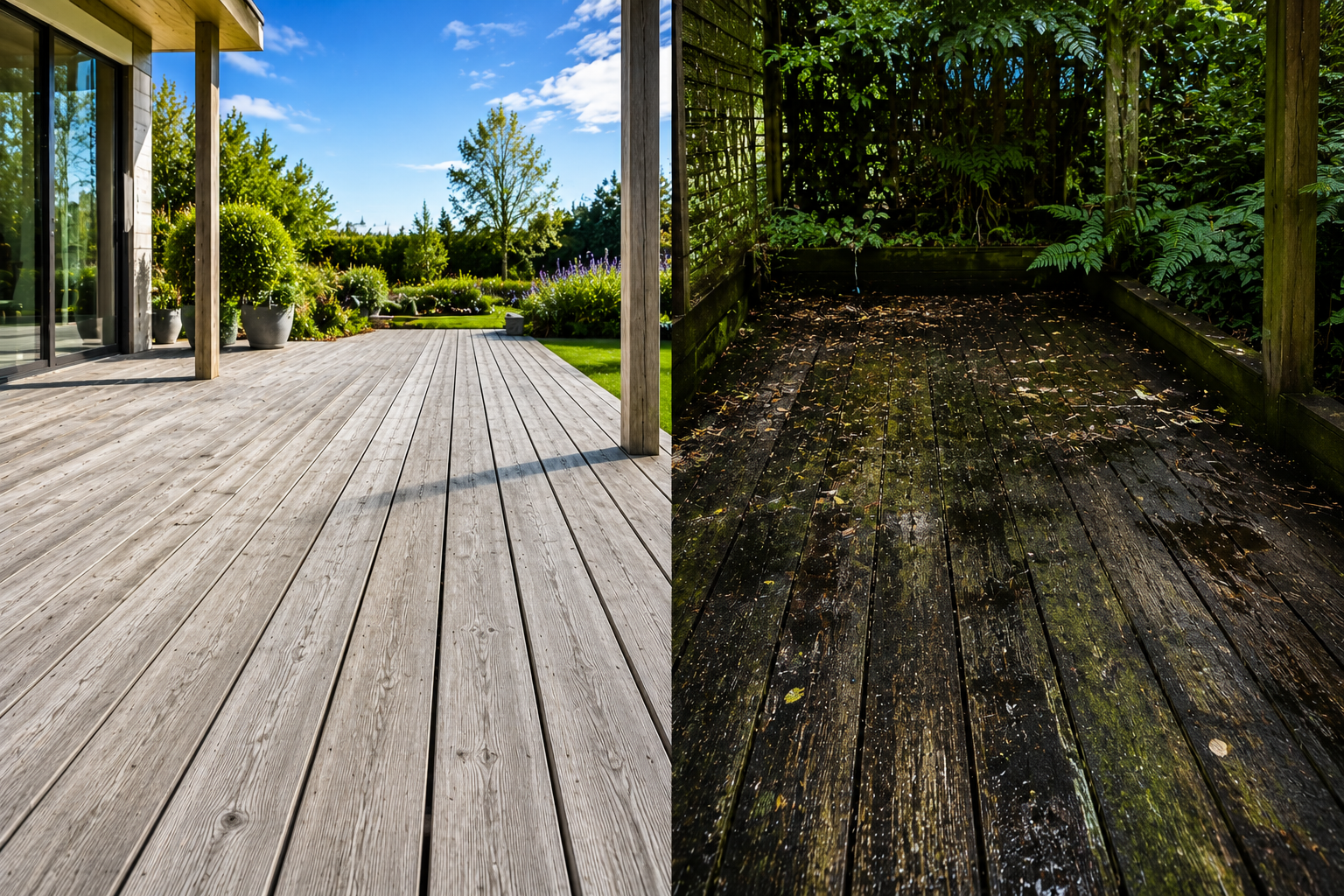
Sun can be the bigger concern when a deck, fence or cladding project needs to retain a consistent colour or a long-lasting finish. A south-facing surface with strong exposure may look older much sooner than a shaded one, even when both remain structurally healthy.
What rain and moisture do to outdoor wood
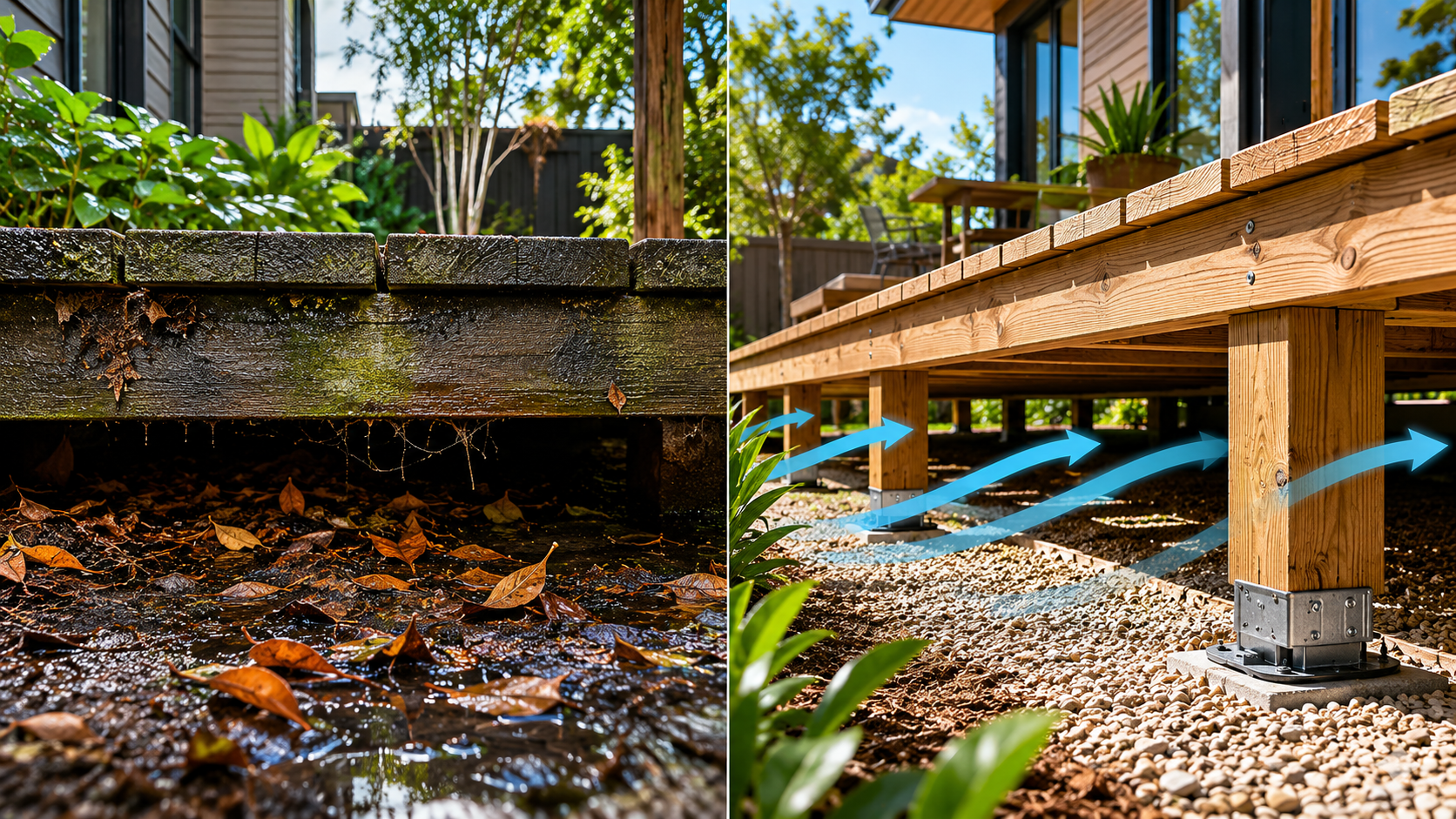
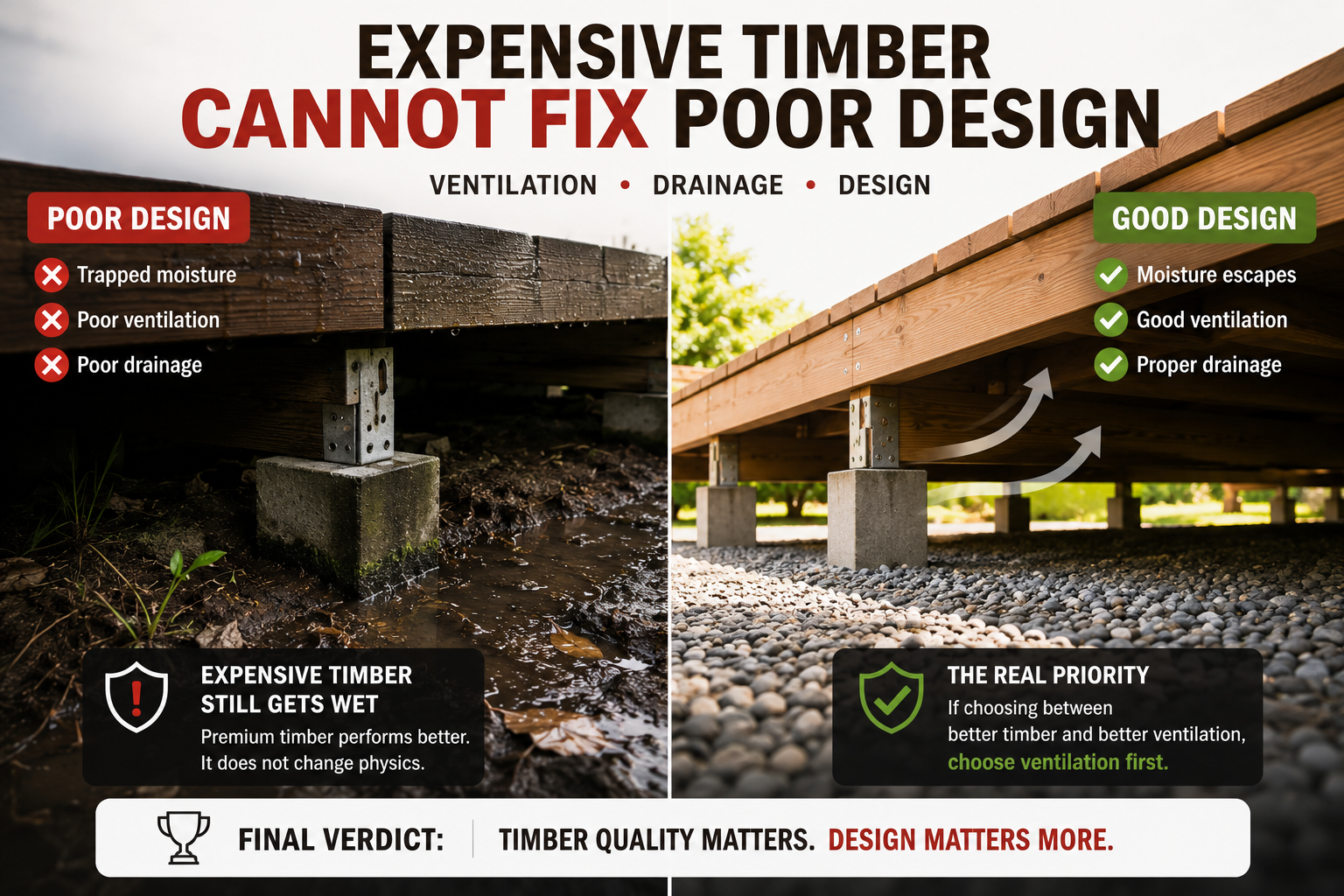
Rain is not automatically harmful. Timber can get wet outdoors and perform well when water drains away and the wood dries between wet periods. The risk increases when water is held against the timber by soil, leaves, plant pots, tight joints or an enclosed space below a deck.
As wood absorbs and releases moisture, it swells and shrinks. Repeated movement can create checks, lift grain and place stress on coatings and fixings. Those openings can then allow more water into vulnerable areas such as board ends, notches and connections.
Moisture also affects more than the wood itself. It can corrode unsuitable metal fixings and leave dark staining around fasteners. In the right conditions, it supports mould and the fungi that cause wood decay.
Why sun and rain together weather wood faster
The useful answer is not simply that sun is harmless and rain is dangerous. Sunlight changes and weakens the exposed surface, while wet-dry cycling moves the wood and can enlarge small checks. That combination makes an unfinished or poorly maintained surface look rougher and more uneven over time.
Weathering alone is usually slow. Structural failure is more often linked to decay, insect damage or failed connections. But surface weathering still matters because it can shorten the life of a coating and create easier pathways for moisture to enter.
When sun is the bigger problem
Prioritise sun protection when the main concern is colour, a painted or stained finish, or a surface that receives strong direct light. In those cases, a compatible exterior finish can reduce fading and surface weathering. Follow the product instructions because different finishes provide different levels of UV and moisture protection.
Do not apply a finish to solve a drainage problem. A coating may improve the appearance of boards, but a damp deck frame still needs water to drain and air to circulate.
When rain is the bigger problem
Prioritise water management when the deck is close to the ground, under dense planting, in a shaded corner or enclosed with solid skirting. These conditions make it harder for the frame to dry after rain or dew.
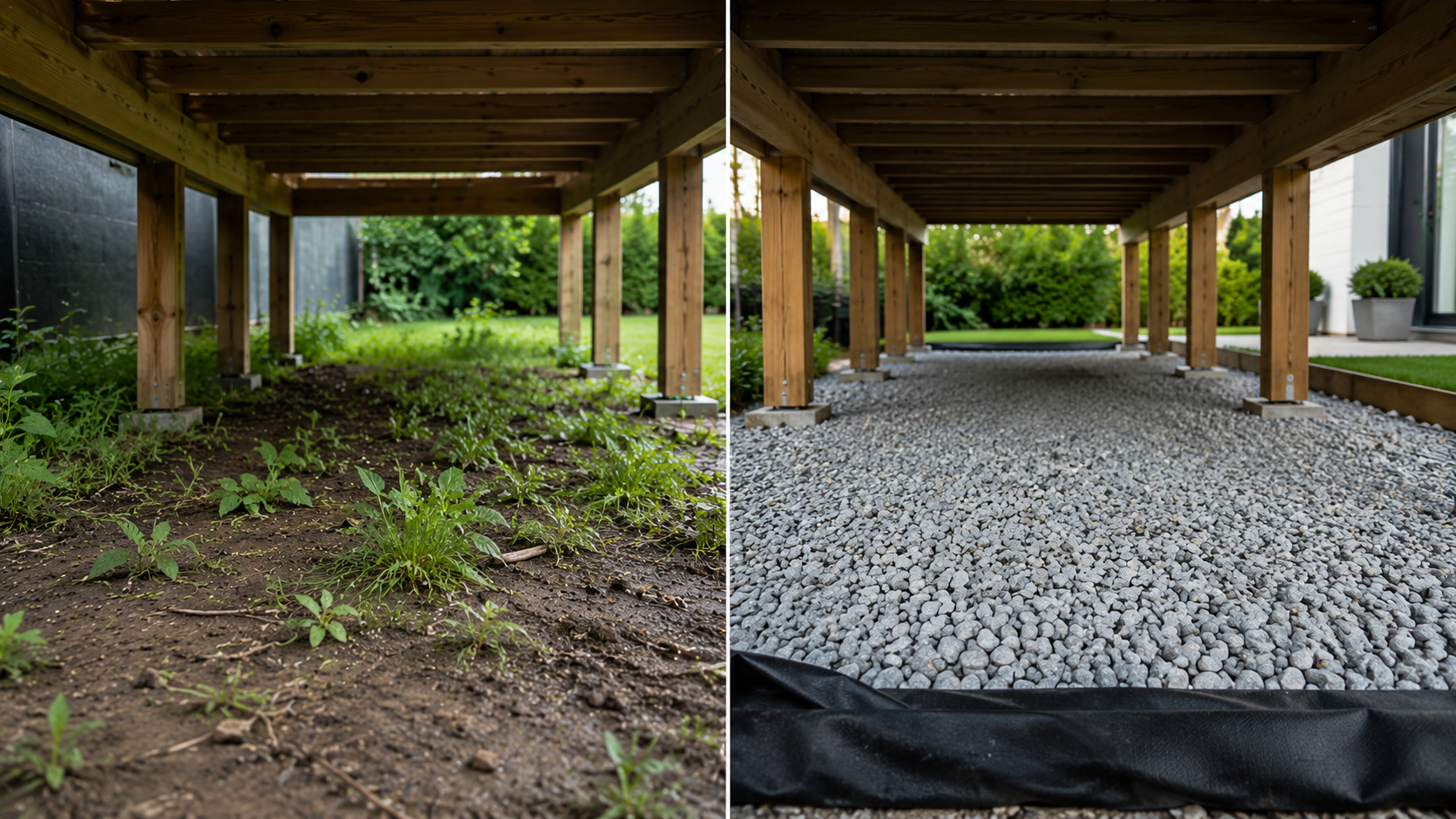
Look underneath as well as above the deck. Persistent dampness, leaf build-up, green growth, soft timber and corroding fixings are more useful warning signs than a change in board colour. If the structure moves under load or timber feels soft, seek an assessment from a competent professional.
How to protect outdoor wood from sun and rain
Good design prevents more problems than a finish applied after installation. Focus on these practical details:
- Keep water moving. Avoid low spots, flat details and post bases that hold water against timber.
- Give the structure room to dry. Keep airflow paths open below low decks and do not trap wet debris around the frame.
- Use the right board gaps. Spacing helps water leave the deck surface and allows seasonal movement.
- Protect exposed timber. Treat fresh cuts and drilled areas as specified for the timber product.
- Choose compatible fixings and finishes. Exterior hardware and coatings must suit the timber and the exposure.
- Inspect annually. Clean away leaves and soil, check drainage and look at accessible joists, posts and connections.
For board spacing, start with our guide to why decking boards need gaps. If moisture is building up below the frame, compare gravel and geotextile under a deck.
Questions about sun, rain and timber damage
Does sunlight cause wood rot?
Sunlight does not cause rot. It can fade and weather the surface, while fungal decay needs suitable moisture conditions. In fact, sun may help an exposed surface dry, although it also contributes to colour change and surface weathering.
Can rain damage pressure-treated wood?
Yes. Pressure treatment improves resistance to biological decay, but it does not make timber waterproof or prevent swelling, shrinking and weathering. The treatment class, the quality of the treatment and the installation detail all still matter.
Why is the underside of my deck rotting first?
The underside often dries more slowly and can collect damp soil, leaves and poor drainage. Inspect the subframe and improve the conditions that are keeping it wet. Our guide to why wooden decks rot covers the common moisture traps.
Do I need to protect UC4 timber from rain?
UC4 treatment provides added protection for demanding exterior conditions, but it still benefits from good drainage and drying. See whether UC4 timber still needs ventilation for the details.
Protect the wood by controlling the conditions around it
Sun tends to age the visible surface first. Persistent moisture is the greater threat to the life of the structure. The best approach is to protect the exposed surface where appearance matters, then make sure water can drain and the timber can dry.
For a broader guide to the expected life of a timber deck, read how long a wooden deck lasts.
Technical references: US Forest Service: Weathering of wood and US Forest Service: Finishing wood.