On this page
- What UC3 and UC4 actually mean
- UC3 vs UC4 for a timber deck
- When UC4 is not optional
- When UC3 is usually appropriate
- What UC4 does not tell you
- Questions to ask before ordering treated timber
- Site cuts, drilled holes and notches
- A simple way to write the timber specification
- Build for drying as well as treatment
- Frequently asked questions
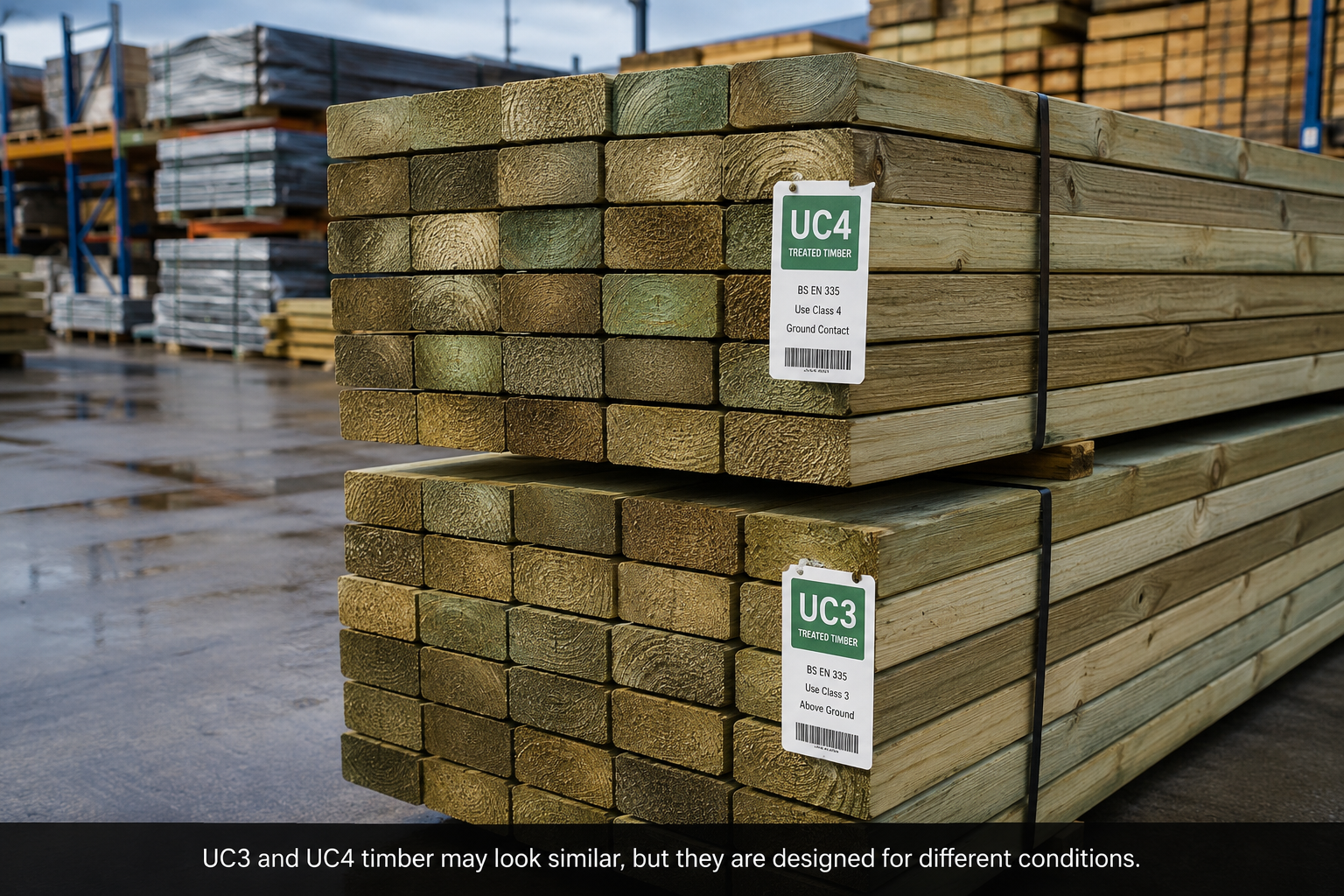
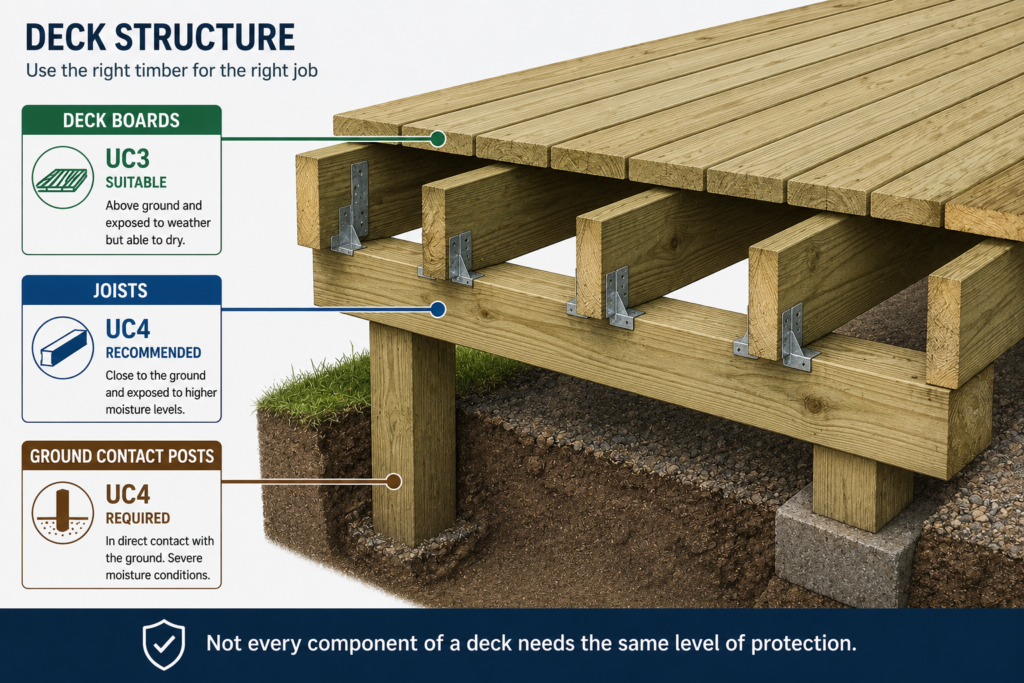
UC3 and UC4 are not simply “good” and “better” timber. They describe different levels of preservative protection for different exposure conditions. For a typical softwood deck, above-ground boards are commonly specified as UC3, while the hidden structural parts that support the deck, such as joists, beams and posts, often need UC4. Always check the supplier’s documentation and the requirements that apply where you are building.
The practical question is not “Is UC4 worth upgrading to?” It is: what will each piece of timber do, how wet can it stay and how difficult will it be to replace?
| Deck component | Typical exposure | What to check |
|---|---|---|
| Visible deck boards above ground | Rain and weathering, with an opportunity to drain and dry | UC3 or the class specified by the board supplier; board spacing and fixing instructions |
| Joists and beams beneath the deck | Hidden, slower-drying exterior structural timber | UC4 and the required strength grade for the design |
| Posts and supports near or in soil | Persistent moisture, splashback or ground contact | UC4 or a product specifically declared for this exposure |
| Handrails, pergola members and above-ground trim | Exterior weathering, usually with good access to air | The stated exterior treatment class and any structural requirement |
What UC3 and UC4 actually mean
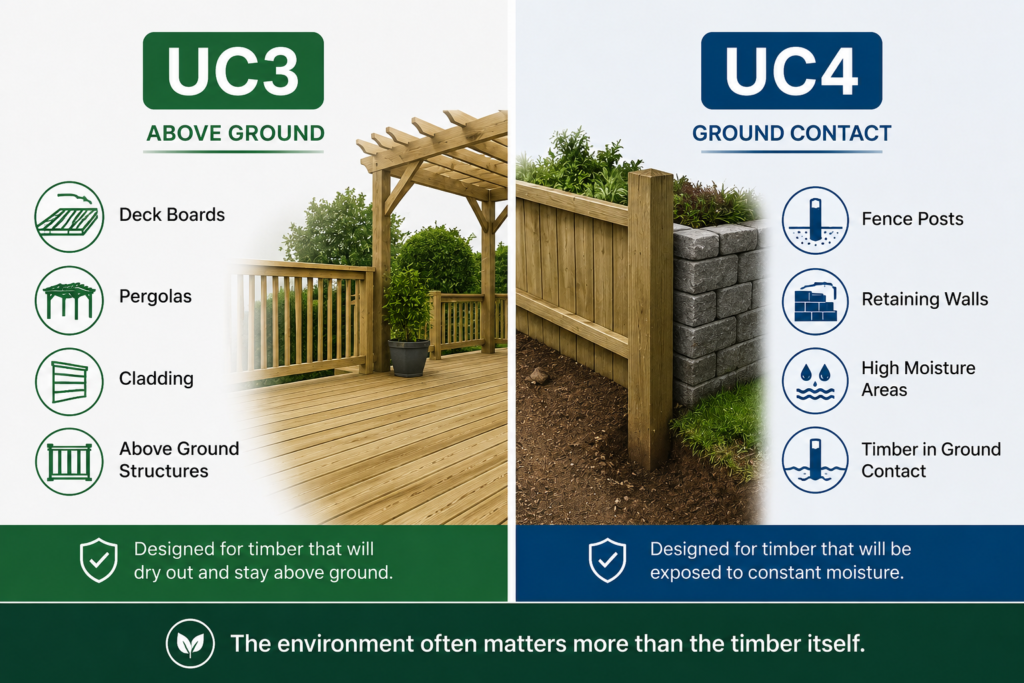
Use Class describes the level of biological hazard that preservative-treated timber is intended to withstand. It is about the exposure the timber will face, not the timber species, colour or a guaranteed number of years.
UC3: exterior timber above ground
UC3 is used for timber exposed outdoors above ground where rain can wet the surface but the piece has a reasonable chance to dry. It is commonly used for softwood deck boards and other exposed above-ground parts, provided the product is specified for that use.
UC4: severe exterior exposure
UC4 is intended for more demanding conditions, including ground contact, fresh-water contact and exterior structural support that can remain damp for longer. It gives a softwood subframe more protection where replacement would mean lifting the deck surface.
UC3 vs UC4 for a timber deck
A deck is made from parts with different exposure risks. The visible boards can shed water through their gaps and are relatively straightforward to replace. Joists, beams and posts are hidden, can collect debris and often dry more slowly. Treating every piece as though it faces the same conditions is an expensive mistake in one direction and a durability risk in the other.
The Timber Development UK decking guidance distinguishes between decking boards and exterior structural components. Its guidance specifies UC3 treatment for softwood deck boards and UC4 for joists, beams, posts and other softwood components providing exterior structural support. Use the rule or design requirements that apply to your location and the exact product you are buying.
When UC4 is not optional
Do not treat UC4 as a cosmetic upgrade when a component is structural, difficult to inspect or expected to remain close to moisture. This normally includes the subframe of a softwood deck, posts near soil and elements where water can collect or drainage is limited.
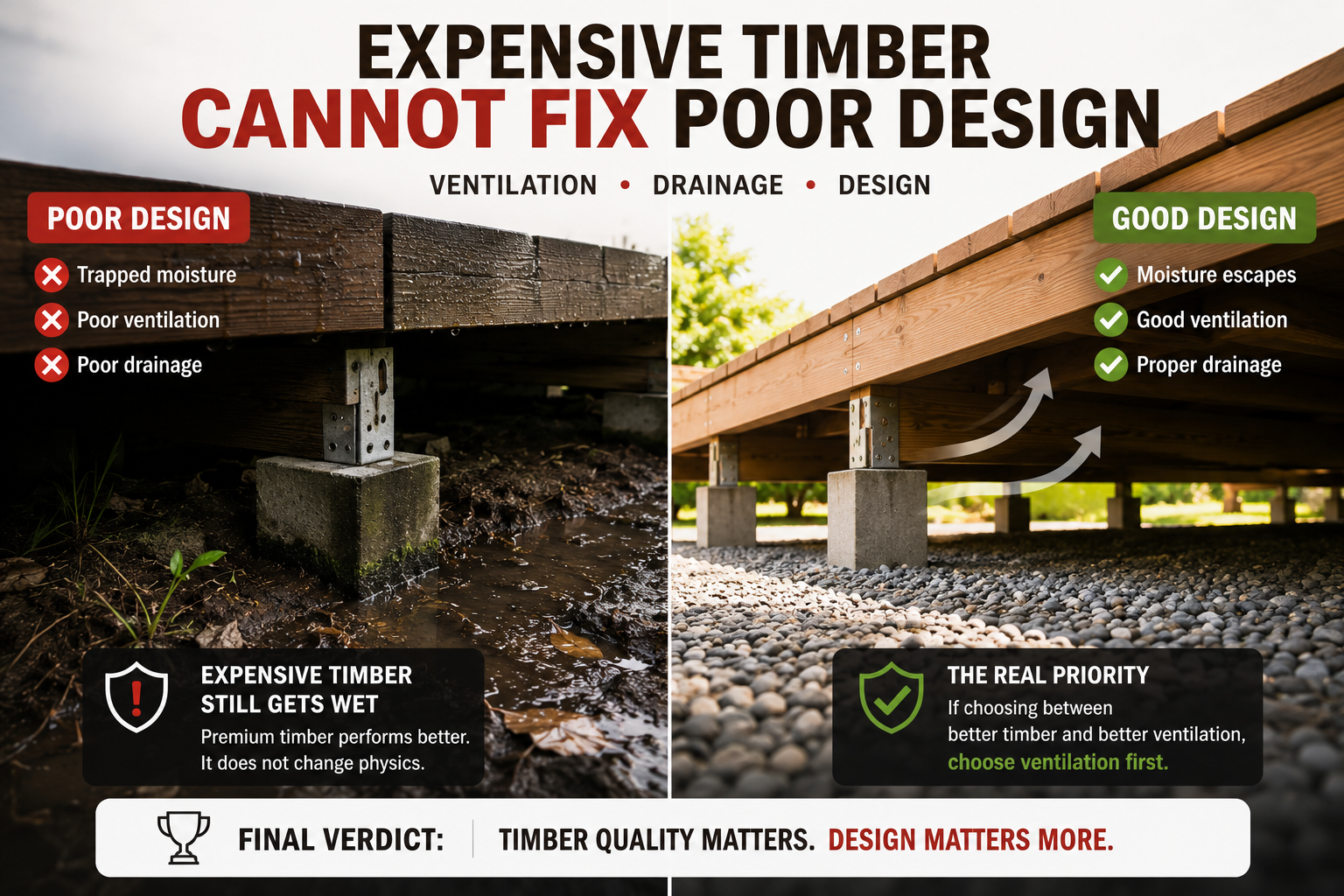
UC4 still needs competent detailing. It improves resistance to organisms that cause decay; it does not make timber waterproof, provide structural strength or turn standing water into an acceptable condition. See Does UC4 Timber Still Need Ventilation? for the drying and drainage details.
When UC3 is usually appropriate
UC3 is commonly appropriate for softwood deck boards installed above ground as part of a deck designed to drain and dry. It can also suit other above-ground exterior timber where the supplier confirms the product’s intended use.
UC3 is not a shortcut for hidden structural members simply because they are not buried in soil. A joist below a deck can be exposed to slow drying, trapped debris and expensive future access. Specify the treatment class for the component, not the most visible part of the project.
What UC4 does not tell you
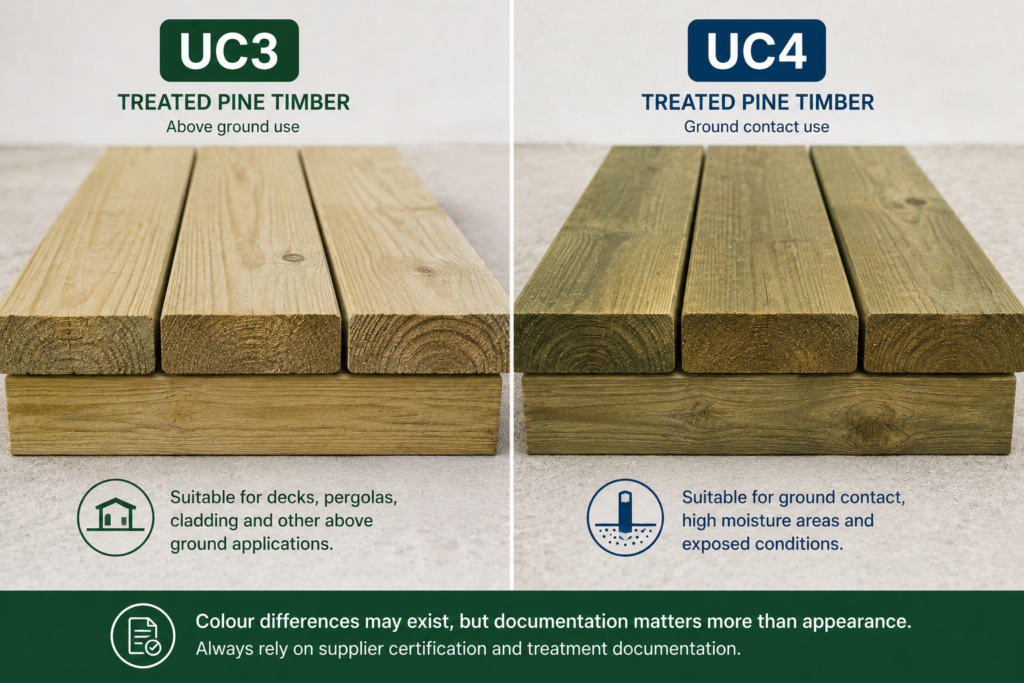
UC4 is only one line in a specification. It does not confirm the strength grade, straightness, board dimensions, fixing system or quality of construction. It also cannot be identified reliably by the timber’s green or brown colour. Ask the supplier for a treatment declaration, invoice or certificate that states the class and intended end use.
For load-bearing members, also check the strength grade and the member sizes required by the deck design. A correctly treated but undersized joist is still not a safe structural solution.
Questions to ask before ordering treated timber
- What use class is declared for this exact product?
- Is it intended for deck boards, structural use, ground contact or another application?
- What strength grade applies to joists, beams, posts or other load-bearing parts?
- Does the supplier provide a treatment certificate, declaration or written confirmation on the order?
- How should cut ends, notches and drilled holes be treated?
- What spacing, fixing and ventilation details does the product system require?
Site cuts, drilled holes and notches
Factory treatment protects the timber supplied, but a cut, drilled hole or notch can expose wood that did not receive the same preservative penetration as the original surface. These details are especially important on joists, posts and other UC4 structural members because they are hidden and slow to dry.
Plan cuts before installation, keep freshly exposed end grain out of standing water and apply the end-grain or cut-end preservative specified by the timber and preservative manufacturers. A brush-on product is a repair detail for exposed cuts; it is not a substitute for specifying factory-treated UC3 or UC4 timber in the first place. The Wood Protection Association’s UC4 guidance also advises protecting freshly exposed areas and avoiding details that trap water around timber.
A simple way to write the timber specification
Instead of ordering “treated timber for a deck”, list each group of components separately. This makes it much easier for a supplier to confirm that the product matches the job.
- Deck boards: species, finished size and profile, exterior deck-board use class, required gap and fixing system.
- Joists and beams: finished size from the structural design, strength grade and UC4 exterior structural treatment.
- Posts and supports: finished size, strength grade, UC4 or a product specifically declared for ground-contact or persistent-moisture exposure.
- Documentation: treatment declaration, intended end use and installation instructions supplied with the order.
This approach prevents the common mistake of ordering one generic treated product for every visible and hidden piece of a deck.
Build for drying as well as treatment
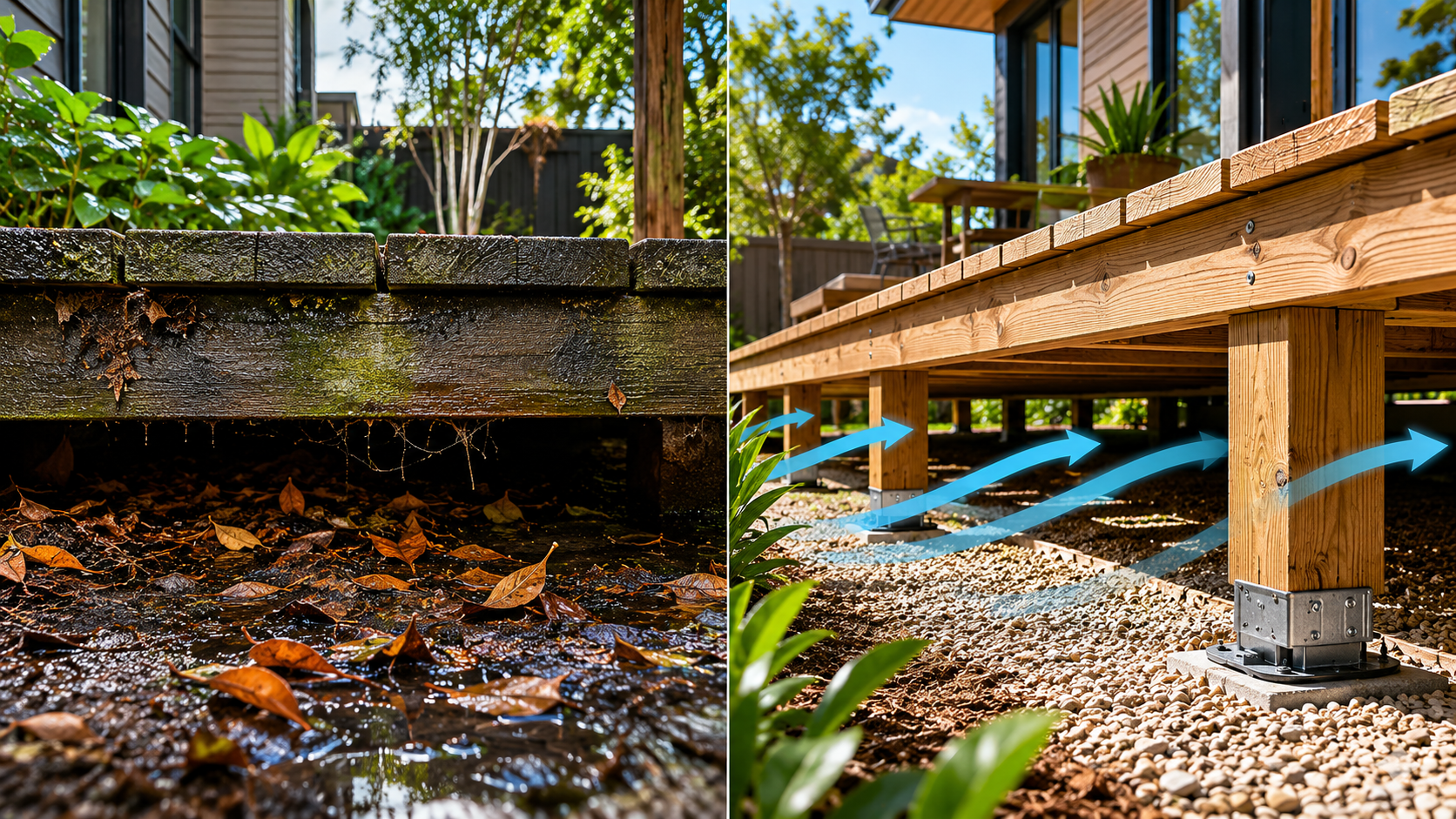
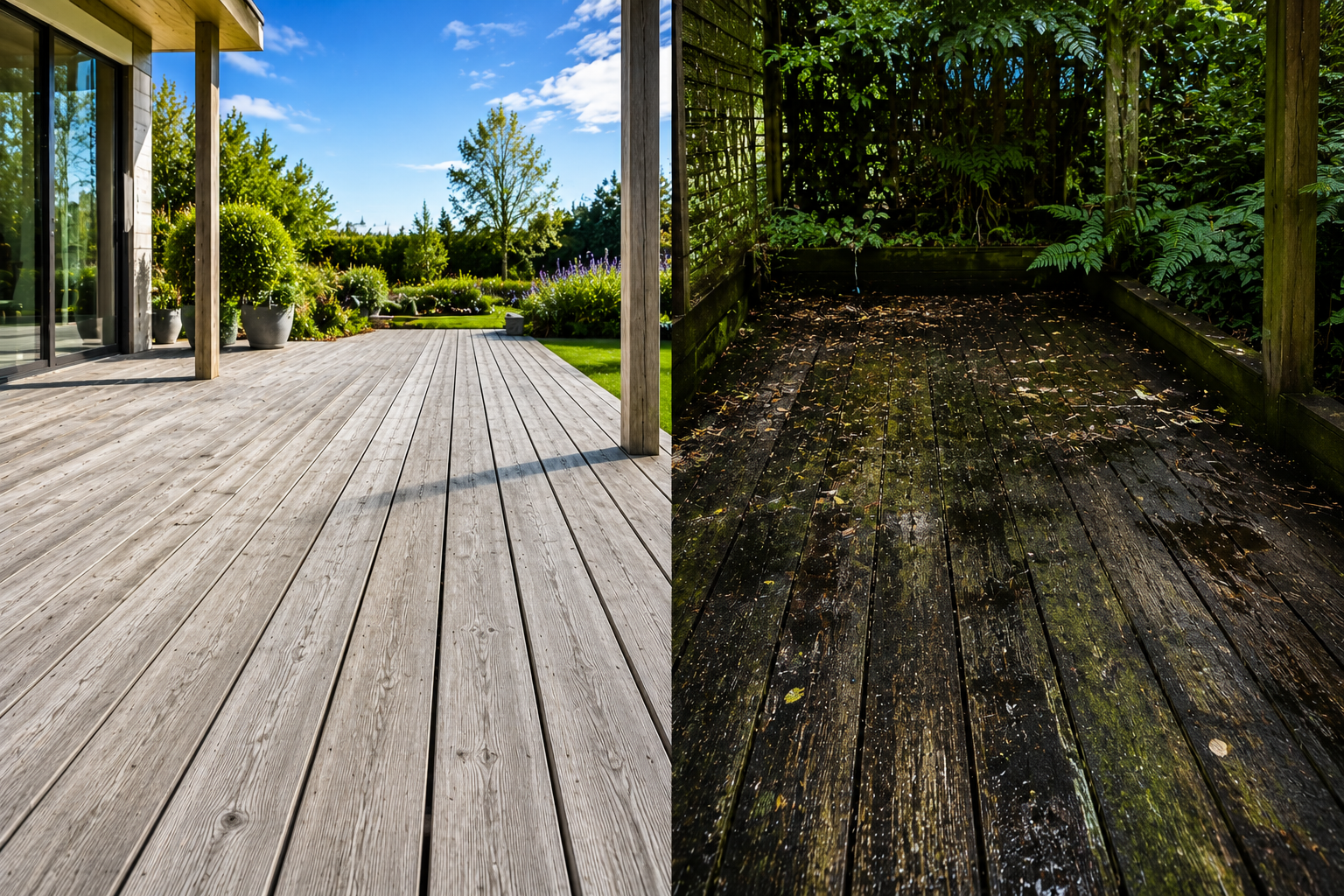
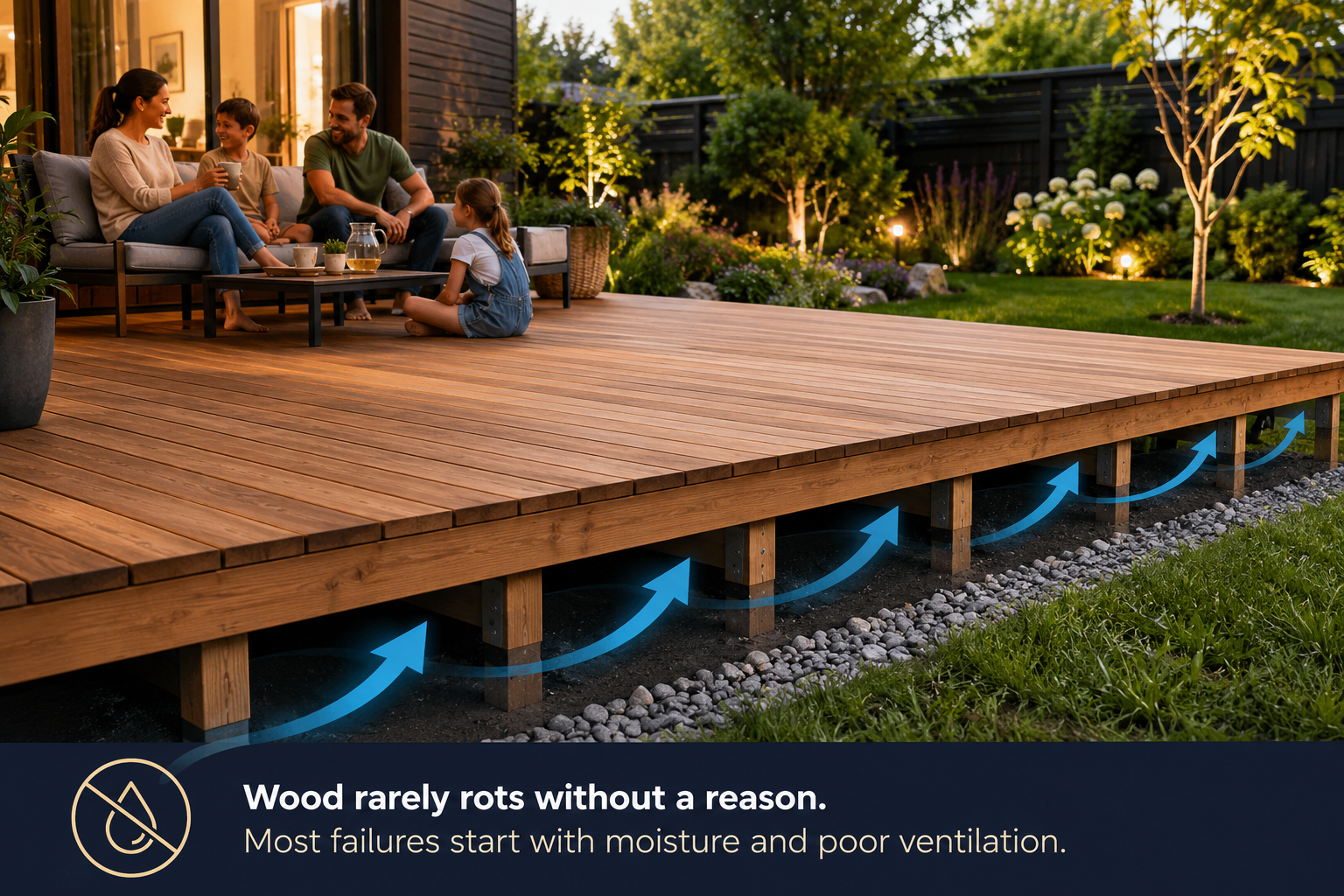
The right use class works alongside good design. Leave usable gaps between boards, take water away from the site, keep the under-deck area clear and avoid closing a low deck without a considered airflow plan. For the ground beneath the frame, read What to Put Under a Deck. For spacing at the surface, use Deck Board Spacing.
Good drainage and ventilation do not justify using a lower class than the component requires. They help the correctly specified timber perform as intended.
Frequently asked questions
Can I use UC3 timber for deck joists?
Check the local requirements and the supplier’s specification, but do not assume UC3 is sufficient for a softwood deck subframe. Industry guidance for timber decking commonly specifies UC4 for exterior structural supports, including joists and posts, because they are harder to inspect and replace.
Is UC4 timber waterproof?
No. UC4 treatment improves resistance to biological decay in severe exterior conditions. The timber can still absorb moisture, swell, shrink and weather, so drainage, ventilation and protection of site cuts still matter.
Is UC4 always better than UC3?
UC4 gives more protection for more severe exposure, but it is not automatically the right specification for every part of a project. Use the class that matches the component and its intended conditions.
How can I tell whether timber is UC3 or UC4?
Use documentation, not colour. Ask for the declared treatment class and intended end use on the delivery note, invoice or treatment certificate.