On this page
- Myth 1: Expensive timber solves everything
- Myth 2: UC4 timber cannot rot
- Myth 3: Any treated timber is suitable for every part of a deck
- Myth 4: Composite decking is maintenance-free
- Myth 5: No gaps between deck boards are better
- Myth 6: Gravel or geotextile alone prevents rot
- Myth 7: If the deck looks fine, it is fine
- What matters more than the myths
- Frequently asked questions
Wooden decks are not inherently difficult to keep. The failures that give them a bad reputation usually come from water that cannot drain or dry, the wrong timber in the wrong place, or small maintenance problems left unseen. This guide separates the common wooden deck myths from the decisions that actually affect service life.
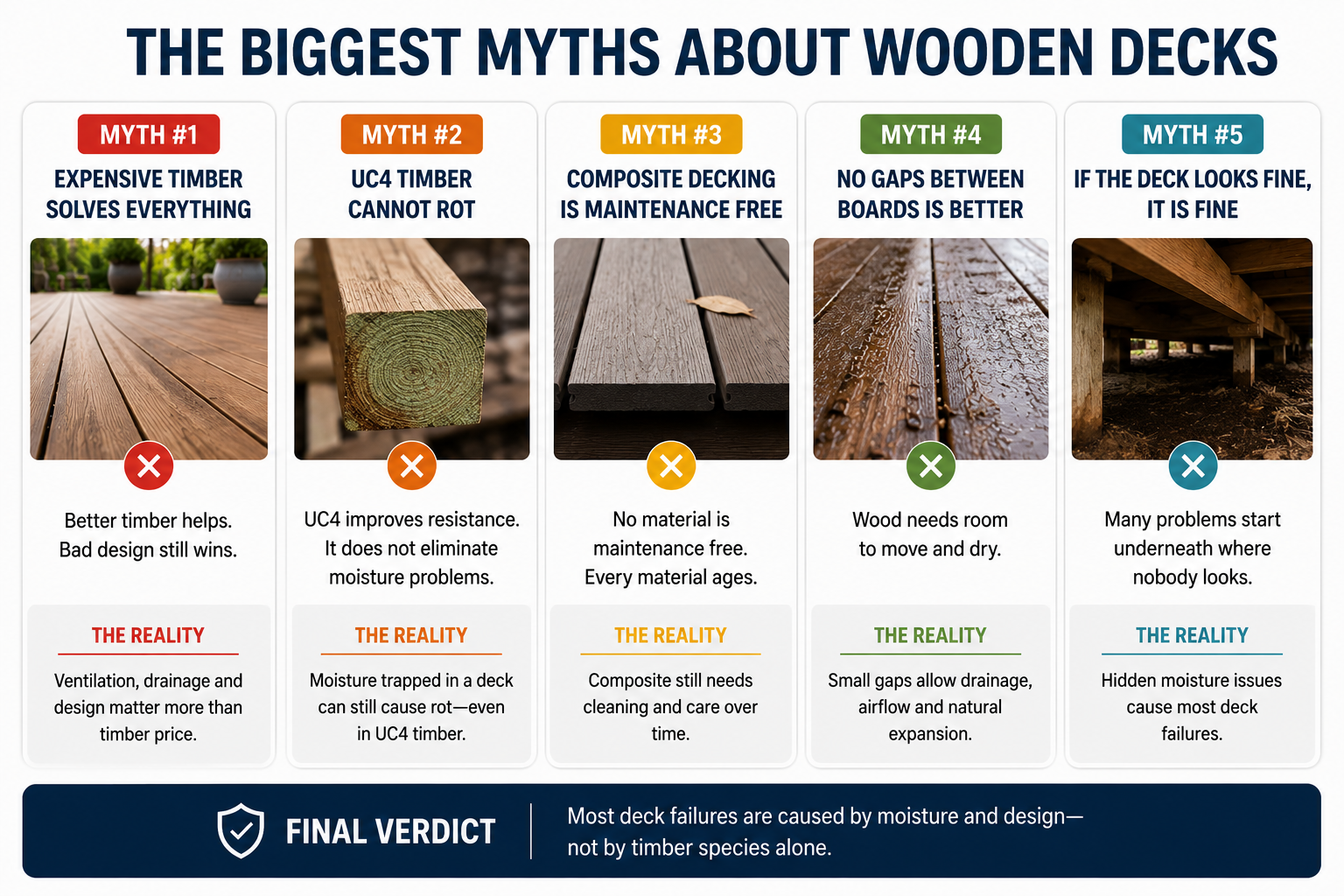
| Myth | What actually matters |
|---|---|
| Expensive timber solves every problem | Drainage, ventilation and detailing still control how long the structure stays wet. |
| UC4 timber cannot rot | Its treatment is suited to more severe exposure, but it does not make trapped water harmless. |
| Any treated timber suits every deck component | The use class, strength grade and intended exposure need to match the job. |
| Composite decking is maintenance-free | It needs less finishing, but debris, drainage and the subframe still need attention. |
| No gaps make a deck stronger | Correct gaps allow drainage and accommodate timber movement. |
| Gravel or geotextile alone prevents rot | A dry, ventilated void beneath the deck matters more than either material alone. |
| A deck that looks fine needs no inspection | Early decay often starts at hidden joints, supports and areas where debris collects. |
Myth 1: Expensive timber solves everything
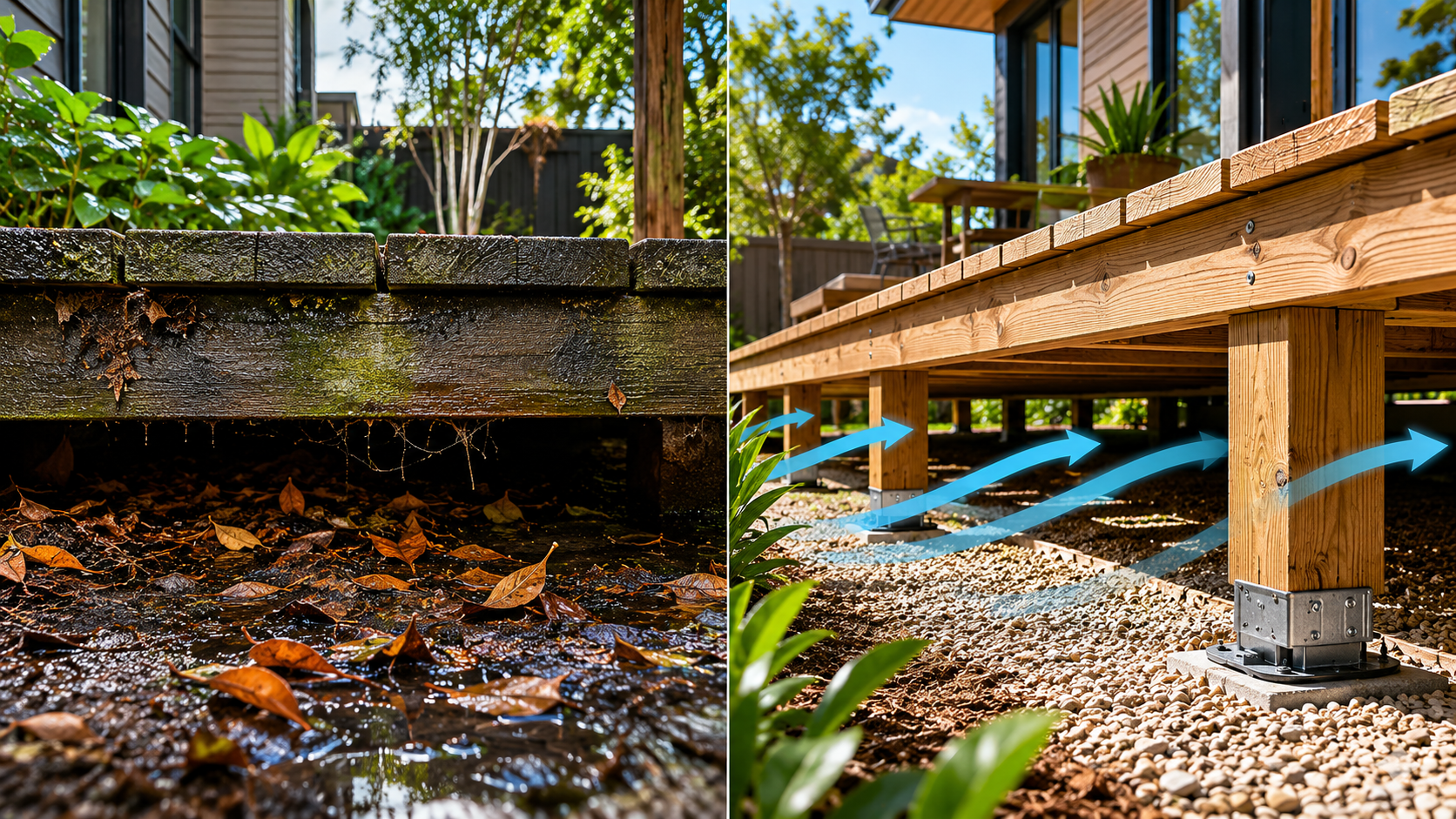
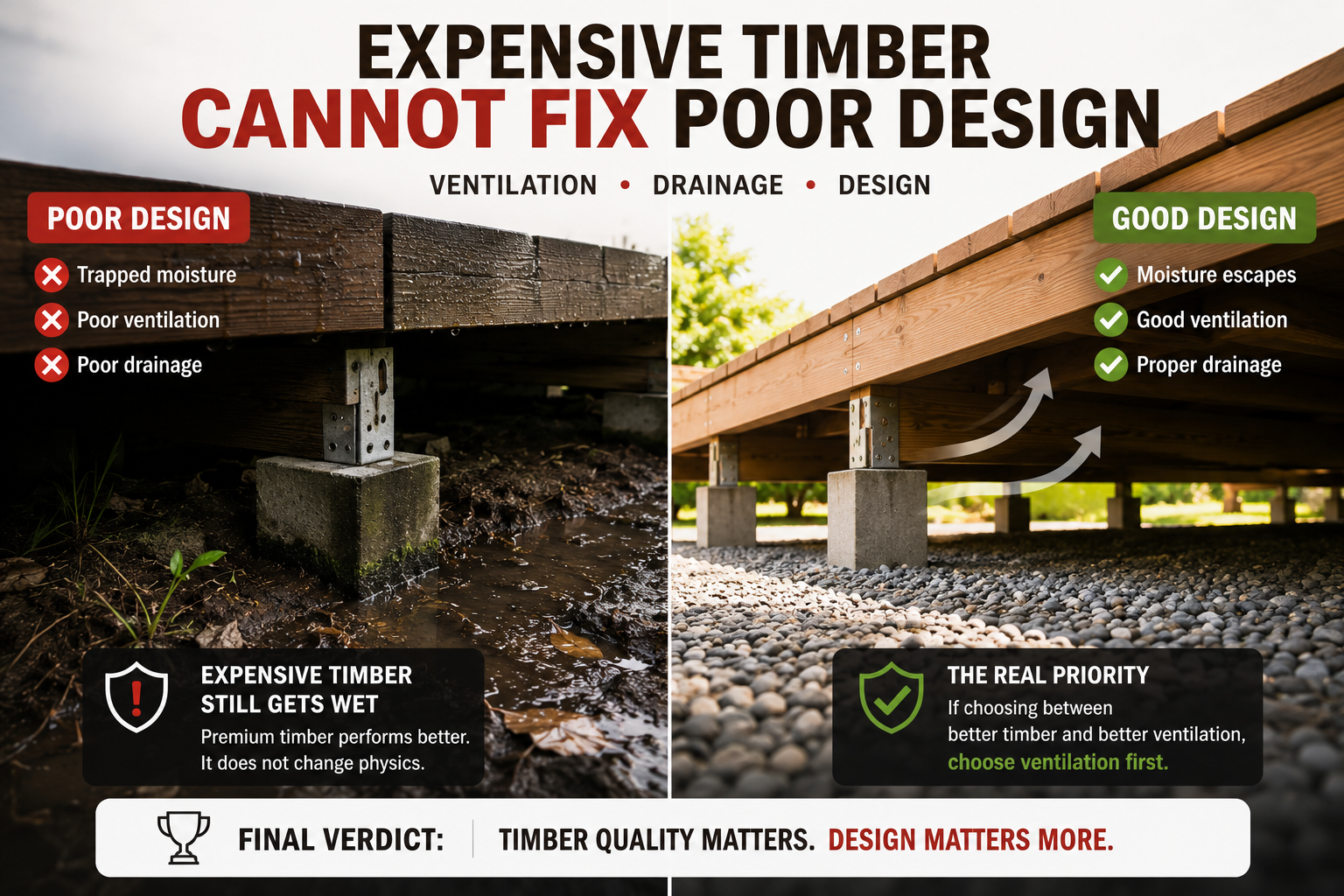
Reality: Better timber can be a sensible investment, but it cannot compensate for a deck that stays wet. A premium board over blocked drainage, tight board gaps or a badly detailed support frame can still cup, split or decay early.
What to do: Put the budget into the whole moisture-management system first: a sound support structure, drainage away from the deck, ventilation below it and appropriate fixings. Then choose timber that suits the expected exposure. Read more in Can Expensive Timber Fix a Poorly Designed Deck?.
Myth 2: UC4 timber cannot rot
Reality: UC4 identifies preservative-treated timber intended for severe exterior exposure, including ground contact or conditions close to it. It improves resistance to biological attack; it is not a promise that the timber can remain permanently wet without consequence.
What to do: Keep cut ends protected where the product system requires it, avoid water traps and leave the underside able to dry. For the distinction between treatment class and good construction, see Does UC4 Timber Still Need Ventilation? and UC3 vs UC4 Timber.
Myth 3: Any treated timber is suitable for every part of a deck
Reality: “Treated” describes a process, not a complete specification. Decking boards, joists, posts and members close to soil can face different moisture risks and structural loads. Treatment class also says nothing by itself about strength grade, straightness or whether the material is suitable for a particular span.
What to do: Ask the supplier for the declared use class and structural information for the intended component. Match the material to the exposure instead of choosing by colour or by a generic “outdoor” label.
Myth 4: Composite decking is maintenance-free
Reality: Composite usually needs less staining or oiling than timber, but it still collects leaves and dirt. Its gaps and drainage routes can block, and the timber or metal structure beneath it still has to be detailed and inspected correctly.
What to do: Plan for cleaning, maintain drainage paths and follow the board manufacturer’s spacing and support requirements. The material comparison in Wood vs Composite Decking helps with the broader choice.
Myth 5: No gaps between deck boards are better
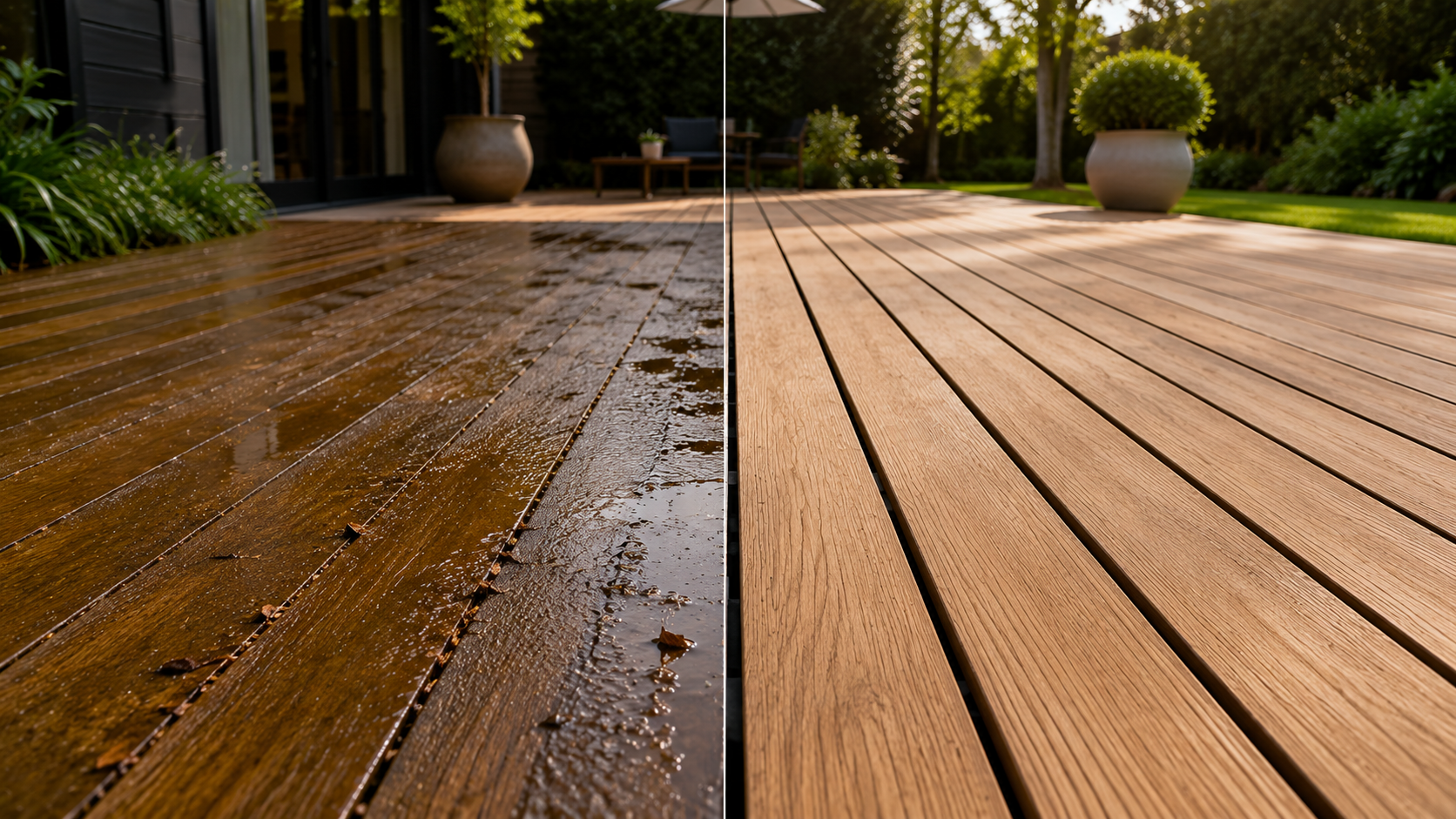
Reality: Timber changes dimension as its moisture content changes. Gaps give rainwater a route through the surface and help prevent debris from sitting between boards. They are part of the deck’s drainage detail, not an aesthetic mistake.
What to do: Use the gap specified for the board, the timber condition and the installation system. Do not assume one measurement suits every product. See Deck Board Spacing for the practical reasoning.
Myth 6: Gravel or geotextile alone prevents rot
Reality: Geotextile separates soil from stone and can limit weed growth. Clean gravel can create a tidier, better-draining surface. Neither one substitutes for a deck with a route for water to leave and enough air below it to dry.
What to do: First deal with site drainage and the clearance beneath the deck. Then use geotextile and clean stone where they make sense for the ground conditions. What to Put Under a Deck explains the role of each layer.
Myth 7: If the deck looks fine, it is fine
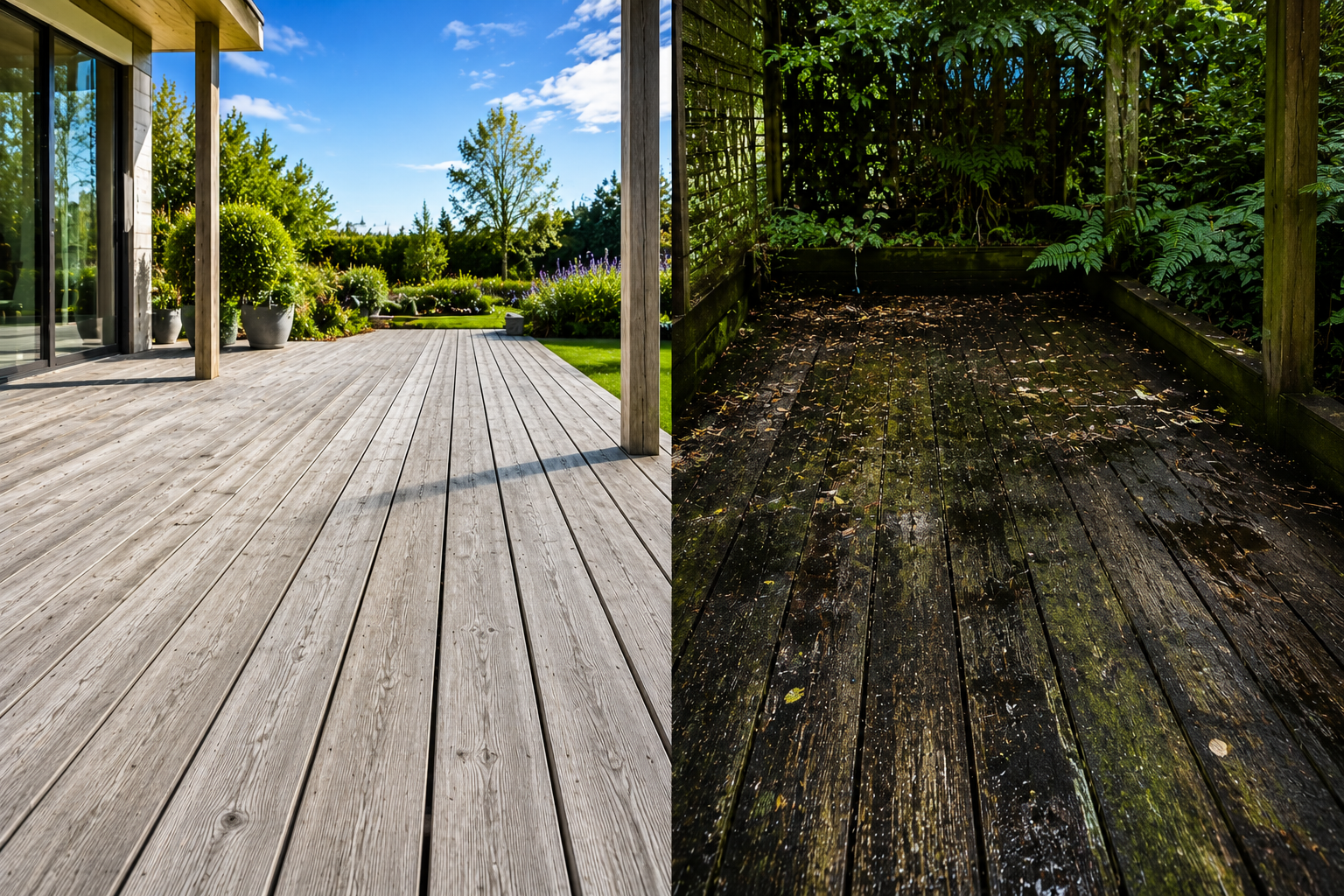
Reality: The top surface can look sound while moisture is collecting under boards, around fasteners, at joist ends or near posts. Fungal decay needs suitable moisture conditions, which is why hidden, slow-drying locations deserve attention. The US Forest Service guidance on wood decay explains the connection between wood moisture and deterioration.
What to do: At least once each year, clear debris, check that water can escape, look beneath the deck where access allows and investigate soft wood, loose fixings or persistent staining early. Use the wooden deck maintenance checklist as a simple inspection routine.
What matters more than the myths
A durable deck is a system. Choose suitable timber, give water a way out, give the structure a chance to dry and catch small defects before they spread. None of these measures is difficult in isolation; together, they make the difference between a deck that weathers normally and one that stays wet for too long.
Frequently asked questions
Do wooden decks rot easily?
Not when the material and construction suit the conditions. Persistent moisture, poor drainage, restricted airflow and neglected debris create the conditions that make decay more likely.
Is pressure-treated wood enough for a deck?
Pressure treatment helps, but it is only one part of the design. The correct treatment class, drainage, ventilation, board spacing and maintenance still matter.
Do I need gravel under a wooden deck?
Not always. Gravel can improve the surface below a deck and make maintenance easier, but its value depends on the site. It cannot solve standing water or a restricted under-deck void on its own.