On this page
- Pine vs spruce decking: the practical answer
- Why treatment matters more than the species label
- Appearance: knots, colour and grain
- Is pine or spruce stronger for decking?
- Durability: what actually decides how long the deck lasts
- How to choose between pine and spruce
- When pine is the better choice
- When spruce is the better choice
- Frequently asked questions
For most pressure-treated timber decks, pine is the simpler choice because it generally accepts preservative treatment well and is widely available. Spruce can also make a good-looking deck, but do not choose either species by name alone. The treatment class, strength grade, drying quality, board profile and installation details will have more effect on the result than a small natural difference between two softwoods.
In merchants’ terminology, pine may be sold as redwood and spruce as whitewood. Those names are not a full specification, so ask what species, treatment and grade are actually being supplied.
| Question | Pine | Spruce |
|---|---|---|
| Pressure treatment | Often a practical choice because pine sapwood is permeable and takes preservative treatment well. | Can be treated, but treatment performance depends on the product and process; confirm the declared use class. |
| Appearance | Often warmer in colour with a more pronounced, characterful look. | Often lighter and more even-looking, depending on grade and finish. |
| Strength and stiffness | Neither species name guarantees a structural performance level. | Check the supplied strength grade and the board or joist span table. |
| Outdoor durability | Depends on treatment, detailing, drainage and maintenance. | Depends on treatment, detailing, drainage and maintenance. |
| Cost | Compare local, like-for-like products. | Compare local, like-for-like products; price varies by grade, treatment and availability. |
Pine vs spruce decking: the practical answer
If you are buying standard softwood boards for a raised deck, begin with the product specification, then choose the appearance you prefer. A properly treated pine board is often the straightforward option. A spruce board can be equally reasonable where its treatment and intended exterior use are clearly declared.
For joists, beams, posts and any part close to wet ground, do not decide from the surface appearance of the board. These are structural components and need the correct strength grade and exposure rating. See UC3 vs UC4 timber for the difference between above-ground boards and the parts of a deck that are difficult to replace.
Why treatment matters more than the species label
Both pine and spruce have low natural durability in wet exterior conditions. A deck therefore relies on the right preservative treatment or another proven durability system, as well as a design that dries after rain. The treatment must suit the intended use, not simply carry an “outdoor” label.
The Timber Development UK notes that European redwood, commonly pine, is a permeable species that takes preservative treatment well and is suited to exterior structural Use Class 4 applications when correctly specified. That does not make every pine board automatically suitable, and it does not make spruce unusable. It means the supplied treatment declaration matters.
Ask the supplier these questions before ordering:
- What use class is declared for this exact board or structural member?
- Is the timber intended for decking, structural use, or both?
- What strength grade applies where the piece carries load?
- What installation gap, joist spacing and fixing system does the manufacturer require?
Appearance: knots, colour and grain
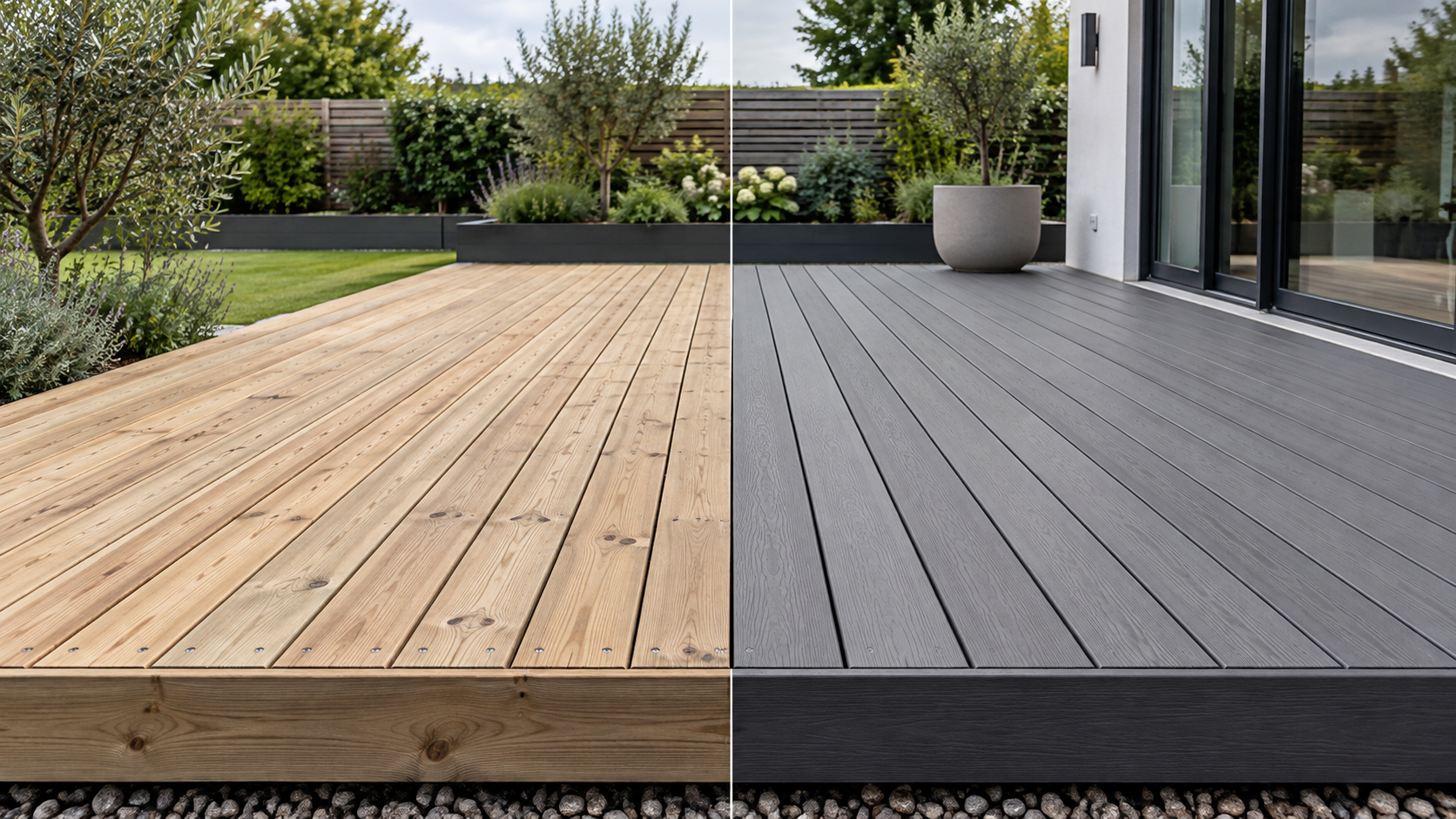
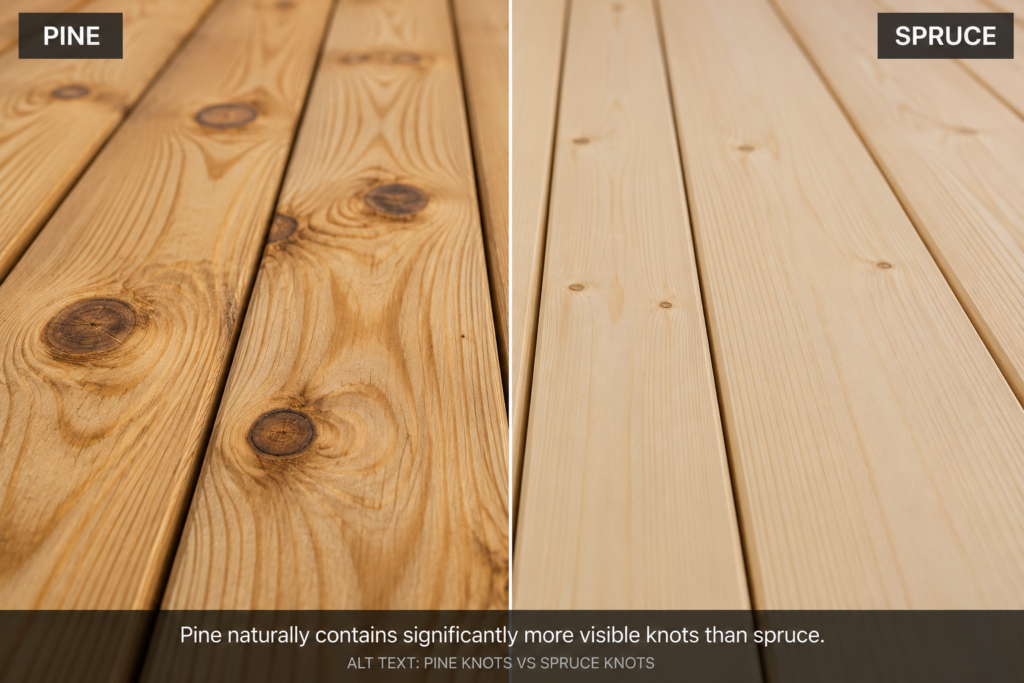
Appearance is a valid reason to choose one product over another, but it is mainly a question of the grade in front of you. Pine can have a warmer tone and more visible character. Spruce can look paler and more uniform. Knot size, frequency and soundness vary within both species and are heavily influenced by sorting and grading.
Look at several boards from the same batch in daylight. Check the face that will be visible, not just a showroom sample. If you want a consistent finish, buy a grade that states the visual quality you need and consider how it will weather or be finished.
Is pine or spruce stronger for decking?
Species alone is not a safe way to choose structural timber. Pine and spruce are both supplied in several grades, sizes and moisture conditions. A marked strength grade and the member size tell you more than the word “pine” or “spruce”.
For deck boards, also use the board manufacturer’s span table. A board that feels solid on close joists can feel flexible on wider spacing regardless of species. Never choose joist spacing from a generic online rule when the board instructions say otherwise.
Durability: what actually decides how long the deck lasts
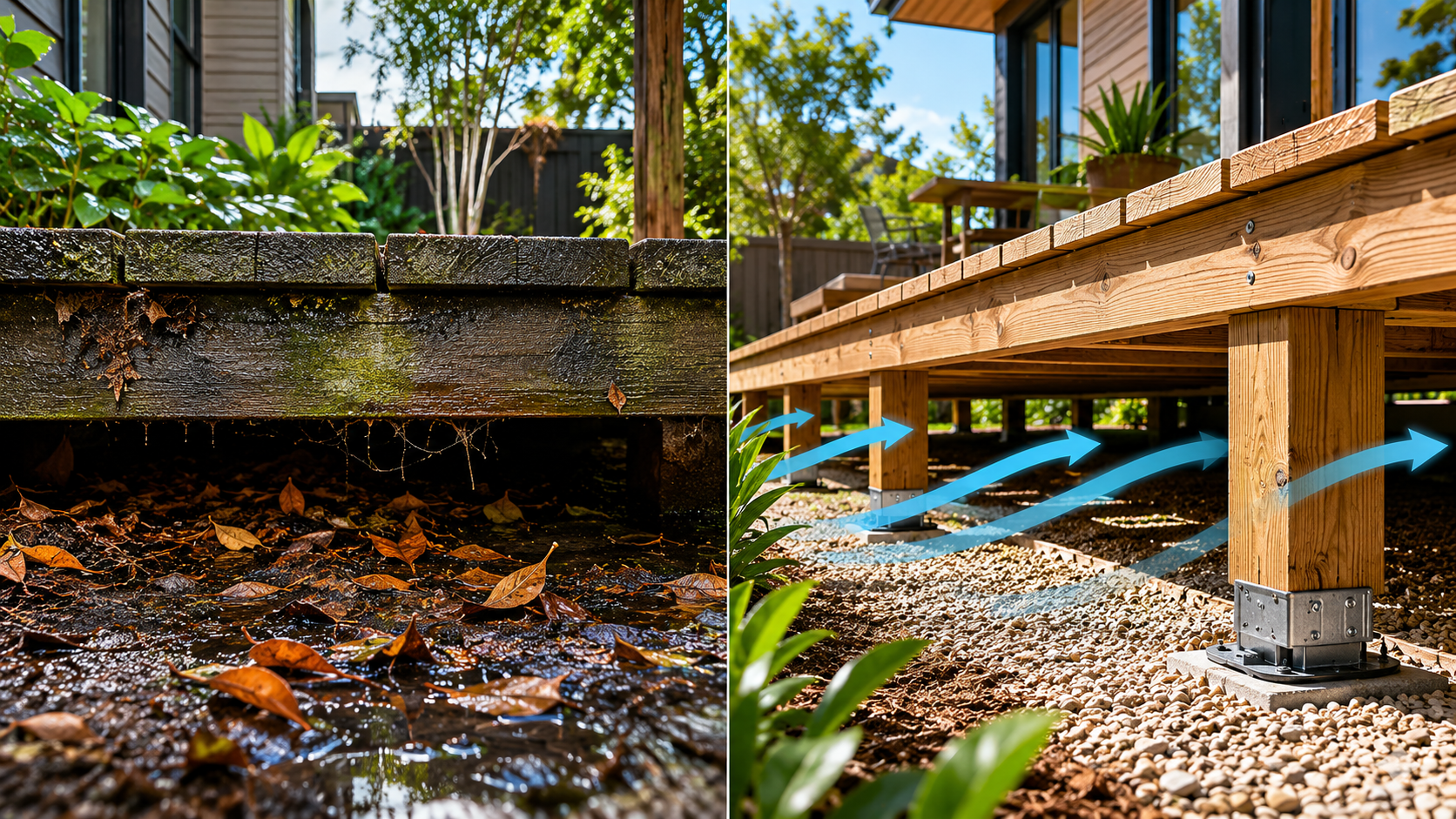
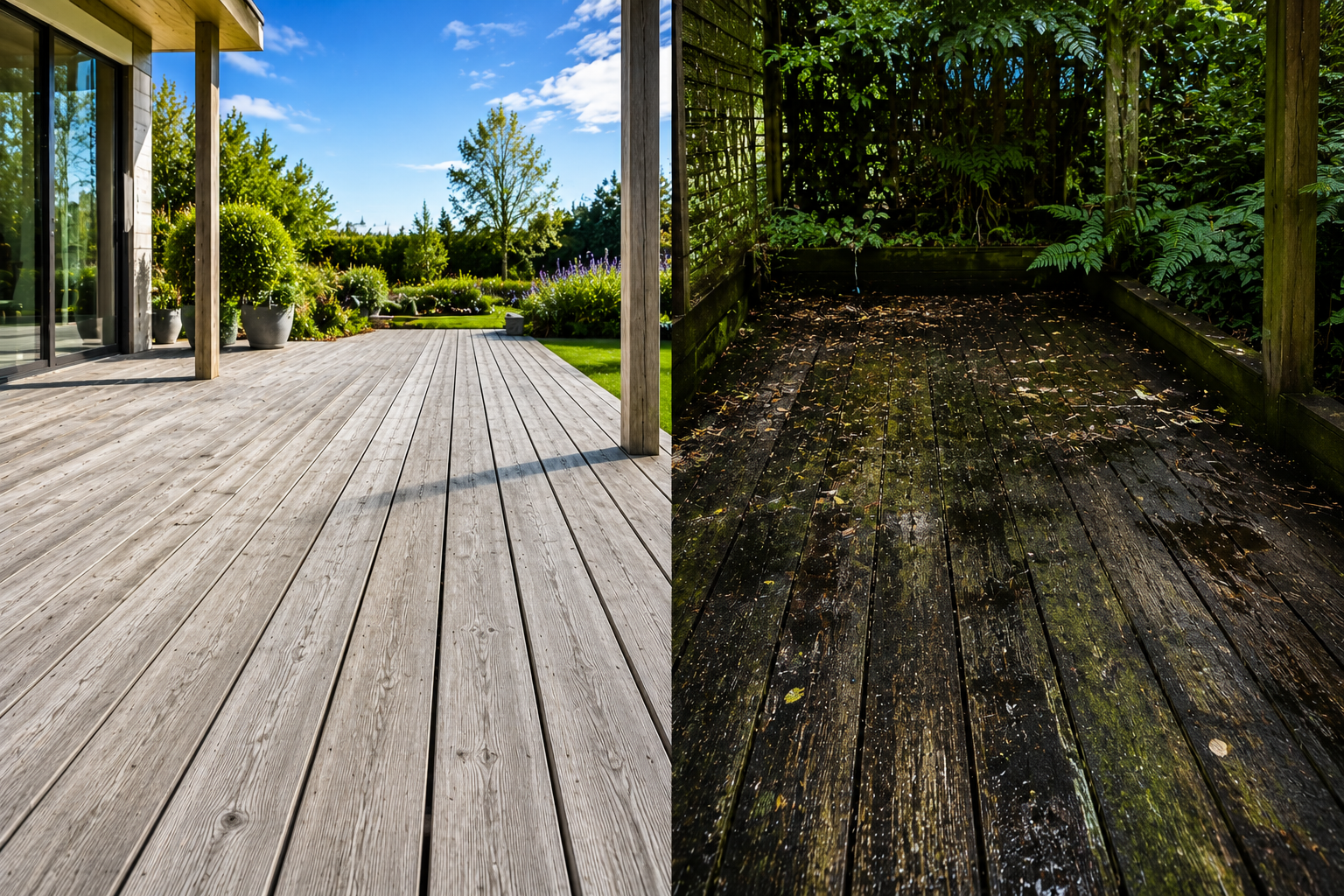
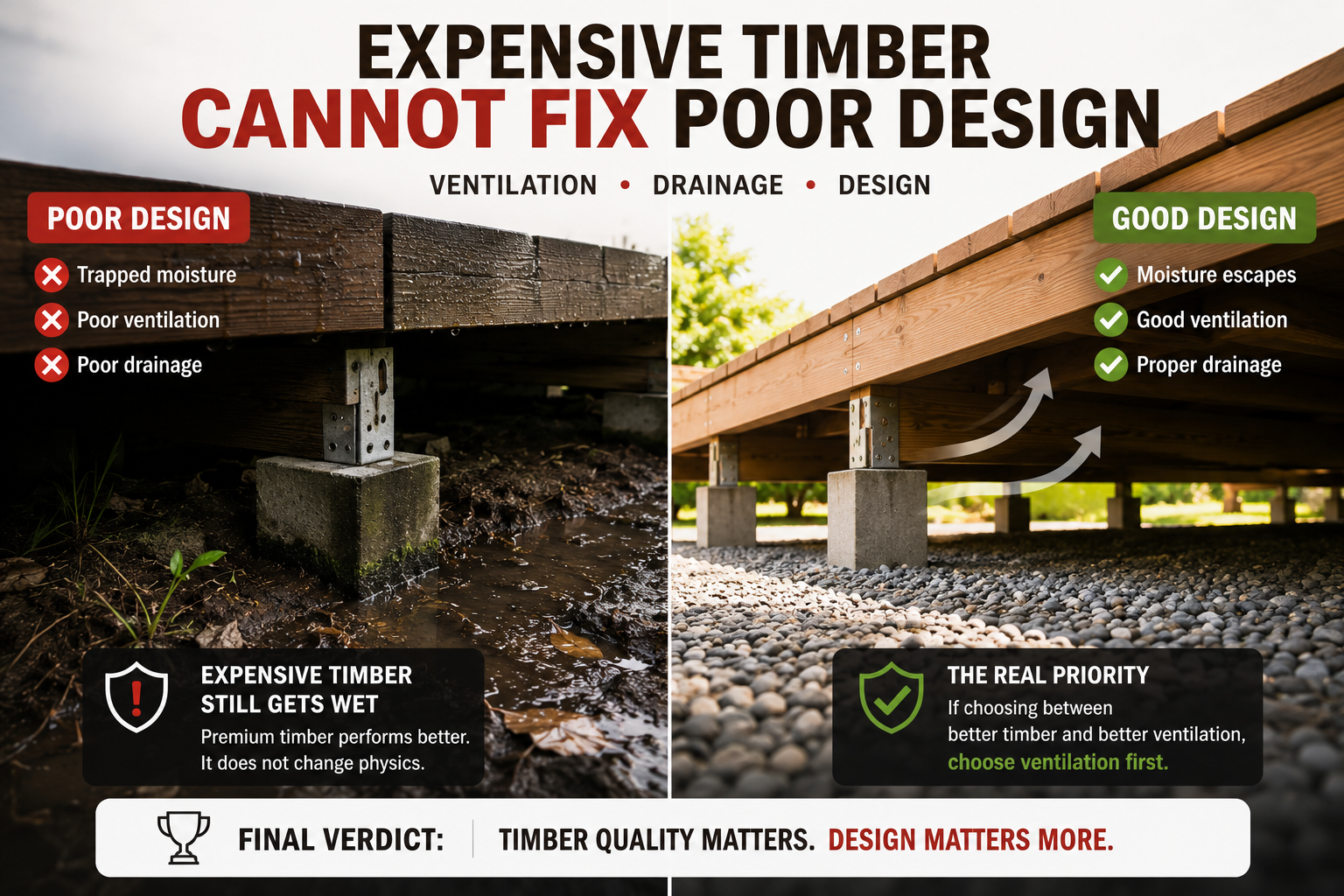
Neither pine nor spruce compensates for trapped moisture. Water needs a route through the board gaps, away from the site and out of the under-deck space. Keep cut ends and penetrations detailed as the timber system requires, and clear leaves before they block the drainage path.
A well-designed deck built from correctly specified softwood can outlast a poorly detailed deck made from a more expensive species. For the wider decision, read Can Expensive Timber Fix a Poorly Designed Deck?. For ongoing care, use the wooden deck maintenance checklist.
How to choose between pine and spruce
- Specify the exposure first. Separate visible boards from joists, beams, posts and members close to damp ground.
- Check the treatment declaration. Do not rely on colour, a vague “treated” description or the species name.
- Check strength where it matters. Use graded structural material and a span table for load-bearing parts.
- Compare like for like. Match dimensions, treatment class, grade, profile and supplied length before comparing prices.
- Choose the finish you want to live with. Inspect several boards from the actual batch for knots, colour and machining quality.
When pine is the better choice
- You want a widely available pressure-treated softwood product with a clear use-class declaration.
- You are choosing exterior structural timber and the supplier provides the correct treatment and strength grade.
- You prefer its warmer, more characterful appearance.
- The comparable spruce option does not provide equally clear treatment or structural information.
When spruce is the better choice
- You prefer the look of the specific spruce boards available to you.
- The supplier confirms that the product is correctly treated and suitable for the intended deck location.
- You have checked the grade, board profile, span requirements and fixing instructions.
- It is genuinely the better local value after comparing like-for-like specifications.
Frequently asked questions
Is spruce good for decking?
It can be. Verify that the exact spruce product is intended for exterior decking, has the appropriate treatment and is installed with the manufacturer’s spacing and support details. Spruce should not be assumed suitable merely because it is sold as softwood.
Does pine last longer than spruce outdoors?
There is no dependable species-only answer. Treatment quality, the exposure class, drainage, ventilation and maintenance have a much greater effect on the service life of a deck.
Is pine or spruce cheaper?
It depends on the market and the specification. Compare products with the same dimensions, grade, treatment class and profile. A lower price on an untreated or lower-specification board is not a useful saving.
Should I use pine or spruce for deck joists?
Choose the product that is structurally graded and correctly treated for its exterior exposure. For most decks, the specification for joists matters more than whether the timber is pine or spruce.