On this page
- Which is cheaper: wood or composite decking?
- Maintenance: what does “low maintenance” really mean?
- Which lasts longer?
- Repairs and replacement
- Installation details matter for both materials
- Choose wood if these priorities sound like you
- Choose composite if these priorities sound like you
- Questions to ask before choosing either material
- Frequently asked questions
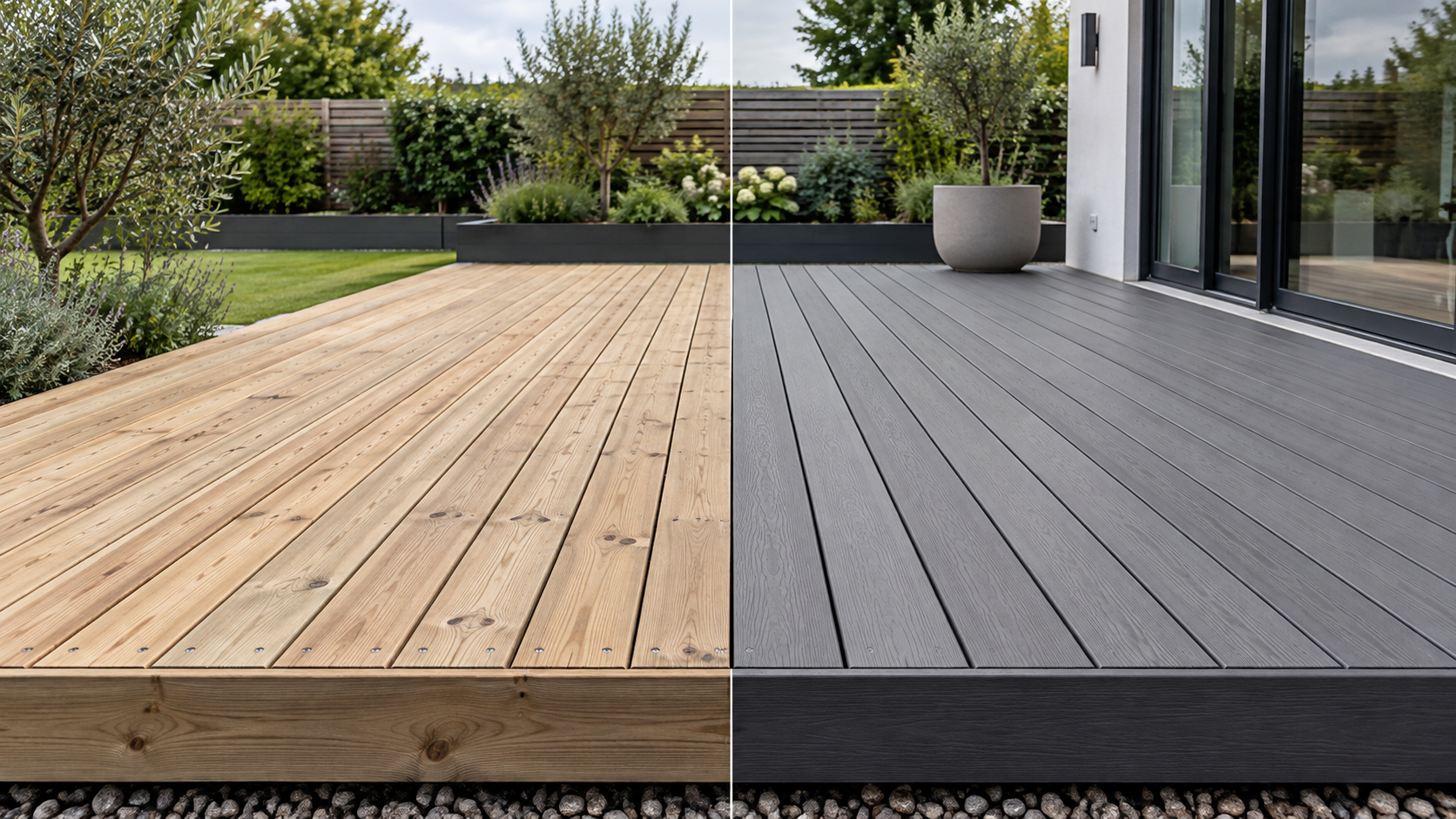
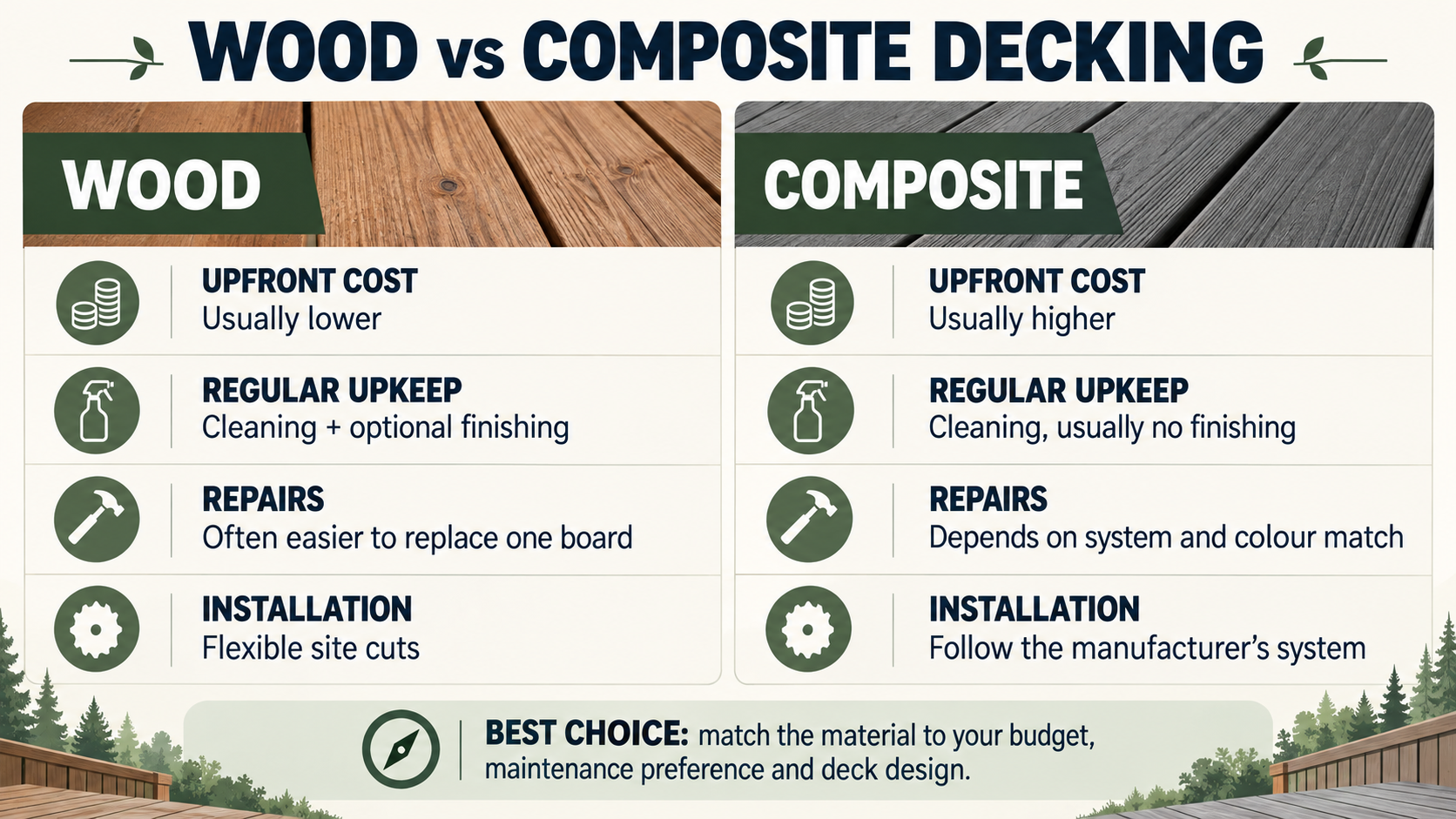
Wood decking is usually the lower-cost, easier-to-repair choice. Composite decking usually needs less regular finishing work, but costs more upfront and must be installed as a compatible system. Neither material is automatically better. The right choice depends on your budget, how much maintenance you are willing to do, the look you want and whether the deck can drain and dry properly.
Do not compare board prices alone. The long-term result depends on the subframe, fixings, installation, drainage and the availability of matching replacement parts as much as it does on the visible surface.
| Factor | Wood decking | Composite decking |
|---|---|---|
| Upfront material cost | Usually lower for standard pressure-treated softwood. | Usually higher, especially for branded board and fixing systems. |
| Regular upkeep | Needs cleaning and may need a finish, depending on the appearance and protection you want. | Needs cleaning but usually no oiling or staining. |
| Repairs | Individual boards are often straightforward to cut out and replace. | Replacement can depend on the exact profile, clip system and availability of a colour match. |
| Appearance over time | Weathers naturally and can often be cleaned, sanded or refinished. | Offers a more consistent manufactured look; colour and surface change vary by product and exposure. |
| Installation | Flexible for site cuts and custom details, but still needs correct spacing and fixings. | Usually follows a specific support, expansion-gap and fixing system. |
| Moisture risk | Board and subframe specification, drainage and drying are critical. | The board resists biological decay, but drainage, gaps and the subframe still matter. |
Which is cheaper: wood or composite decking?
Wood is usually cheaper at the start, particularly when comparing pressure-treated softwood boards with a branded composite system. Composite costs can include proprietary clips, trim pieces, starter boards and closer joist spacing, so a price per board can give a misleading comparison.
For a fair estimate, price the complete deck rather than only the visible surface:
- deck boards and waste allowance;
- joists, beams, posts and supports;
- fixings, clips, trims and edge details;
- ground preparation, drainage and access;
- installation labour or your own time;
- cleaning products and any future finish for timber.
A low board price is not a saving if it needs a different subframe or if replacement parts will be hard to find later. For a practical board-and-frame estimate, use How Much Decking Do I Need?.
Maintenance: what does “low maintenance” really mean?
Composite is low maintenance, not maintenance-free. Leaves, dirt and algae can still collect on the surface and in the gaps. A composite deck also relies on the frame below it, which needs drainage, ventilation and inspection just like a timber deck.
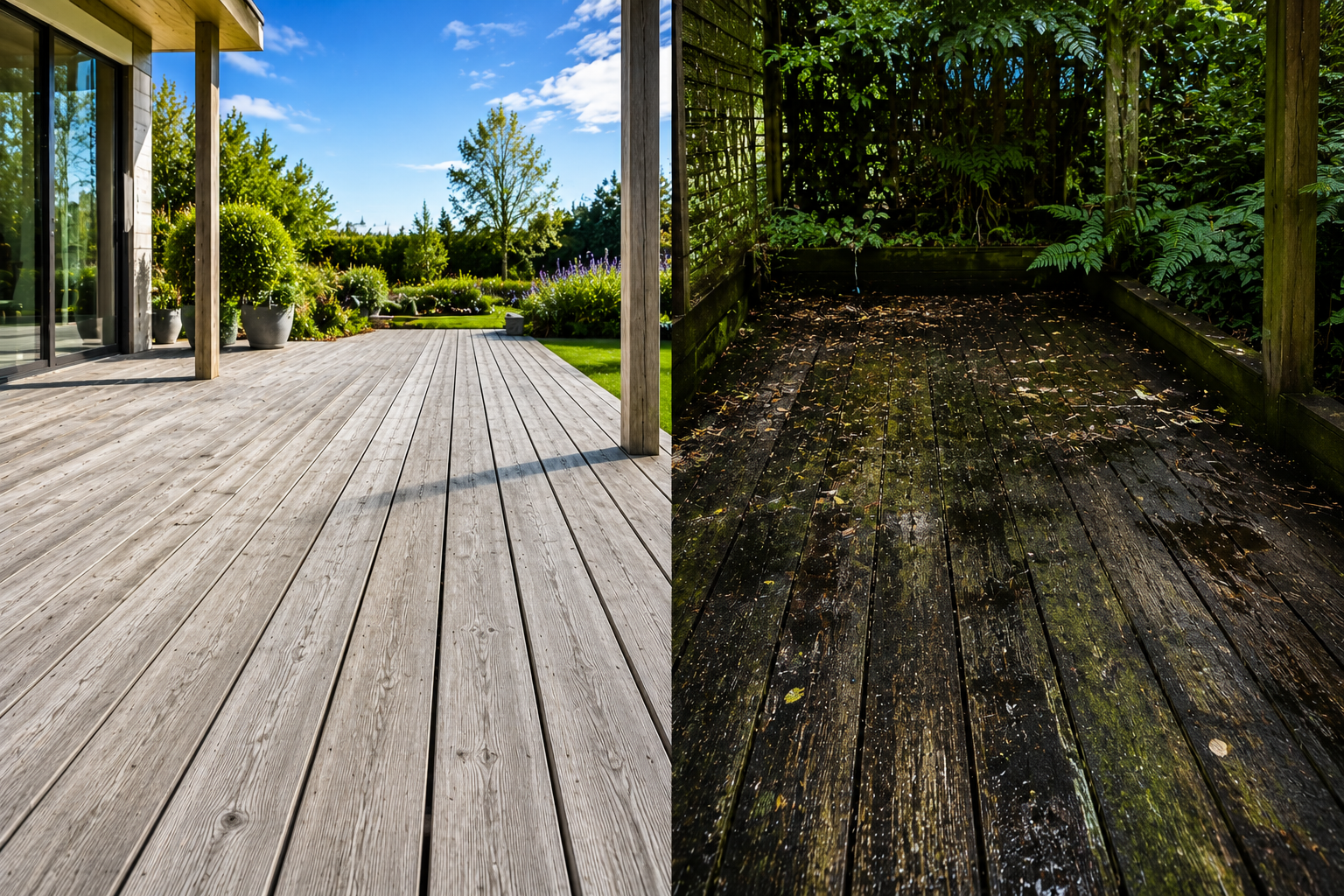
Wood needs more choice from the owner. Some people accept the natural silver-grey weathering and clean it periodically. Others prefer to apply a suitable finish to retain colour or water repellency. The important distinction is that a coating is an appearance and surface-protection choice, not a substitute for good construction.
Which lasts longer?
There is no reliable material-only lifespan. A well-built timber deck can serve for many years; a poorly drained composite deck can still have staining, movement, blocked gaps or subframe damage. Product quality, the treatment and grade of the timber, installation details, exposure and maintenance determine the outcome.
For timber, the hidden structural parts are particularly important. Softwood deck boards and the load-bearing subframe do not face the same conditions. See UC3 vs UC4 Timber before specifying joists, beams or posts.
Repairs and replacement
Wood is often easier to repair on site. A damaged board can commonly be removed, a replacement can be cut to size and a finish can help it blend in over time. This is useful for DIY work and decks with non-standard layouts.
Composite can be durable at the surface, but replacement is more product-specific. Hidden clips, proprietary board profiles and colour weathering can make a single-board repair less straightforward. Before buying, check whether the manufacturer expects the same product, colour and fixing system to remain available in future.
Installation details matter for both materials
Wood and composite both need gaps, support and a route for water to leave. Do not use timber board spacing for composite: composite products expand and contract differently, and their manufacturer’s installation table controls joist spacing, side gaps and end gaps.
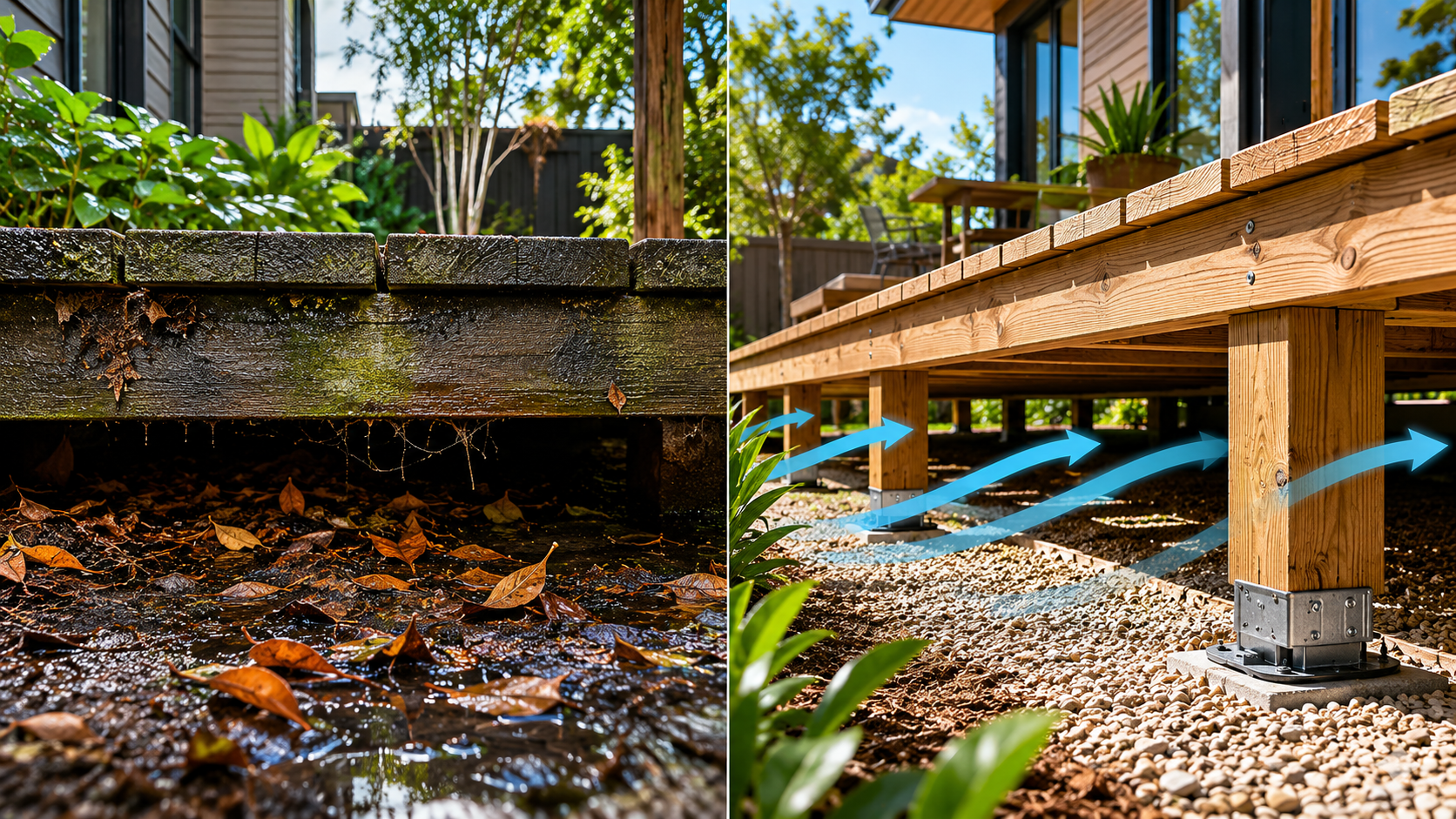
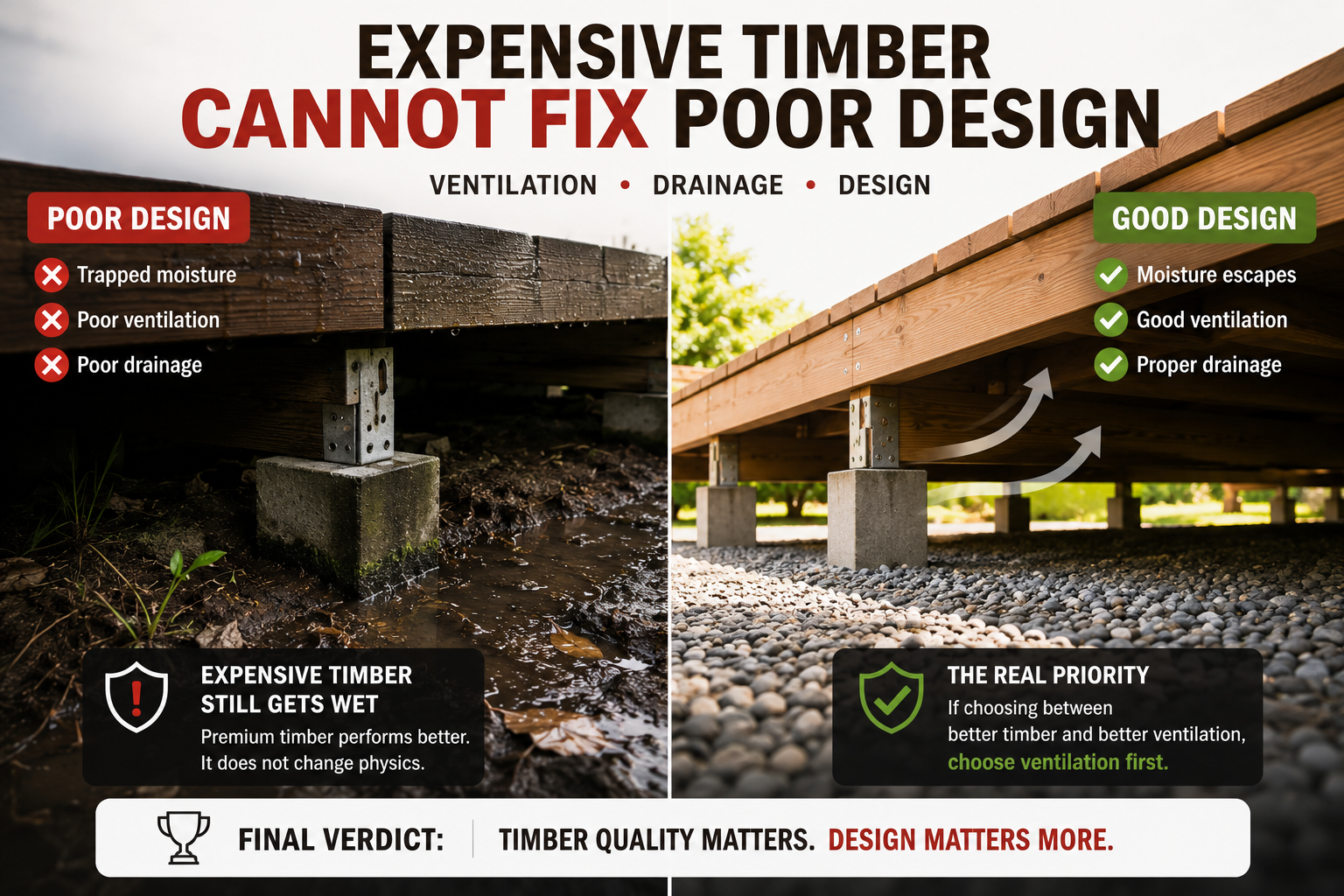
Likewise, composite boards do not make a damp, unventilated subframe acceptable. Build the support structure so it can drain, dry and be inspected. Does UC4 Timber Still Need Ventilation? explains why hidden exterior timber needs attention even beneath a different deck surface.
Choose wood if these priorities sound like you
- You want the lowest practical upfront cost.
- You value natural timber and are comfortable with cleaning and optional refinishing.
- You want straightforward site cuts, custom details and easier individual-board repairs.
- You can specify the correct treatment class and maintain drainage around the deck.
If you choose softwood, compare the actual product rather than the species label alone. Pine vs Spruce Decking explains treatment, grade and appearance considerations.
Choose composite if these priorities sound like you
- You prefer a more consistent manufactured appearance.
- You want to avoid routine staining or oiling.
- You are comfortable paying more upfront for a complete board-and-fixing system.
- You will follow the manufacturer’s support, expansion and cleaning instructions closely.
Questions to ask before choosing either material
- What is included in the quoted price besides the boards?
- What joist spacing, gaps and fixing system does this exact product require?
- What is the specification for the subframe, posts and ground preparation?
- How will the material look after several seasons of sun, rain and cleaning?
- Can a damaged board be replaced, and will matching parts be available?
- What maintenance does the manufacturer require to keep the product warranty valid?
Frequently asked questions
Is composite decking cheaper than wood?
Usually not at the point of purchase. Standard pressure-treated softwood is commonly cheaper, while composite can reduce the need for regular finishing. Compare the complete installed and maintained deck, not just board prices.
Is composite decking better than wood?
It is better for some priorities, such as avoiding routine staining or oiling. Wood can be better for lower initial cost, natural appearance, site flexibility and repairs. Both need a well-designed subframe and drainage.
Does composite decking get hot?
Surface temperature depends on the board colour, texture, direct sun, local weather and the specific product. If the deck will receive strong sun, inspect full-size samples in similar light and ask the manufacturer for its guidance before ordering.
Can composite decking rot?
Composite boards do not rot in the same way as timber, but the deck can still develop drainage, staining, movement and subframe problems. The structure beneath it must still be suitable for exterior exposure.
Which decking is easiest to repair?
Wood is usually simpler to repair because an individual board can be cut and fitted with ordinary exterior fixings. Composite repairs depend more heavily on the board profile and fixing system.
Both materials can work well when the deck is designed to drain and dry. For the underlying construction principles, see Outdoor Timber Construction for Decks, Pergolas & Fences and the wooden deck maintenance checklist.