On this page
- How often should you inspect a wooden deck?
- Spring deck maintenance checklist
- Autumn deck maintenance checklist
- What to check underneath the deck
- Keep drainage gaps and ventilation clear
- Early signs of rot, movement and loose fixings
- When cleaning is enough and when a repair is needed
- Use finishes to protect appearance, not to hide a moisture problem
- Questions about wooden deck maintenance
- Small checks protect the whole deck
A wooden deck lasts longer when small moisture problems are found early. A few routine checks can keep leaves out of the gaps, water away from the structure and airflow moving below the boards. That is usually far cheaper than discovering soft joists or loose boards after damage has spread.
This wooden deck maintenance checklist focuses on the things that affect durability most: debris, drainage, ventilation, movement and the hidden parts of the structure. It is useful for pressure-treated, naturally durable and modified timber alike.
How often should you inspect a wooden deck?
Give the deck a quick visual check several times during the year and a more thorough inspection at least once a year. Spring and autumn are practical times. Spring shows what winter moisture has done, while autumn is when leaves and damp conditions can start to block drainage.
Check sooner after prolonged wet weather, a storm or changes around the deck. A new shed, dense planting, stored items or a rug can change airflow and create a damp area that did not exist when the deck was built.
Spring deck maintenance checklist
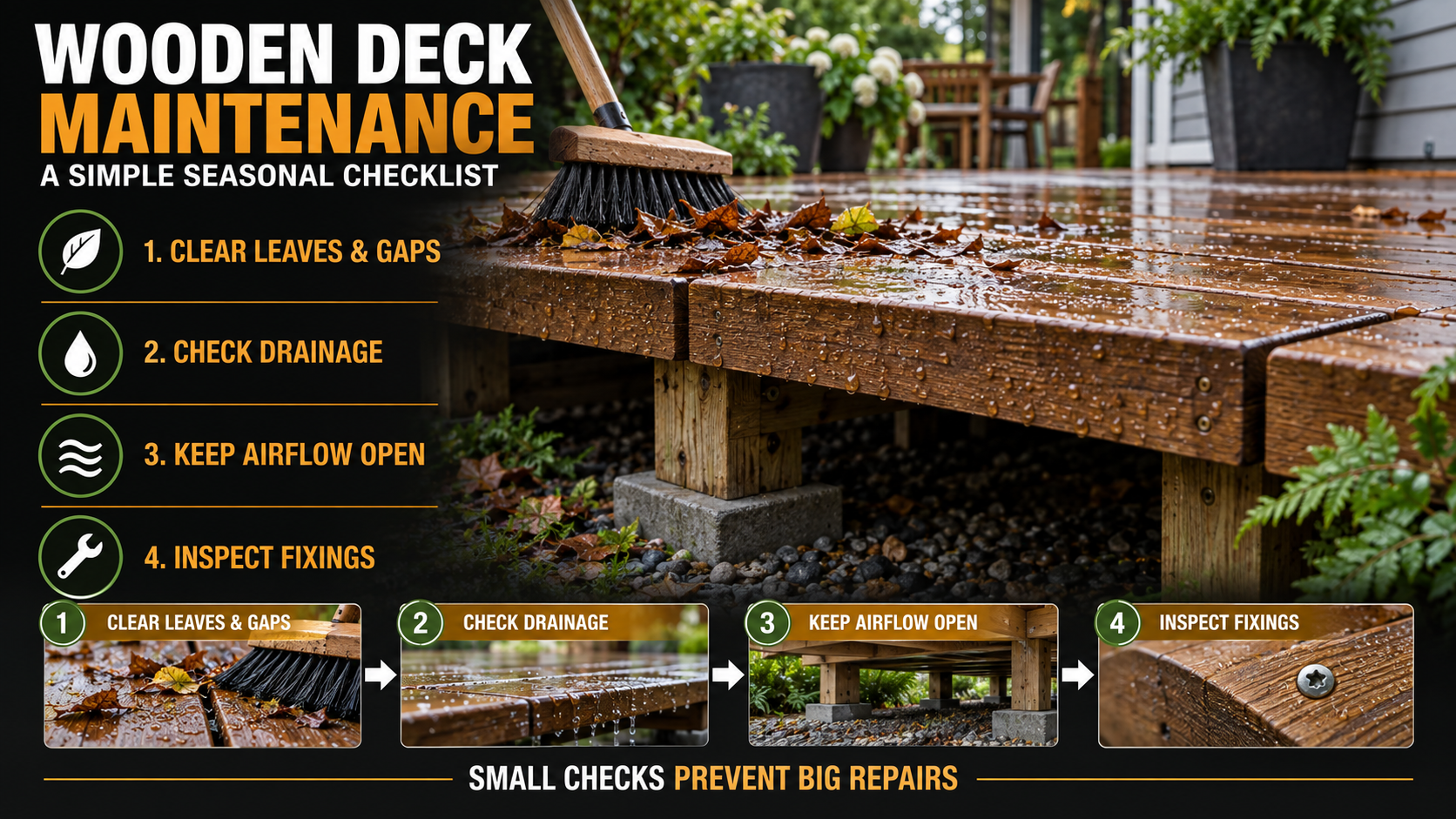
Spring maintenance is about clearing the effects of winter and checking that the deck can dry properly as the season changes.
- Remove leaves, moss and soil from the board gaps and around the deck perimeter.
- Sweep away debris that sits against the house, posts, steps and rail bases.
- Check whether water drains from the surface after rain rather than forming puddles.
- Look for raised, cracked, cupped or split boards.
- Check screws, bolts, brackets and railing connections for looseness or corrosion.
- Inspect the underside where accessible, especially shaded corners and areas close to the ground.
Clean the deck with a method suitable for its finish and timber type. Aggressive pressure washing can roughen the surface or drive water into the wood, so follow the product manufacturer's guidance. Allow the deck to dry fully before applying any oil or finish.
Autumn deck maintenance checklist
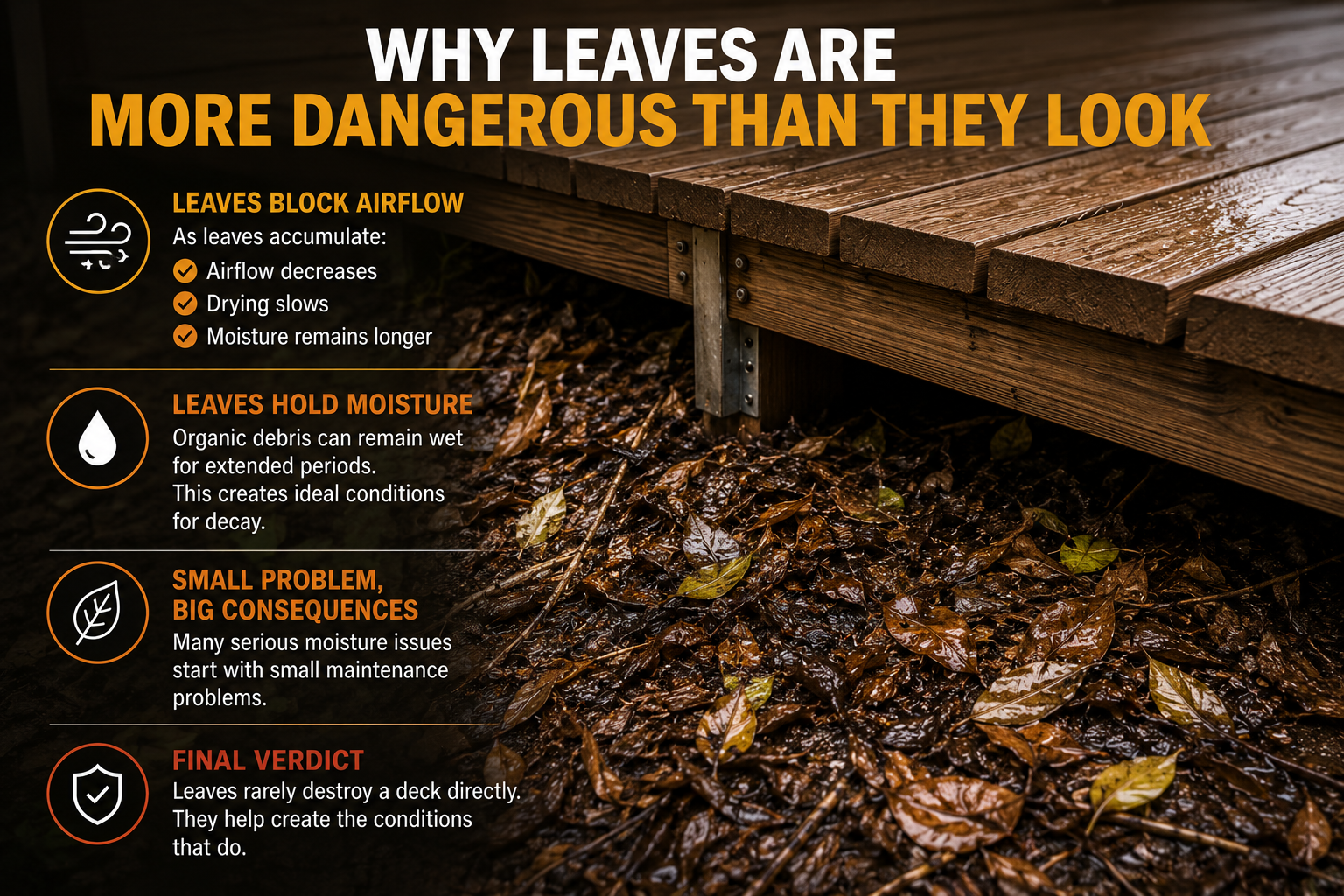
Autumn is often the most important season for preventing rot. Wet leaves and organic debris hold moisture on the timber and can block the paths where water should escape.
- Clear leaves from the boards, gaps, stairs and the ground below the deck.
- Move planters, furniture and outdoor rugs so the covered timber can dry.
- Trim vegetation that touches the deck or blocks the open sides below it.
- Check gutters, downpipes and nearby paving for water that now drains toward the deck.
- Make sure ventilation openings have not been blocked by stored items or seasonal covers.
- Look at post bases and low joists for dark areas that remain wet after the surrounding wood dries.
Read more about why leaves are dangerous around decks if leaf fall is a regular issue in your garden.
What to check underneath the deck
The top of a deck is easy to see, but the underside often needs the closer inspection. Joists and beams receive less sun and may hold moisture where boards overlap them. A low deck can also trap damp air between the structure and the ground.
Use a torch and inspect as much of the substructure as you can safely reach. Look for dark staining, soft or crumbly timber, surface fungal growth, loose fixings and areas where soil or leaf litter has built up. Do not probe structural timber aggressively if you are unsure of its condition; seek a qualified inspection if a support looks seriously degraded.
If the deck has little clearance, focus on its edges, access points and the areas near posts. Even limited visibility can reveal whether debris or standing water is collecting below the boards.
Keep drainage gaps and ventilation clear
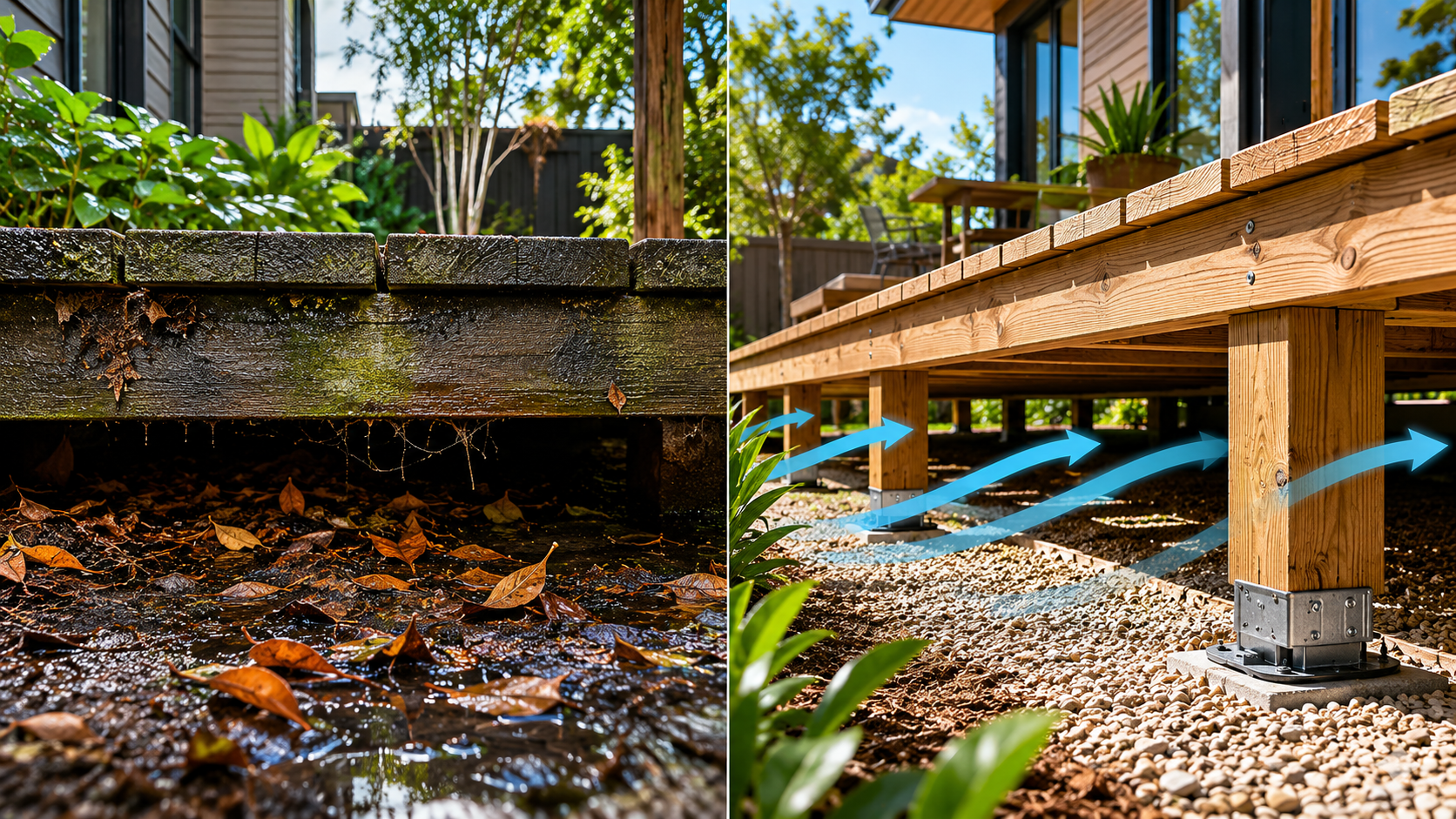
Deck-board gaps do two jobs. They let rainwater and debris pass through, and they allow the boards to expand and contract with seasonal moisture changes. When the gaps fill with leaves, soil or moss, the surface holds water for longer and the structure below receives less air.
Use a narrow non-metal tool or a brush to clear the gaps without damaging board edges. Do not fill them with sealant or debris. If the original gaps are too narrow to work, that is a design issue rather than a cleaning issue. See how deck board spacing works.
Ventilation matters underneath too. Keep items away from any open sides or vents, and avoid closing in a low deck without a considered airflow plan. Treated structural timber still benefits from drying, including timber rated for higher moisture exposure. Our guide explains why UC4 timber still needs ventilation.
Early signs of rot, movement and loose fixings
Not every crack means the deck is failing. Outdoor wood naturally moves, weathers and may develop small surface checks. The warning signs are changes that stay damp, become soft, spread or affect how the deck feels underfoot.
| What you notice | What it may indicate | Useful next step |
|---|---|---|
| Dark timber that remains damp | Trapped water, poor drainage or limited airflow | Clear debris and identify why the area is not drying |
| Soft, crumbly or spongy wood | Possible decay | Assess the affected member; seek help for structural parts |
| A board that rocks or feels springy | Loose fixing, damaged board or movement in the frame | Check the fastening and support before continued use |
| Rust staining or loose hardware | Fixing corrosion or timber movement | Replace with a suitable fixing and check the surrounding wood |
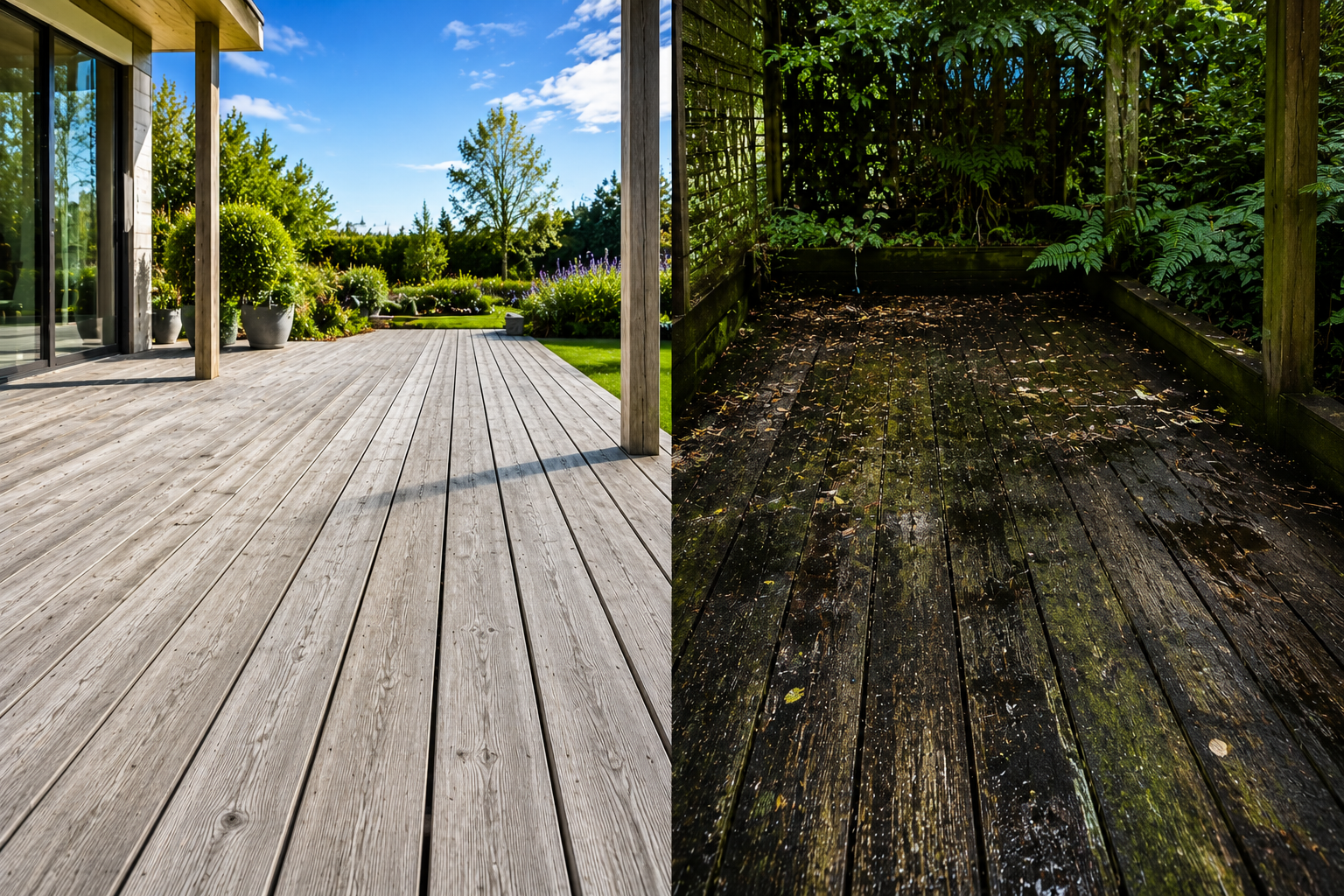
| Moss or leaf build-up in one area | A shaded, slow-drying moisture trap | Clean it and improve light, drainage or airflow where possible |
For a fuller explanation of the underlying moisture cycle, read Why Do Wooden Decks Rot?.
When cleaning is enough and when a repair is needed
Cleaning and a maintenance coat may be enough when the issue is surface grey weathering, light moss or dirt held in the gaps. It is not enough when a board has become soft, a fixing no longer holds, a joist is damaged or water repeatedly pools in the same place.
Repair the cause as well as the visible symptom. Replacing one damaged board without clearing the blocked gap beneath it, for example, can lead to the same problem again. If the issue is in a beam, post, joist or connection, treat it as a structural question rather than a cosmetic repair.
Use finishes to protect appearance, not to hide a moisture problem
Oils, stains and other suitable exterior finishes can reduce surface weathering and help retain a more even colour. They do not create a substitute for drainage, ventilation or a correctly treated substructure.
Before applying a finish, clean the surface, let it dry and check the product is appropriate for horizontal exterior timber. Do not apply a heavy coating over damp wood or a surface that has standing-water problems. Resolve the moisture source first.
Questions about wooden deck maintenance
How do you maintain a wooden deck?
Clear debris regularly, keep drainage gaps open, inspect the underside, check fixings and make sure the timber can dry after rain. Refresh a suitable finish when appearance or water repellency calls for it, but do not use finishing as a substitute for good drainage.
How do you prevent a wooden deck from rotting?
Use timber suitable for the exposure, prevent moisture from being trapped and give the structure airflow. Keep leaves, soil, planters and furniture from holding water against the boards and substructure.
Should you oil a wooden deck every year?
It depends on the product, exposure and the look you want. Inspect the surface rather than following a fixed calendar alone. A fully exposed deck may need attention more often than a sheltered one, but the manufacturer's instructions should guide the maintenance interval.
What is the first thing to check when a deck feels soft?
Stop treating it as a surface issue. Check whether a board, joist or support has decayed, whether the fixing has failed and whether the area stays damp. If a structural part may be affected, have it assessed before using the deck normally.
Small checks protect the whole deck
Good deck maintenance is mostly about giving moisture nowhere to hide. Clearing debris, keeping gaps open and looking below the boards takes little time, but it can prevent the conditions that lead to expensive repairs. The best time to address a damp patch or loose fixing is before it becomes a structural problem.
Sources:
Timber Decking and Cladding Association: Specification for Timber Decking
US Forest Service: Guidelines for the Selection and Use of Pressure-Treated Wood
US Forest Service: Wood Biodeterioration and Preservation