On this page
- The short answer on timber deck lifespan
- Can a wooden deck really last 30 years?
- What determines how long a deck lasts?
- How long does pressure-treated decking last?
- The most common reasons decks fail early
- How to plan for a 30-year deck
- How different timber choices affect lifespan
- Questions homeowners ask about deck lifespan
- A deck lasts when the whole system is designed to dry
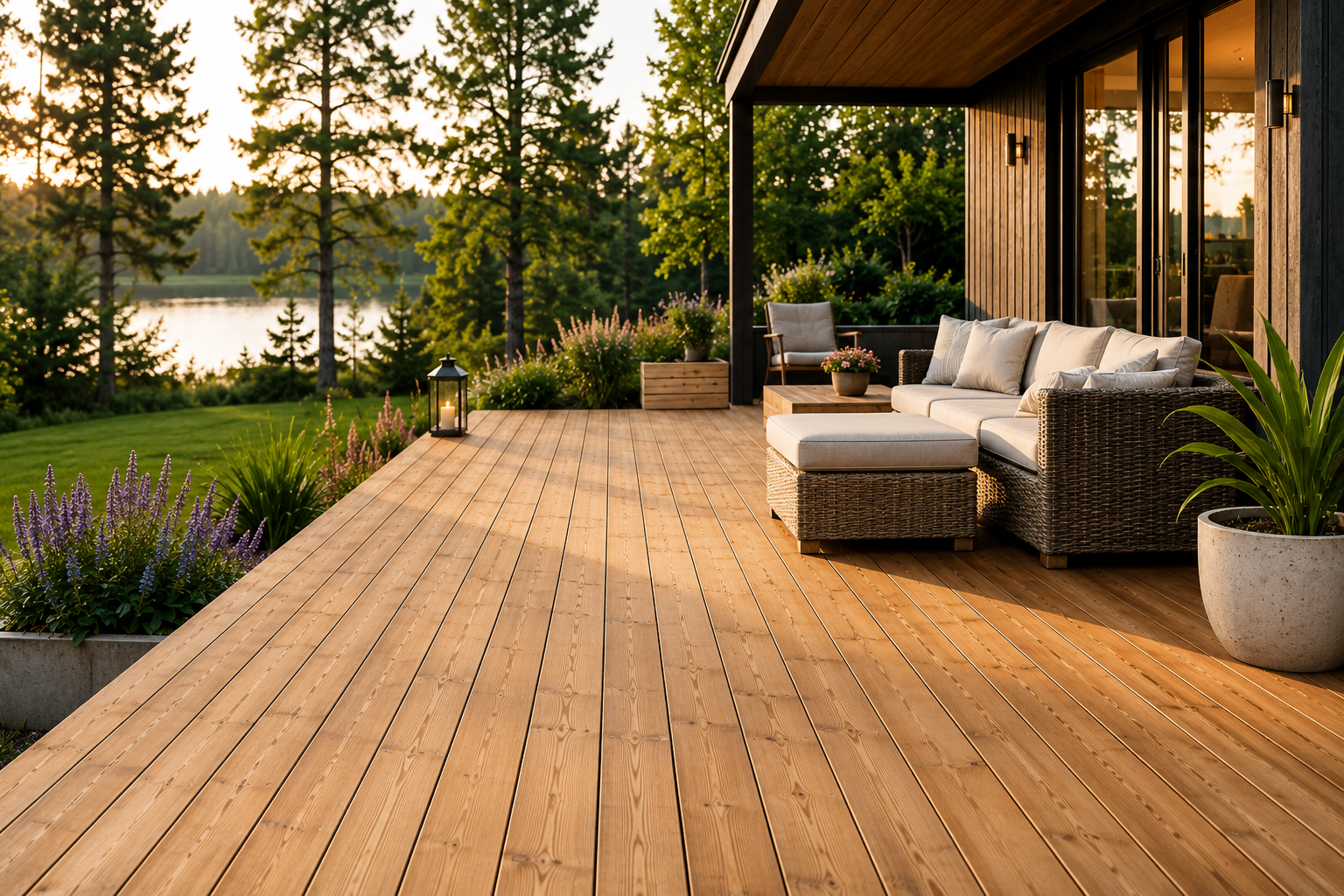
A wooden deck can last 15, 30 or more years. The realistic answer depends on the deck boards, the subframe, how quickly the structure dries and whether small problems are fixed before they become structural repairs.
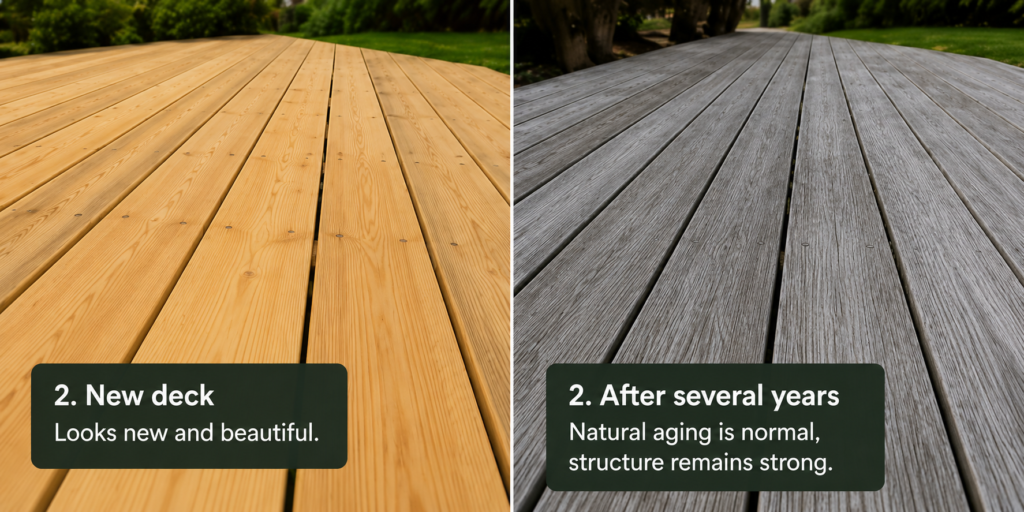
Thirty years is achievable, but it is a design target rather than an automatic result of buying treated timber. A deck can look weathered after a few seasons while its frame remains sound. It can also look tidy from above while hidden joists are holding moisture underneath.
The short answer on timber deck lifespan
In UK industry guidance, 15 years is treated as a minimum service-life standard for a quality timber deck. Longer desired service lives of 30 and 60 years are also achievable when the timber, treatment, construction and maintenance are specified for that target.
| What you are measuring | What it means | What affects it most |
|---|---|---|
| Appearance lifespan | How long the boards look fresh | Sun, rain, foot traffic and the finish |
| Maintenance interval | When cleaning, oiling or refinishing becomes useful | Shade, debris, board species and product instructions |
| Structural lifespan | How long the frame, posts and fixings remain safe | Material specification, drainage, airflow, connections and inspection |
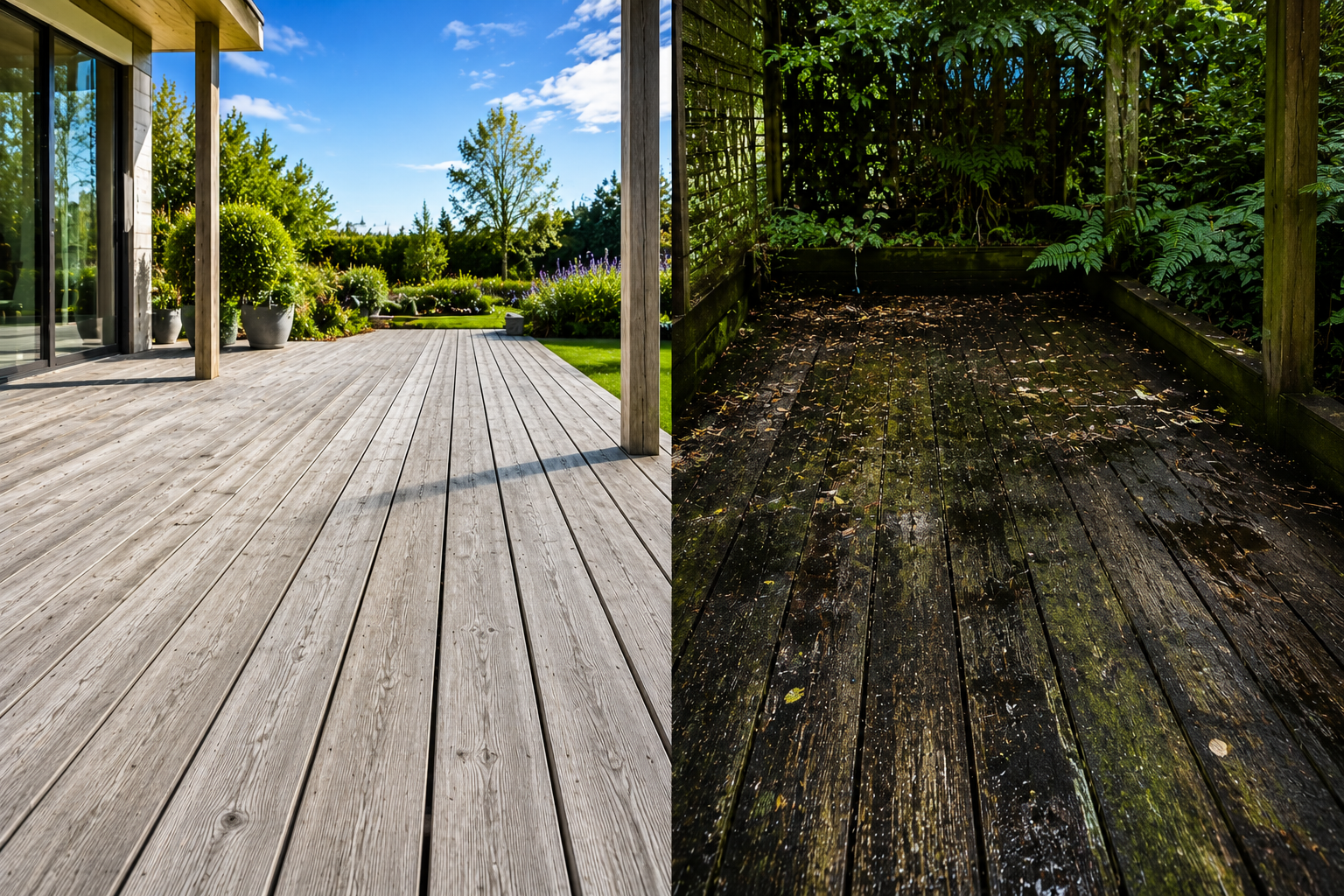
These are not the same thing. Greyed boards can still be structurally sound, while a damp subframe can deteriorate out of sight. Judge the deck as a complete system rather than by the colour of the walking surface alone.
Can a wooden deck really last 30 years?
Yes, provided the project is designed for that lifespan. Timber Decking and Cladding Association guidance identifies 30 and 60 years as achievable desired service lives for raised decks, but makes timber selection the first requirement. A 30-year target needs more than a routine exterior treatment label.
For a raised deck on a new home, the same guidance treats the visible boards and the supporting structure differently. Deck boards may be specified for a 30-year desired service life, while joists and posts need to outlast the boards because replacing them is much harder. That distinction is useful for any deck: spend attention on the parts you cannot easily see or replace.
What determines how long a deck lasts?
1. The right timber for each component
Deck boards, joists, beams and posts do not face the same conditions. For UK-style Use Classes, softwood boards above ground are normally UC3. Softwood joists, beams and posts that provide exterior structural support should be UC4, even when they are not buried in soil.
Use Class describes the exposure the preservative treatment is designed to handle. It does not confirm structural strength, board quality or the exact number of years a component will last. Ask the supplier to confirm the treatment class and, for structural members, the strength grade required by the design.
Read our UC3 vs UC4 timber guide before choosing the materials for a new deck.
2. Drainage and airflow below the deck
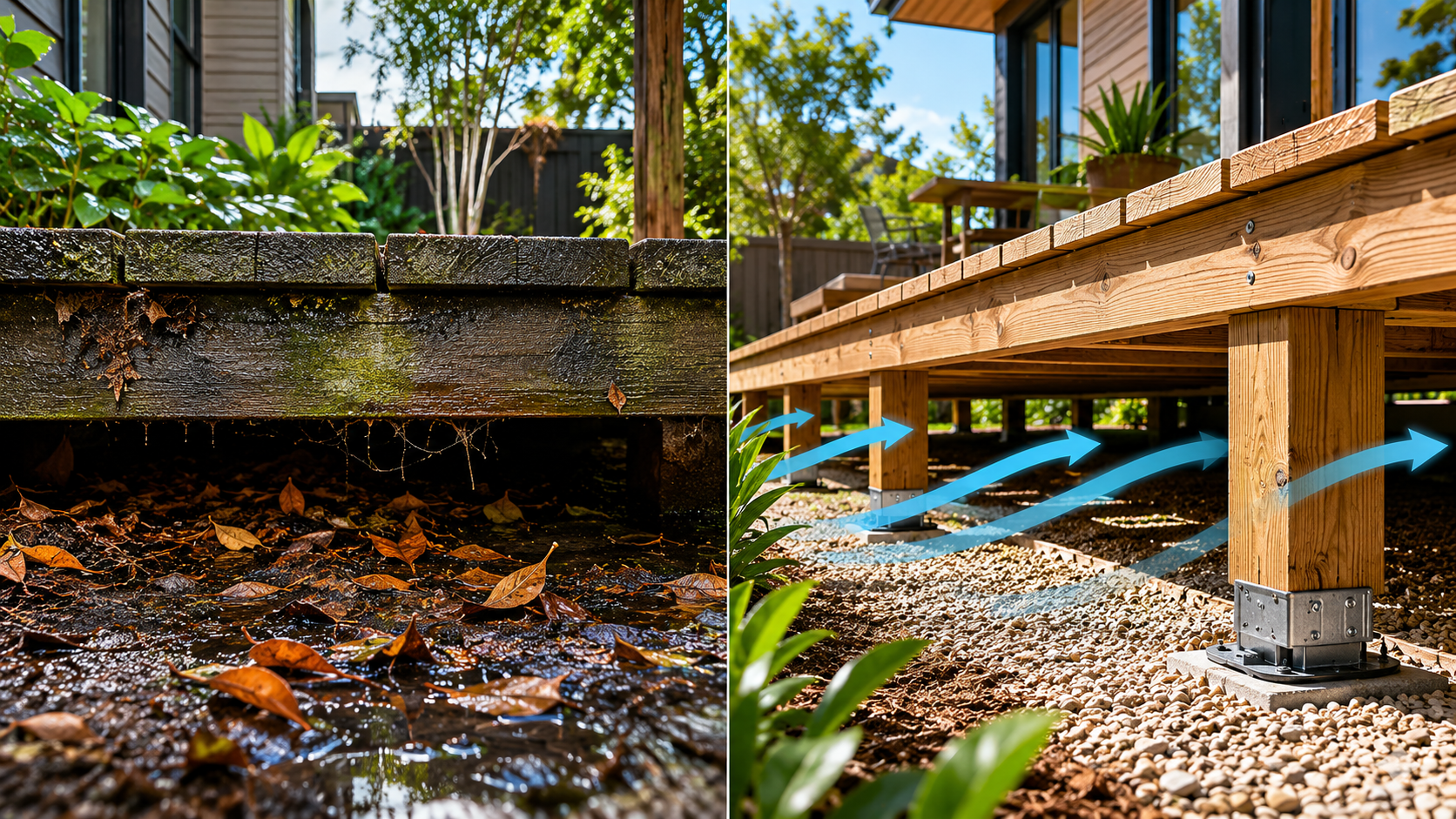
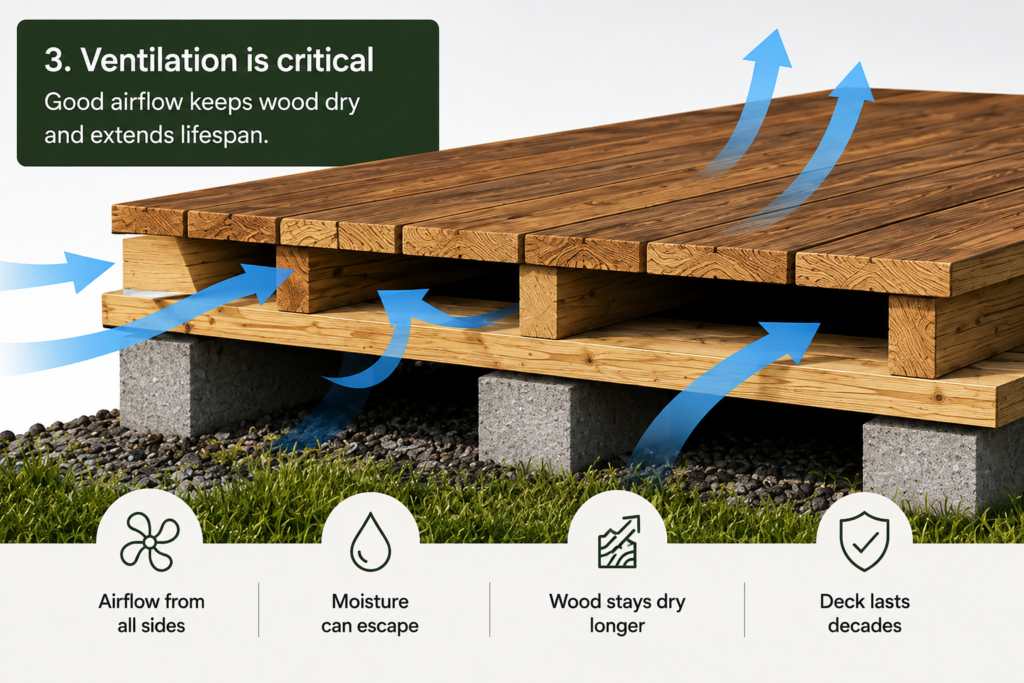
Rain is normal. Long periods of retained water are the problem. A good deck detail lets water drain away, keeps the frame clear of wet ground where possible and gives the underside a chance to dry.
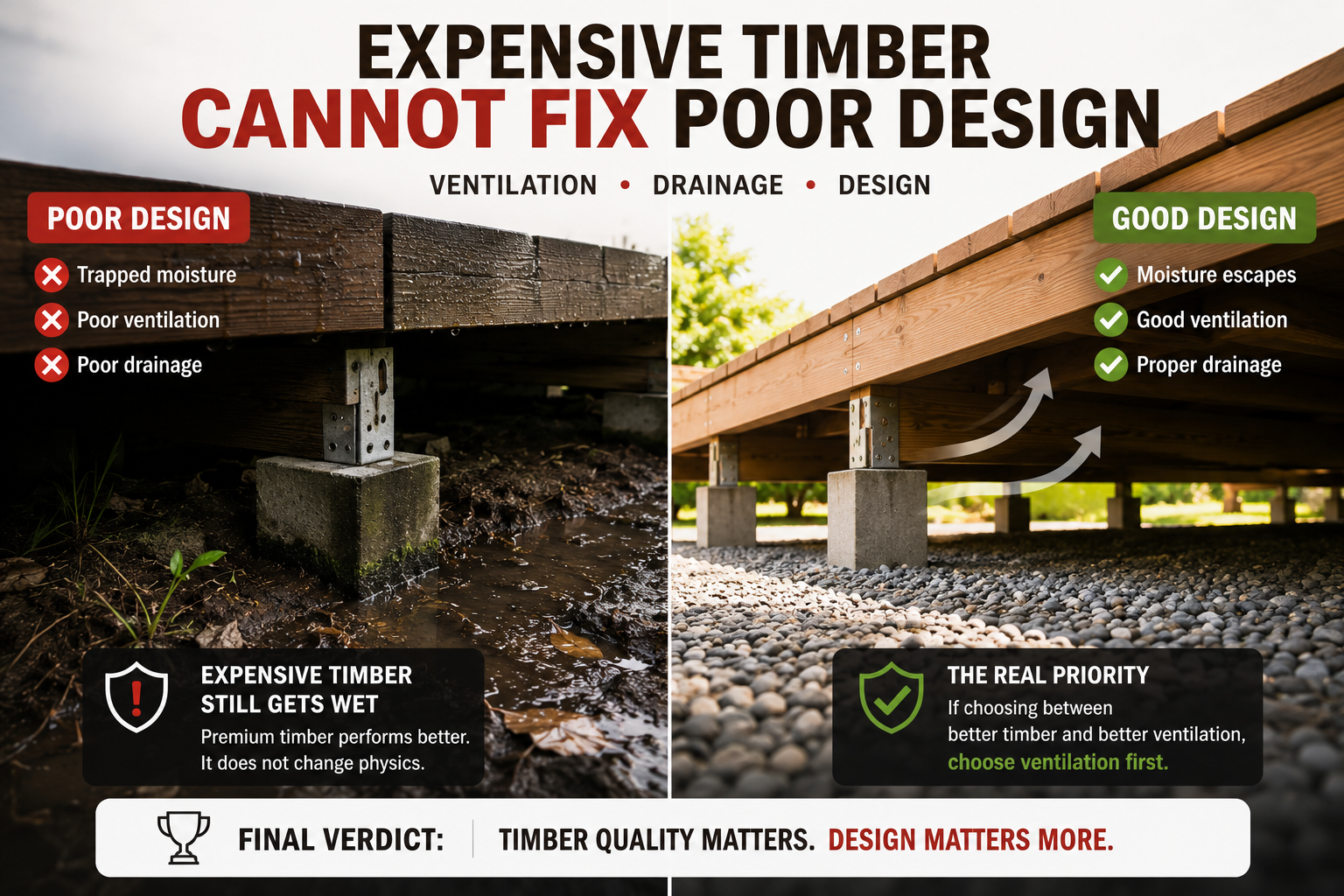
Low-level decks need particular care. Solid skirting on every side, damp soil, dense planting and leaves trapped between structural members can all reduce drying. UC4 treatment gives a subframe greater protection, but it does not make standing water harmless.
Our guide to UC4 timber and ventilation explains how trapped moisture affects a treated deck frame.
3. Installation details
A deck can fail at the details long before a board wears out. Fresh cuts, drilled holes, joints, posts and the points where the deck meets a building need deliberate protection. Pressure-treated timber that is cut on site should have its exposed end grain treated with a suitable preservative product.
Use corrosion-resistant fixings suitable for exterior treated timber. A sound joist is of little value if a connector rusts or a fixing no longer holds the structure securely.
4. Maintenance and inspection
Maintenance is mostly about helping the deck dry and finding problems early. Clear leaves, soil and moss, especially in shaded corners. Keep plant pots raised so water can drain beneath them, and inspect the surface and accessible frame at least once a year.
Finishes can improve appearance and may provide added surface protection, but they cannot compensate for a poorly drained frame. Follow the product manufacturer's instructions for cleaning, recoating and drying time.
How long does pressure-treated decking last?
Pressure-treated decking can give many years of service, but treatment is only one part of the result. The treatment class must match the component: boards above ground need a different level of protection from the joists, beams and posts that support the deck.
Check the treatment specification, the supplier's warranty and the installation instructions before comparing products. A well-drained, accessible deck made with correctly treated timber is more likely to meet a long service-life target than a deck built close to wet ground with blocked airflow.
Pressure treatment does not remove the need to protect fresh cuts, use suitable fixings and clear debris. Those details decide whether the timber can dry between wet periods.
The most common reasons decks fail early
Most premature failures have a moisture path or construction detail behind them. Check these before assuming that the timber itself is poor quality:
- Direct ground contact: soil keeps timber damp and makes inspection difficult.
- Water trapped at posts or joints: a concrete pocket, flat surface or blocked runoff can hold water against the timber.
- Debris under the frame: leaves and organic matter retain moisture and block airflow.
- Tight board spacing: water cannot leave the deck surface freely and seasonal movement can cause damage.
- Unprotected site cuts: cut ends and drilled areas need the treatment recommended for the timber product.
- Corroding fixings: metal components need to suit the outdoor environment and preservative-treated timber.
For the warning signs to look for, see why wooden decks rot and our guide to leaves around a deck.
How to plan for a 30-year deck
A long-lived deck is easier to build at the start than to repair later. Use this checklist when comparing quotes or planning a DIY build:
- Specify the board material and the expected service life, rather than asking only for treated timber.
- Specify UC4 treatment for softwood structural supports and verify it on the delivery documentation.
- Keep posts and the subframe away from persistent ground moisture when the design allows it.
- Plan where water will run after rain, including around the house connection and below the deck.
- Leave access for inspection, cleaning and removal of debris.
- Use the correct gaps between boards and fixings that suit the material.
- Protect cut ends and drilled surfaces during installation.
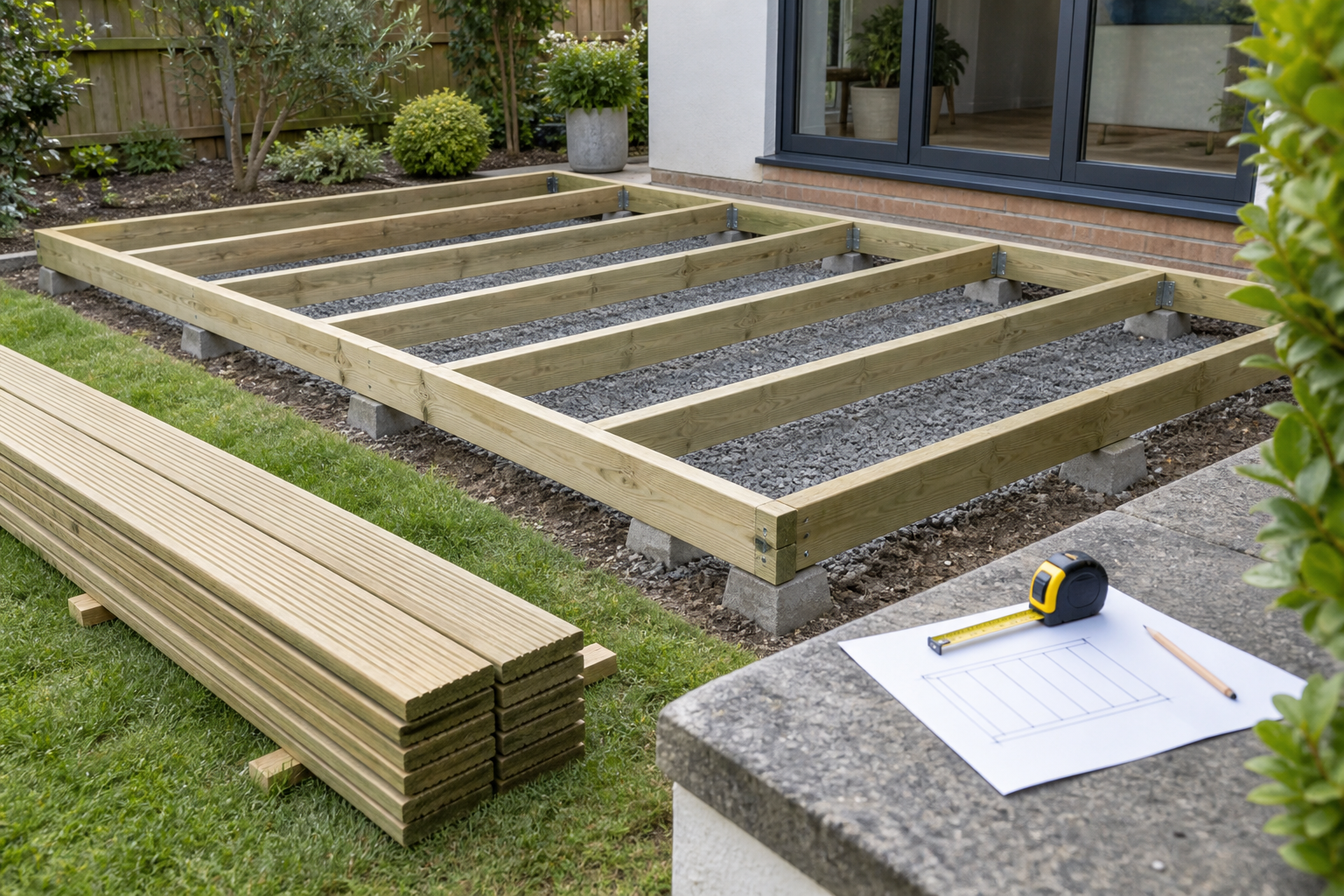
If the ground below the deck remains damp, the base deserves attention before the frame goes in. Compare gravel and geotextile under a deck to decide which approach fits the site.
How different timber choices affect lifespan
There is no single lifespan for all wooden decks. The following comparison is useful when setting expectations, but the supplier's specification and warranty should take priority for a particular product.
| Material choice | Where it can work well | What to verify |
|---|---|---|
| Pressure-treated softwood | Common, cost-conscious decking projects | Correct UC class, treatment quality, drainage and regular maintenance |
| Naturally durable hardwood | Projects seeking a longer desired service life | Durability of the heartwood, structural suitability and responsible sourcing |
| Modified timber | Projects using a manufacturer-specific decking system | Product instructions, warranty and compatible fixings |
Do not assume that a naturally durable species makes all of its timber durable. Natural durability ratings relate to heartwood. Sapwood is generally not regarded as durable unless there is evidence to show otherwise.
Questions homeowners ask about deck lifespan
Does a grey deck need replacing?
Usually not. Sun and rain can change the colour of a timber board without reducing its structural capacity. Check for softness, cracking around connections, loose fixings, rot and movement before deciding whether repair or replacement is necessary.
How long does a UC4 deck frame last?
UC4 describes the required level of preservative protection for the exposure, not a guaranteed number of years. Its lifespan depends on the treatment specification, timber species, installation, ground conditions, drainage and maintenance.
Can an ordinary softwood deck last 30 years?
It can, but do not treat 30 years as a promise. The deck needs the correct materials for each component, good drying conditions and regular care. For a new build designed around a 30-year target, request a documented specification rather than relying on a general product description.
What should be checked every year?
Remove debris, check that water is draining, look for algae and persistently damp areas, test for loose or corroded fixings, and inspect accessible joists and posts. Do not ignore softness, movement or damage at the connection to the building.
A deck lasts when the whole system is designed to dry
For a timber deck, lifespan is not decided by the boards alone. The long-term result comes from a suitable material specification, a durable subframe, water management, corrosion-resistant fixings and regular inspection.
Thirty years is a realistic goal for a properly specified deck. Start with the service-life target, then make sure every hidden component supports it.
Technical references: Timber Decking and Cladding Association deck lifespan guidance, TDCA Code of Practice for raised timber decks, and Timber Development UK decking guidance.