On this page
- Start by defining how wet the structure will get
- Which timber is best for outdoor construction?
- Give water a clear way out
- Build in airflow from the start
- Detail the places where timber is most vulnerable
- Make the structure strong before you make it attractive
- Plan maintenance as part of the design
- Common mistakes in outdoor timber construction
- Questions about building outdoor timber structures
- Build for drainage, drying and access
Outdoor timber construction lasts when it is designed to drain and dry, not simply to look good on installation day. Whether you are building a deck, pergola, fence, bench or garden screen, the same principles matter: select timber for its exposure, keep water moving, allow air around the wood and protect vulnerable details.
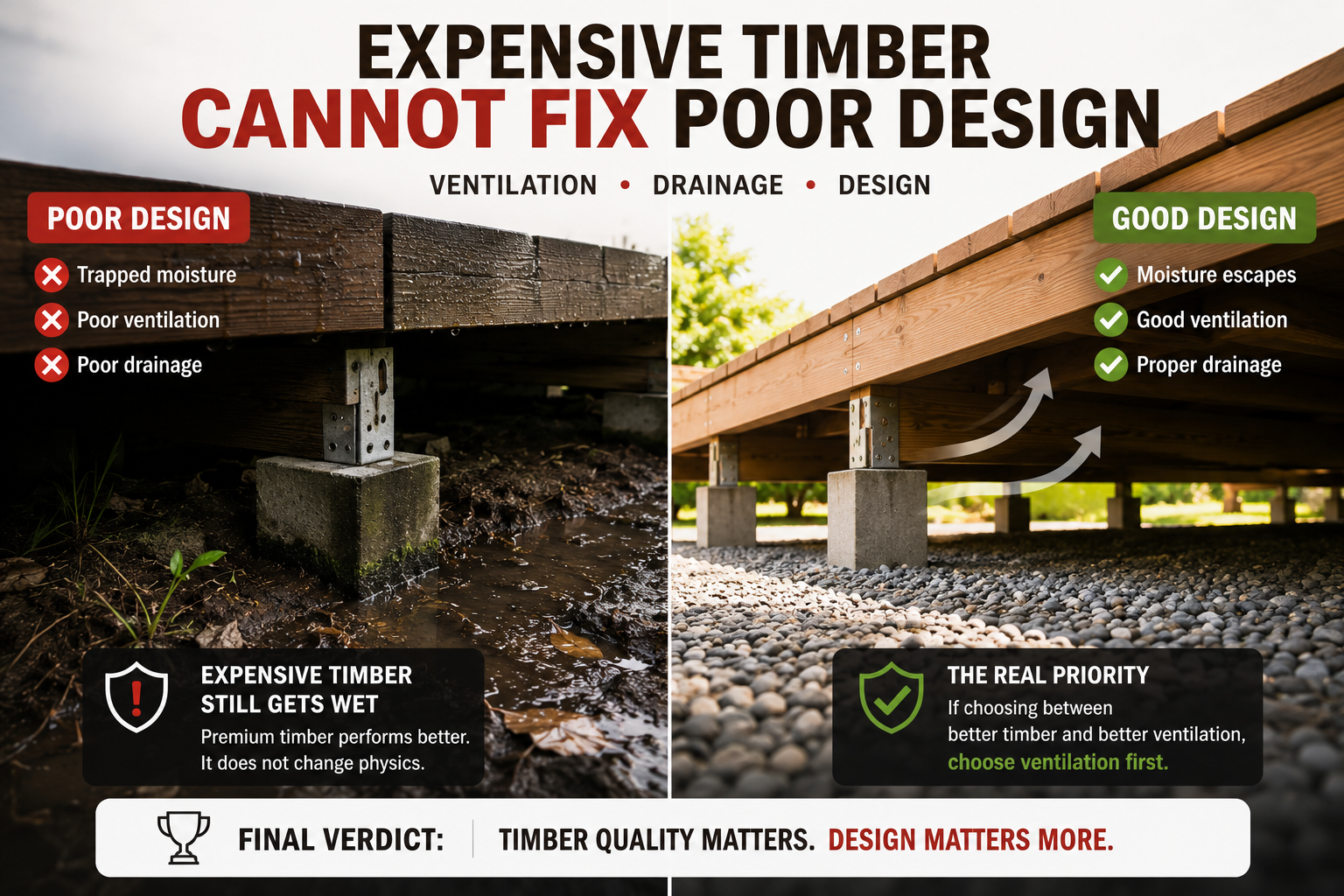
Good timber is important, but it is only one part of the result. A modest, correctly treated timber structure with sound detailing will usually outlast a premium material installed where it stays damp. This guide explains the decisions that matter before you order the timber.
Start by defining how wet the structure will get
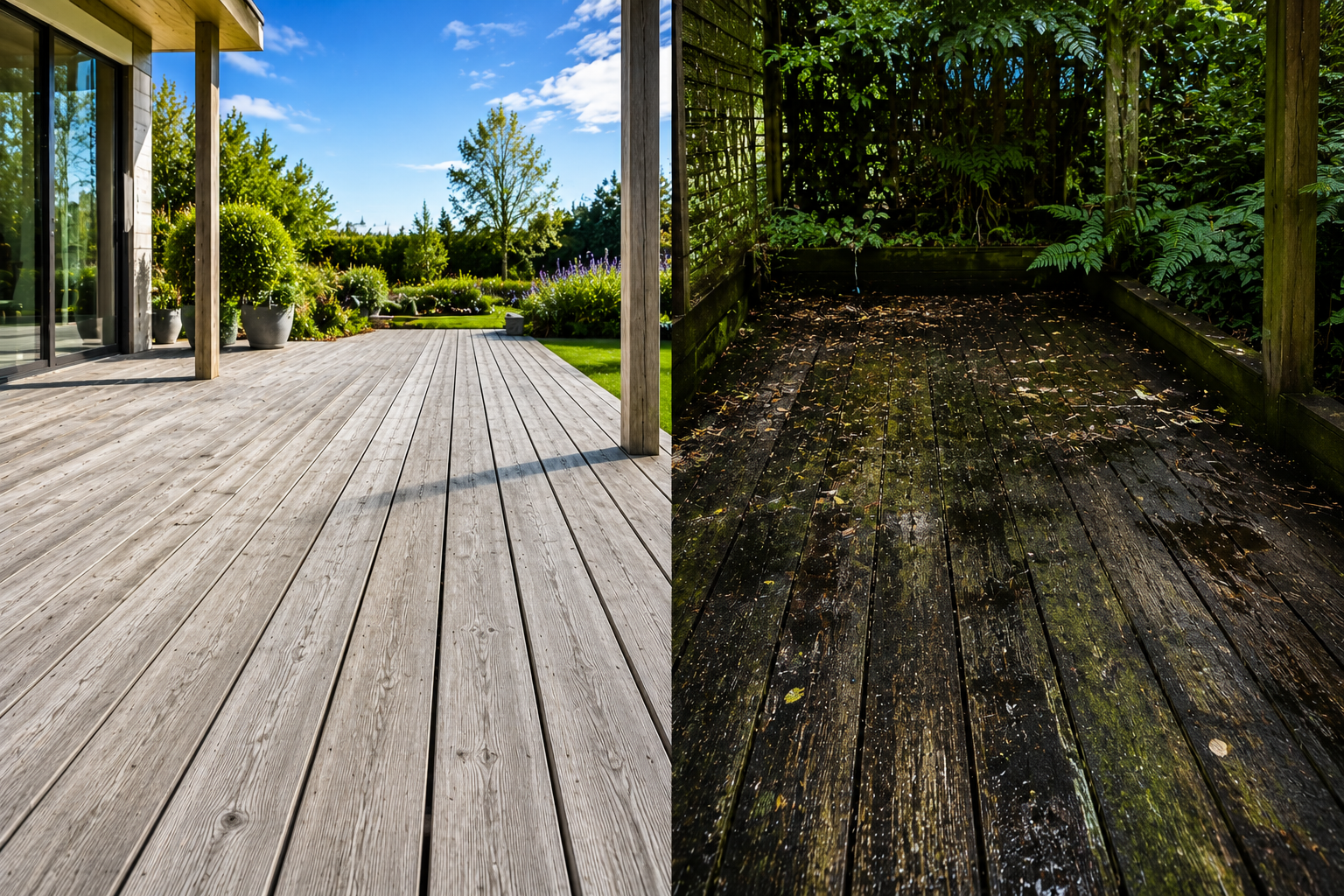
Outdoor structures do not all face the same conditions. A pergola beam high above the ground can dry quickly after rain. A deck joist close to soil, a fence post in the ground or a bench beside dense planting may stay damp much longer.
Think about each component separately. The visible boards, hidden joists, posts, rails and fixings can all have different exposure levels. The component that dries slowest often sets the durability of the whole project.
| Part of the structure | Typical moisture risk | Design priority |
|---|---|---|
| Raised deck boards | Frequent rain, but usually good access to air | Board gaps, drainage and a suitable outdoor treatment |
| Joists and beams beneath a deck | Shade and slow drying | Ventilation, clearance from wet ground and structural timber suited to exposure |
| Posts in or near soil | Persistent moisture and splashback | Correct treatment class, drainage around the post and careful base detailing |
| Pergola rafters and rails | Weathering on exposed faces | Water-shedding profiles, protected cut ends and durable fixings |
| Fences and screens | Rain, ground splash and vegetation | Keep the bottom clear of soil and avoid trapped debris |
Do not choose every piece of timber by one label or one price. Ask what moisture each part will see and how quickly it can dry afterwards.
Which timber is best for outdoor construction?
Outdoor timber can be naturally durable, pressure-treated or modified. Each route can work well when the product is suitable for the actual exposure. A decorative board above ground does not need the same specification as a load-bearing post or joist close to wet soil.
In the use-class system, UC3 is used for exterior timber above ground that is exposed to frequent wetting. UC4 is for more severe exposure, including ground contact or persistent wetting. These classifications help match treatment to the situation, but they do not remove the need for good design.
Buy from a supplier who can confirm the treatment class and intended use. The colour of treated timber is not proof that it has the right penetration or retention for a structural part. If you are comparing the two main outdoor classes, see UC3 vs UC4 Timber: Which Treatment Class Do You Need?.
Give water a clear way out
Water that arrives on a structure should have somewhere to go. That starts with the layout, not with an oil or surface coating applied at the end.
- Leave usable gaps between deck boards so rainwater and debris can clear.
- Do not create flat pockets where water can sit around joints or fasteners.
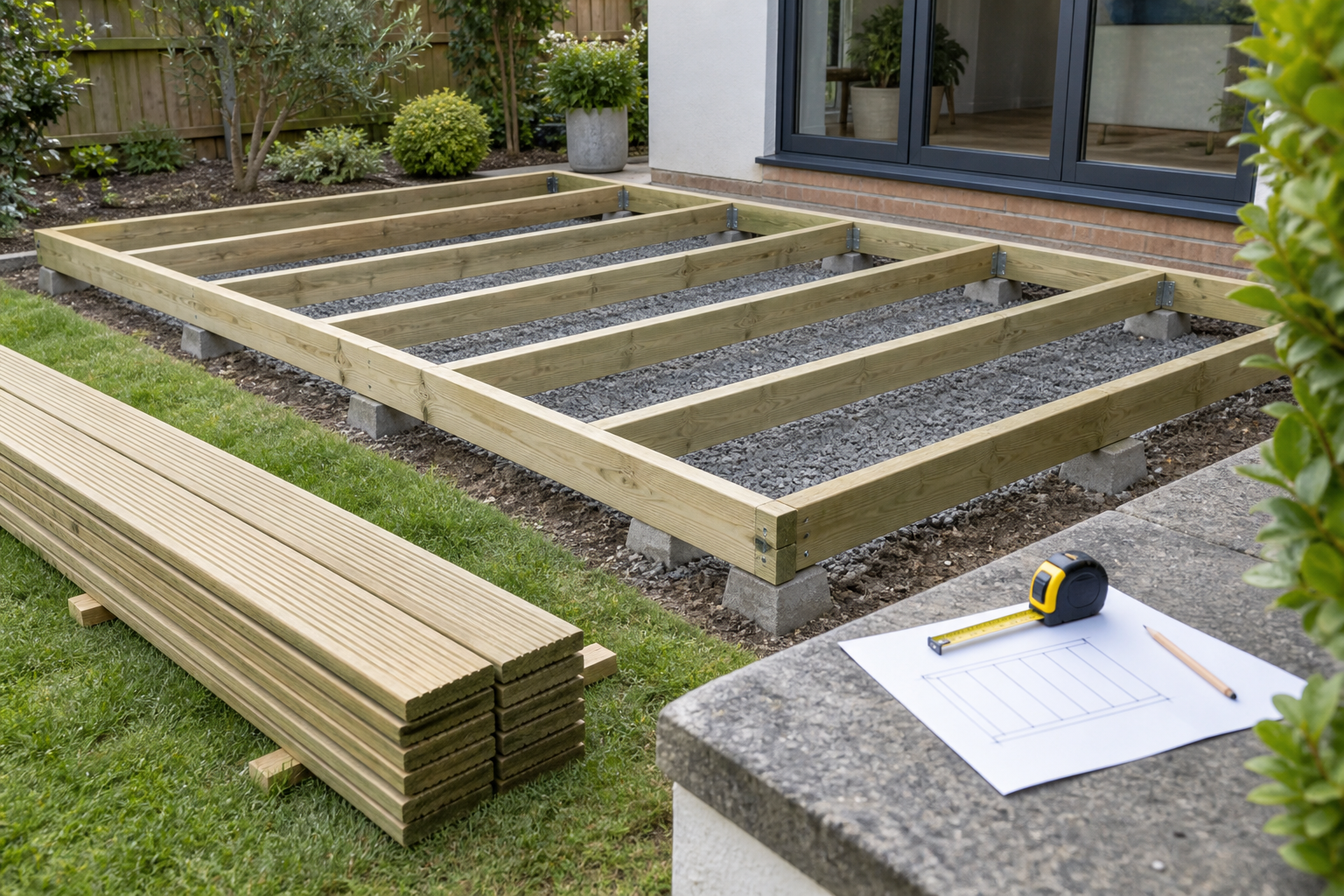
- Keep the ground beneath a deck free-draining where possible.
- Raise planters, rugs and furniture slightly so they do not hold wetness against the wood.
- Use post details that do not let water collect at the base of the timber.
This is why a deck can look dry from above yet still develop problems below. Water and organic debris may be held at the board edges, around a post base or on the shaded side of a joist. For a practical decision on the ground layer, read What to Put Under a Deck.
Build in airflow from the start
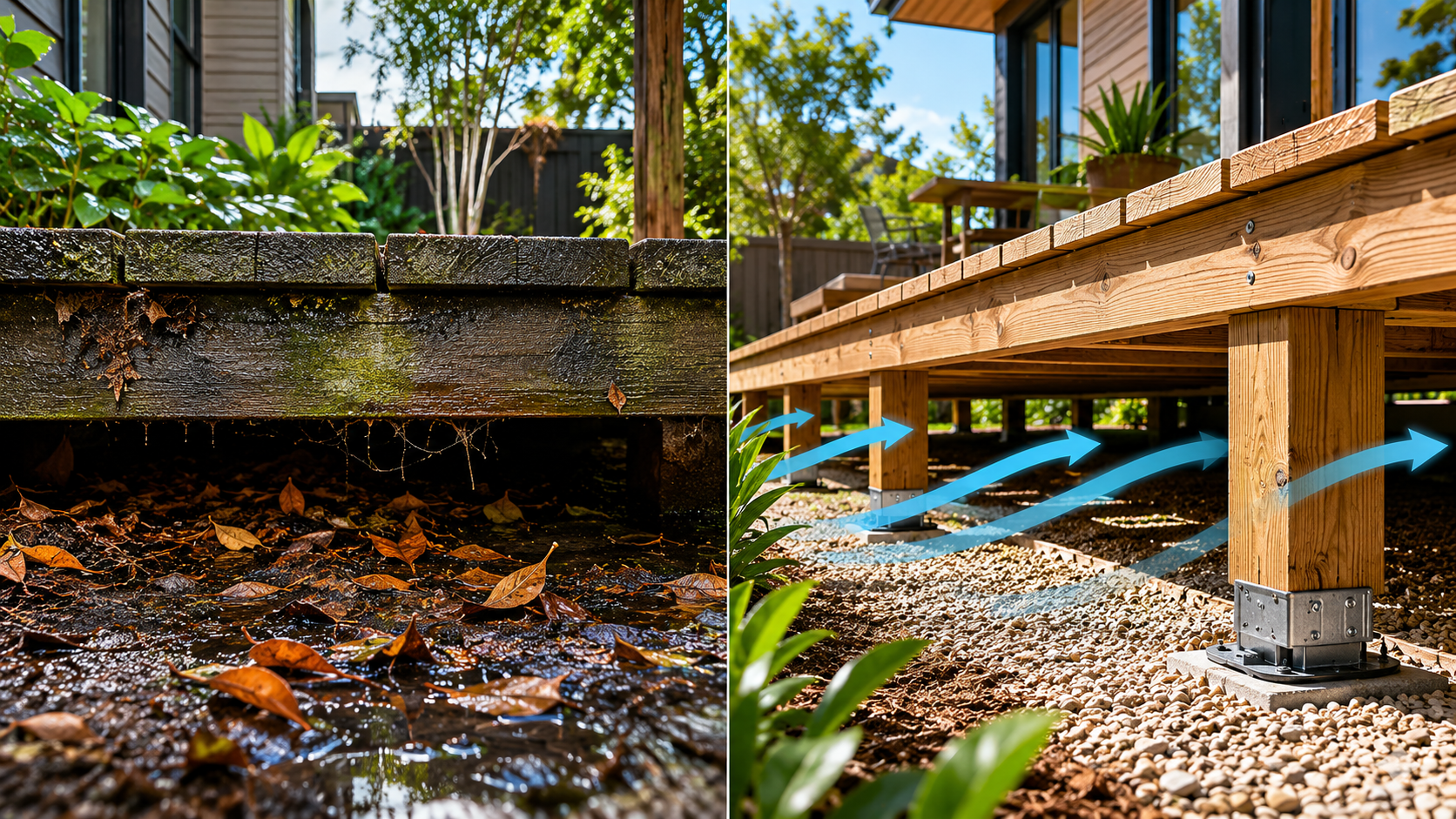
Ventilation is the partner of drainage. After water has left the surface, moving air lets the timber release the moisture it absorbed. This matters most beneath low decks, inside enclosed benches and near dense planting where sunlight and wind are limited.
Avoid boxing in a deck base unless the design includes enough open ventilation. Keep soil, leaves and stored items from blocking the space below the structure. On a low deck, even a small increase in clearance can improve how quickly the underside dries.
Treated timber benefits from this as much as untreated timber. Treatment improves resistance to decay organisms, but a design that stays wet continuously still creates harsher conditions. Does UC4 Timber Still Need Ventilation? explains why the hidden parts of a structure need attention.
Detail the places where timber is most vulnerable
Most outdoor timber projects do not fail evenly. Problems often begin at cut ends, drilled holes, notches, joints and points of contact. These details are easy to overlook because they are small, but they can expose more absorbent end grain or create a place for water to remain.
Plan to treat field cuts with a compatible end-grain preservative where the timber supplier specifies it. Keep beams and rails from forming a flat ledge that catches water. Use suitable corrosion-resistant fixings for the timber treatment and local environment, and do not bury the heads where water and debris will collect.
For a deck, pay particular attention to the gap between boards and to how the board ends meet. Deck Board Spacing covers the problems caused by tight spacing.
Make the structure strong before you make it attractive
Finishes, concealed fasteners and premium boards can make an outdoor structure look excellent. They should not distract from the foundation, support layout and load path. A pergola, fence or deck needs suitable spans, connections and footings before it needs decorative details.
Check the manufacturer's span information for the exact timber section and product you plan to use. Do not assume that a thicker-looking board is a structural member. If a structure carries people, supports a roof or is attached to a building, use the applicable local rules and seek professional advice where required.
Plan maintenance as part of the design
Outdoor timber is not maintenance-free, and a good design makes maintenance possible. Leave enough access to inspect the substructure, clear leaf debris and identify a loose fixing before it becomes a larger repair.
Cleaning removes material that can hold water against the wood. Oils and finishes can help manage appearance and surface weathering, but they are not a substitute for drainage. Review the deck after winter and after periods of persistent rain, especially under furniture, near planters and beside the house.
Common mistakes in outdoor timber construction
- Using one treatment level everywhere. Different components may face very different exposure.
- Letting timber touch soil unnecessarily. This slows drying and raises the decay risk.
- Closing the underside of a low deck. It can create a permanently damp void.
- Relying on a finish to solve standing water. Solve drainage before choosing the coating.
- Ignoring cut ends. Cuts, notches and large holes need the attention specified by the treatment supplier.
- Choosing premium boards while reducing the structural budget. A high-quality surface cannot rescue weak supports or poor ground preparation.
Questions about building outdoor timber structures
What timber is best for outdoor structures?
The best choice depends on the component and exposure. Appropriately pressure-treated softwood is often a practical option. Naturally durable or modified timber can offer extra stability or appearance benefits, but it still needs drainage and ventilation.
How do you stop outdoor timber from rotting?
Use timber suitable for the exposure, prevent long-term moisture traps, allow water to drain and give the structure air so it can dry. Inspect hidden areas as well as visible surfaces. Our guide to why wooden decks rot explains the moisture cycle in more detail.
Does pressure-treated timber need maintenance?
Yes. Treatment helps protect against biological decay but does not keep a structure clean, dry or free from movement. Clear debris, inspect fixings and look after field-cut ends as recommended by the timber supplier.
Build for drainage, drying and access
The best outdoor timber structures do not depend on one expensive material or a heavy coating. They combine appropriate timber with a simple moisture-aware design. If water can drain, air can circulate and the important details can be inspected, the structure has a far better chance of lasting well.
Sources:
Timber Decking and Cladding Association: Specification for Timber Decking
Timber Decking and Cladding Association: Timber Preservation Treatment
US Forest Service: Guidelines for the Selection and Use of Pressure-Treated Wood